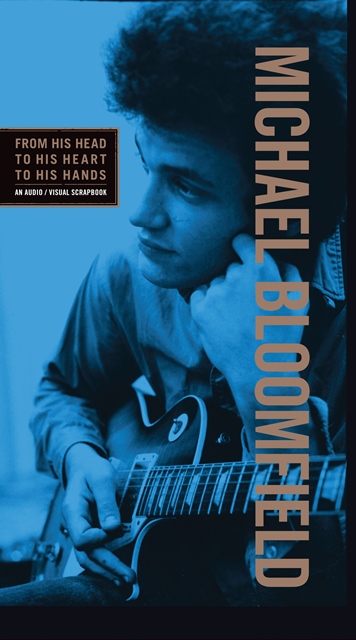
 Michael Bloomfield: From his Head to his Heart to his Hands


Michael Bloomfield: From his Head to his Heart to his Hands

The emergence of artists’ collectives, bristling with idealism and wacky manifestoes, is usually a sign of a vigorous cultural scene. London’s new improvised music scene enjoys several successful examples, of which Loop is perhaps the most prominent. Last night’s Loop club night at the Vortex showed the idea at its best, combining new and established acts across a range of genres.

Bach, Duke Ellington and free jazz improvisation met at Cafe OTO last night, and joyously warped some minds. Composer Alexander Hawkins’ BBC Radio 3 commission, the nonet piece "One Tree Found", was part of last year’s Baroque Spring season. It takes the three-part structures of Bach’s trio sonatas for organ, adds echoes of Duke Ellington’s (known, Hawkins notes, as "The Hot Bach" at the height of his fame) numerous three-way orchestrations, and completes the creation with improvisations both contemporary and baroque in style.

Suzanne Vega clearly likes her new album, Tales from the Realm of the Queen of Pentacles. Either that or she’s got this promotional lark down to a fine art. Tonight we were treated to seven of its ten tracks, which is not something you might expect of someone who began their recording career in 1985 and has since released seven other albums and a fair few hit singles

When the red curtain opens - or drops with delicious melodrama - on the second night of Taylor Swift’s residency at the O2 Arena, the first thing you notice is her eyes. We’re a crowd of thousands, packed into the second largest stadium in the UK, and with our monumental collective gaze directed at one person you wouldn’t expect such intimate details to translate. But Swift need move only her eyes to elicit screams like you’ve never heard in your life. She swoops them oh-so-slowly to the right, pauses, then to the left, pauses, smiles.

Kitty Lux is one of the founders of the Ukulele Orchestra of Great Britain. Her performance of Lou Reed's "Satellite of Love" sums up their wonderful act. Sat strumming stonily stationary, clad in black with a red scarf around her short dark hair and an expression of seen-it-all hangdog boredom on her face, she delivers the song beautifully, her compadres adding the sweetest harmonies. There is, however, an injection of silliness when the orginal's memorable backing vocal, a descending trio of notes, becomes a ridiculously emphatic "Bing! Bang! Bong!" in the cheesiest barber shop style.

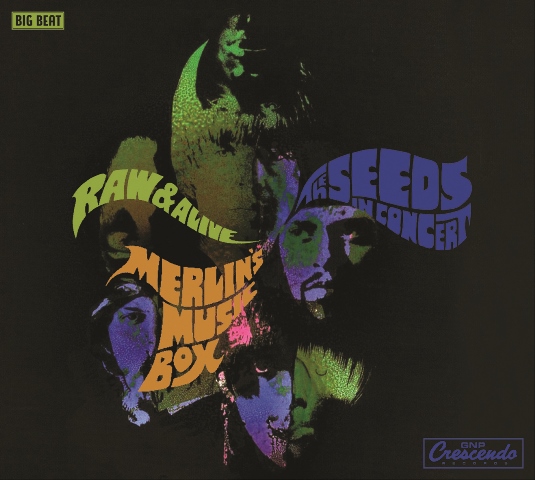 The Seeds: Raw & Alive / The Dream Syndicate: The Day Before Wine and Roses

Last night Lloyd Cole arrived on stage with a similar suede-and-corduroy air to that of his Eighties college-rock hits. Yet something was different. Over the last few years he has developed a real gravitas. It showed in the lines on his face and gunmetal hair; and it's this depth that critics have perceived on his recent album, Standards. Yet despite the critical acclaim the old troubadour is still not happy with how he’s “ disappearing into a niche”. In fact, he says, if this tour is a flop, he might give up music altogether.

Finland’s Jaakko Eino Kalevi, who played his debut British show last November, heads up theartsdesk’s latest regular round-up of what’s come down from the north. A spellbinding display of individualistic pop, the London outing coincided with the arrival of his first non-Finnish release, the Dreamzone EP.

Once upon a time, there was an assumption that the DJs and remixers who emerged in the late 1980s would kill off touring bands like Depeche Mode. As it turns out, nothing could be further from the truth and 34 years since they first got together, Basildon’s finest are not only still providing remixers with plenty of raw material for their craft, but they are reproducing their recreations in the live arena.