

Almost 50 years since he started working on it, and following its world premiere in New York in February, it was a huge thrill to hear Jon Hendricks' lyricisation of the classic Miles Davis-Gil Evans album Miles Ahead at Kings Place.
new music reviews
james.woodall

This is the most frustrating film. It’s probably no fault of the makers, but it’s rare to have to assess a documentary for what it doesn’t have. Over nearly two hours of celebrating the Sgt. Pepper’s Lonely Hearts Club Band Beatles period – late 1966 to their record label Apple taking off in 1968 – there is not a note of the group’s music.
Well, alright, in the opening animated credits you detect a phrasal shimmer of George Harrison’s sitar-driven “Within You Without You”, but that’s it. The score, by Andre Barreau and Evan Jolly, is a confection of atmospherics and rhythms that could be the Beatles but absolutely isn’t.
Sgt. Pepper’s Lonely Hearts Club Band is the most famous album of the 20th century. The LP practically defines the last part of it. On paper, it makes real sense to release a half-century anniversary documentary about the trailblazer. But it’s asking a lot of someone aware of the Beatles brand and familiar with, say, a handful of their best-known songs to be amused by or engaged in chitchat about – the here non-heard – “Being for the Benefit of Mr Kite!” or “Lovely Rita” if they don’t know them.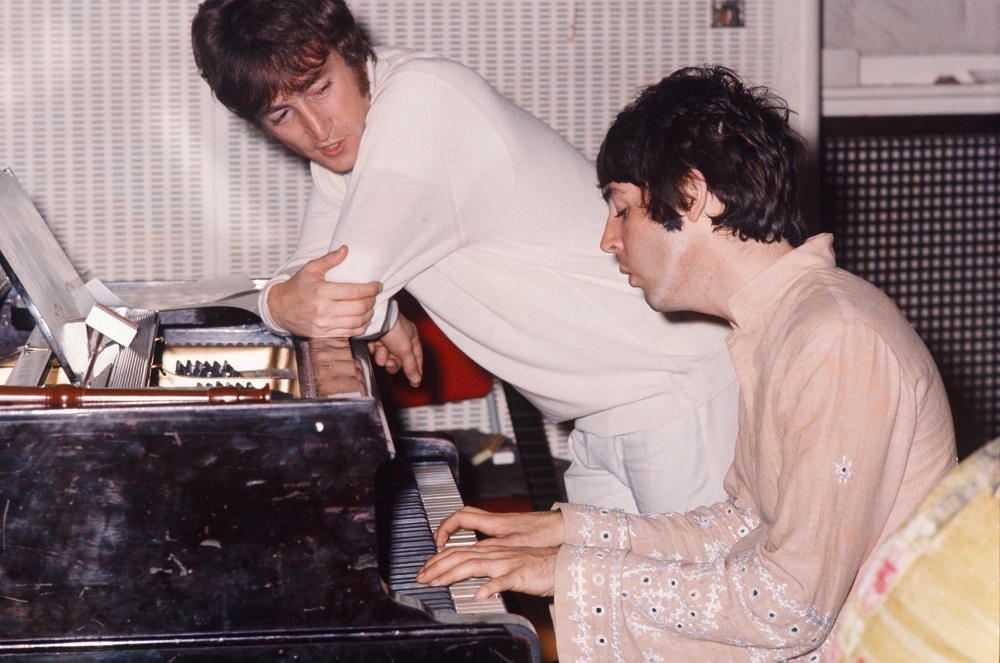 Unfortunately, that is a legacy downside of the group’s global reach: Apple Corps, representing the interests of Paul McCartney, Ringo Starr and the estates of John Lennon and George Harrison, will – putting it simply – just say no to anyone seeking to broadcast or exploit Beatles originals in the public domain, unless four parts are in total agreement and involved. So it was that, by contrast, Ron Howard last year stole a march on Alan G. Parker, maker of this new film, by having – with the help of producer George Martin’s son Giles and presumably Apple – original live sound in Eight Days A Week, about the touring years, as well as new spoken contributions from McCartney and Starr. Neither appears in It Was Years Fifty Ago Today! Who does?
The four themselves, of course, in black and white, from various clips amassing from 1963 in the form of cheeky and, increasingly in 1966, combative press conferences. Many of these can be found on YouTube. One of the more intensive periods of defence-before-the-press was as they headed for the last-ever tour, of America in August 1966. Lennon had set the fires blazing in the Bible Belt by a casual comparison to Christ and the Beatles being more popular… It was really the turning-point in the band’s relation to their gargantuan public. After horrible experiences in the US (and, just before, in the Philippines) they vanished from view. What emerged in 1967 was a completely refashioned quartet, an utterly different sound world and, from behind closed doors, astonishingly innovative recording techniques.
 This is the frame for Parker’s film: historical, cultural, anecdotal. Analysis of the Pepper music is of necessity skimpy, as the film gives us in that respect nothing to listen to. Useful and largely articulate talk comes from well-known Beatles commentators such as biographers Philip Norman and Hunter Davies and journalist Ray Connolly, and from – until now – relative unknowns such as Barbara O’Donnell, who worked for manager Brian Epstein, and Jenny Boyd, sister of Harrison’s first wife Pattie, coming across still as a cut-glass 1960s charmer. Rather sweetly, a groomed, smiling, 75-year-old Pete Best, sacked as drummer in 1962, has some screen-time to praise his three long-lost friends, though this is inessential as of course he had nothing to do with Pepper or, indeed, the recorded legacy.
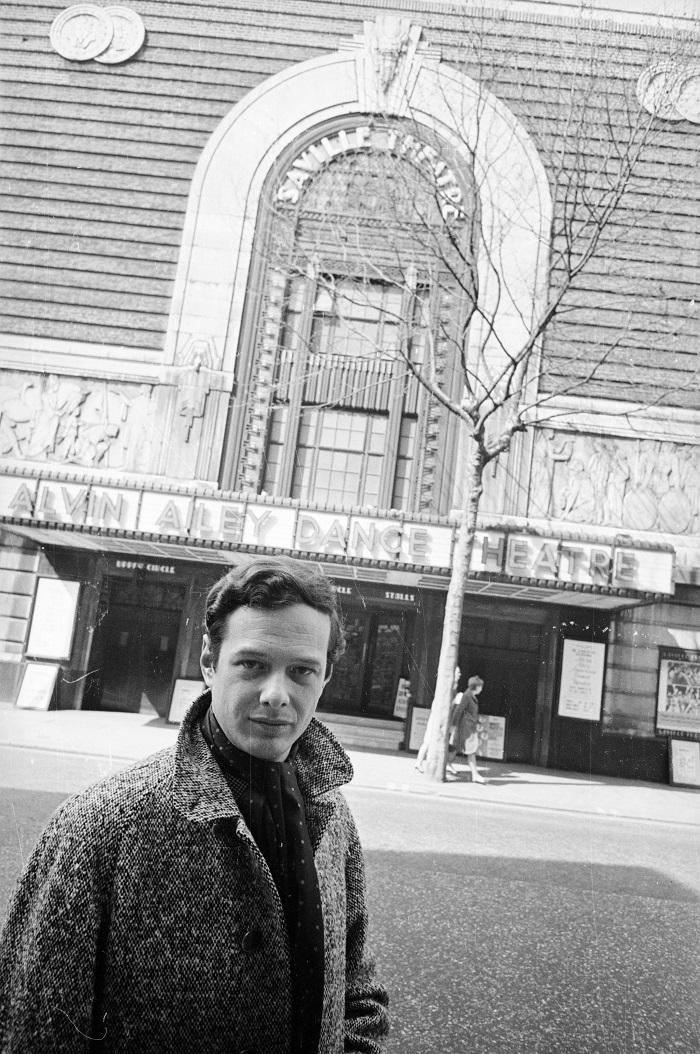
Most interesting of all is ex-pop manager Simon Napier-Bell, fearsomely intelligent, who reckons he was the last person to “hear” Brian Epstein. Epstein’s death from pills and booze in August 1967 was a complicated affair, as traumatic to the four as the death threats of 1966. He, too, hadn’t had much to do with Pepper and without question was feeling sidelined. In his last days he was, if Napier-Bell remembers right, hoping to get the younger man into bed, but Napier-Bell was in Ireland (and never, anyway, going to do Epstein’s bidding). He had invented an early version of the answerphone. On his return to London he heard a succession of blurred messages from the 32-year-old, left through the evening of his death. What Napier-Bell reveals next, one of the more jolting moments in the film, would amount to a spoiler...
Two significant survivors drastically missing here are Epstein’s lieutenant Peter Brown and McCartney’s girlfriend for most of the Beatles era, Jane Asher. Both are alive and thriving, can claim to have been in the eye of the storm from 1963 and would, as interviewees, have been not just feathers in Parker’s cap but lightning-bolt scoops. Alas, they are as likely to talk as Parker was of getting even two seconds of “A Day in the Life”. But those two saw it all.
We must be content with some rare footage not of Pepper-making – that would be gold-dust – but of events early in the Apple years: glimpses of each Beatle in a world even further removed from the protective luxuries and early-form showbiz high security of the touring years. After Pepper they rocketed into, even for them, entirely untested territory of fame. The main virtue of It Was Fifty Years Ago Today! is to remind us how they shaped not only the late 1960s but, in senses more than musical, the very culture of the 20th century’s last third.
Overleaf: watch the trailer to It Was Fifty Years Ago Today!
Kieron Tyler

As the producer of the early Kinks and Who, Shel Talmy’s status as one of British pop’s most important figures is assured. He is, though, American. Despite being integral to the mid-Sixties boom years when the Limeys took over, he was born in Chicago in 1937.
Peter Culshaw

Yasmine Hamdan has gone from being an indie star in Beirut a decade ago with her adventurous band Soapkills to being a bona fide solo star with a couple of sophisticated albums behind her, the latest Al Jamilat recently released.
Kieron Tyler

“Electronic music, feedback, imaginative identification with colours and art and unique sounds is our art-from. We feel we are contributing to the new ‘total sound culture.’ This culture will take its place in the world just as the Renaissance and Picasso’s blue period has.”
The September 1966 press release accompanying The Creation’s second single “Painter Man” wasn’t shy. Its front page declared “We see our music as colours – it’s purple with red flashes.” If all that weren’t enough, the quote was attributed to Creation 1 v ii, as if the bible was being quoted.
Thomas H. Green

The two main commands coming from the stage at this evening's Brighton Festival event are “Everybody jump, jump” and “Put your hands in the air and go side-to-side”. The crowd are mostly under 30 and emanate dancing energy from the moment the doors open, as DJ Molotov warms up. The set-up is basic, a DJ and some mics, but that’s as it should be for, on one level, this evening takes hip hop back to its Bronx block party origins, away from all the bling nonsense that’s taken it over. On another level, it’s a very British affair.
High Focus, a Brighton record label founded in 2010, are probably best known for backing the early career of 2017 breakout artist Rag’n’Bone man, and releasing his “Bluestown EP” debut. However, among many connoisseurs of UK hip hop, they’ve established themselves as a force to be reckoned with, moving the genre away from the Autotune cheese of lame US stars such as Drake and Fetty Wap, and focusing on the genre’s core values of lyricism and back-to-basics beats.
Jam Baxter is on first, a rapper who’s been with High Focus since they began. Clad in hip hop's regulation baggy jeans and top – which comes off to reveal a white T-shirt - he's jokey between songs, advising any “youngers” in the audience “not to take pharmaceuticals and go to Mansion 38”. He then lets loose with cuts from his own recent album of that name. His enthusiasm is contagious. He’s followed by The Four Owls, a collaboration between MCs Fliptrix, Verb T, BVA and Leaf Dog, each rated in their own right before hooking up to put together their 2011 debut album, Nature’s Greatest Mystery, which was an early breakthrough for the label. Initially wearing masks (pictured above), their verbal interaction is honed and slick, as they bounce around bursting with vitality. They hype up the crowd but the tunes, including songs from last year’s Natural Order album, are partly lost amid murky sound.
Tonight’s big problem is the sound system, which is, sadly, not really up to the task at hand. It appears that it's being over-driven, the bass is distorted and the words which, of course, are everything in real hip hop become an imprecise stew. The effect is to render the skilled flows of these MCs a dense attack of indiscernible barking. Because you can’t hear what they’re saying, after a while their MCing just becomes a jarring metronomic hammering. The crowd don’t seem to mind. Many of them already know the words anyway, and all have come to party.
Headliner Ocean Wisdom suffers least from these problems. Either the system has been tweaked, or he’s able to enunciate beyond whatever the issue is. He’s one of the fastest MCs in the world, officially head-to-head with Eminem. Clad in a black top, with combat trousers, a beanie hat and a neck-chain, and accompanied by his own hype man, he rips into his debut album of early last year, Chaos ’93, its diary-like tales, sometimes based in Brighton where he lives, machine-gunning from his mouth, a staccato attack that’s nothing short of thrilling.
Unfortunately, following Ocean Wisdom's every move closely is a guy with a camera on a steadicam. He's an extremely annoying visual distraction. He’s clearly getting rubbish footage, usually from behind the action, but he shadows the performers ceaselessly, bouncing around, and enjoying the excitement of being onstage. Whoever let him on made a drastic error of judgement. His presence takes away from the show's impact and just looks crap. I was not alone in observing this.
Nonetheless, Ocean Wisdom is a next-level talent who will likely be bursting out of the UK hip hop micro-verse to higher profile success soon. Despite the iffy sound and the over-enthusiastic camera dude, he topped off a likeable night boosted by a crowd buzzing with youthful zest and energy.
Overleaf: Watch the video for "Walkin'" by Ocean Wisdom
Adam Sweeting

The title of this exhibition is typical of Pink Floyd’s mordant view of the world, not to mention their sepulchral sense of humour. Needless to say, the band that took stage and studio perfectionism to unprecedented lengths have pushed the boat out here, memorialising over 50 years of their collective history with thoroughness and fanatical attention to detail.
Kieron Tyler

A strong candidate for reissue of the year, World Spirituality Classics, Volume 1: The Ecstatic Music of Alice Coltrane Turiyasangitananda is a rarity amongst archive collections as it does what is always hoped for but seldom accomplished. A new story is told, the music is unfamiliar but wonderful, and it has been put together conscientiously.
Kieron Tyler

Compilations of Sixties girl group or girl-pop sides are innumerable but Honeybeat: Groovy 60s Girl-Pop is promoted on the basis of the rarity of what’s collected. The 19 tracks include The Pussaycats “The Rider”, the A-side of a 1965 single: originals sell for upwards of £100. The track has been reissued before though, on the 1990s grey-area album Girls in the Garage Volume 7. Until now, it’s never been legitimately comped.
Peter Culshaw

Caetano Veloso is a unique figure in world popular music. As bright as the likes of David Byrne and Brian Eno, but also a genuine pop star, beloved by “chamber maids and taxi drivers” as well as the intellectual liberal élite. In the late 1960s, he reinvented Brazilian pop music with friends like Gilberto Gil in the Tropicalismo movement.