

Suddenly Steven Spielberg movies are plopping off the production line like Ford Fiestas or Cadburys Creme Eggs. It seems like only seconds ago that we were greeting The BFG and the breast-beating earnestness of The Post, and now the director comes steaming back with this huge and hectic tribute to the gamer-world and his own long-lost youth.
film reviews
David Kettle

A feature-length documentary on whaling in the Faroe Islands: you might think you can see it unfolding already. Hardy Viking fishermen battling the elements, gruesome killings of majestic sea creatures, implied or outright condemnation of the shocking brutality.
Scottish director Mike Day’s masterful film is no shock-factor exposé, though – although what it does expose is far more chilling than the low-level hunting it shows. The Islands and the Whales is a haunting, deeply troubling portrait of a modern community on the edge, a film that paints an uncompromisingly complex, contradictory picture of ancient traditions struggling for survival amid the dangers of the modern world, without ever jumping to hasty judgement.
Researched and recorded over four years, it revolves around a seemingly unsolvable problem. The Faroes have an ancient tradition of whaling – of fishermen dashing for their boats as soon as a pod of pilot whales is sighted, then forcing the creatures ashore, where they are butchered with hooks and spears by the locals. It’s one of the defining elements of Faroese culture, we’re reminded time and again by numerous interviewees in the film.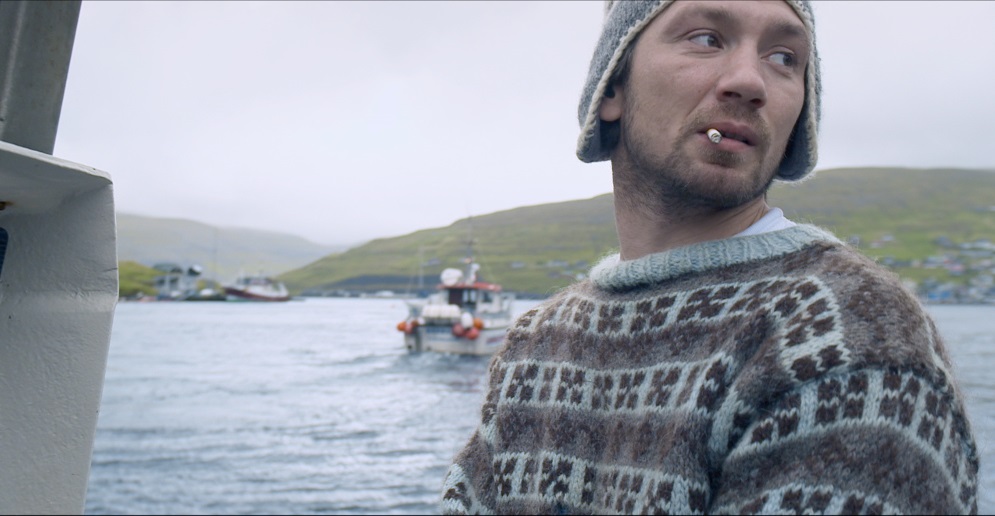 But it’s under threat – not from protesters, however, who jet in to yell their objections and scupper whale hunts (cue a cringe-inducing press conference with Pamela Anderson exhorting the Faroese to go vegetarian), to the frustration of locals only too aware of their ignorance of the hardships of Faroese life. No, the big threat is from mercury, now present at dangerously concentrated levels in whale meat – a result of the relentless pollution of the oceans, and whales, as top of the food chain, receiving the highest dose. That mercury is now being passed on to human whale meat consumers, with serious concerns for the long-term health of the Faroese.
Day allows his story to unfold slowly, with persuasive access to the Faroese community. He speaks at length to Faroese medical officer Pál Weihe, who first voiced concerns over mercury levels, and who risks attack for seeming to undermine tradition by suggesting that the Faroese should give up whale meat. Day personifies the nation’s dilemma in touching scenes with careworn fisherman Bárður Isaksen (pictured above), seemingly in serious danger from his lifetime of whalemeat consumption, and his young family. Is he threatening the health of his two toddler daughters through his dogged adherence to tradition? Are the alternatives in a tiny, remote community – turning to flown-in, heavily processed food, for example – any more appealing?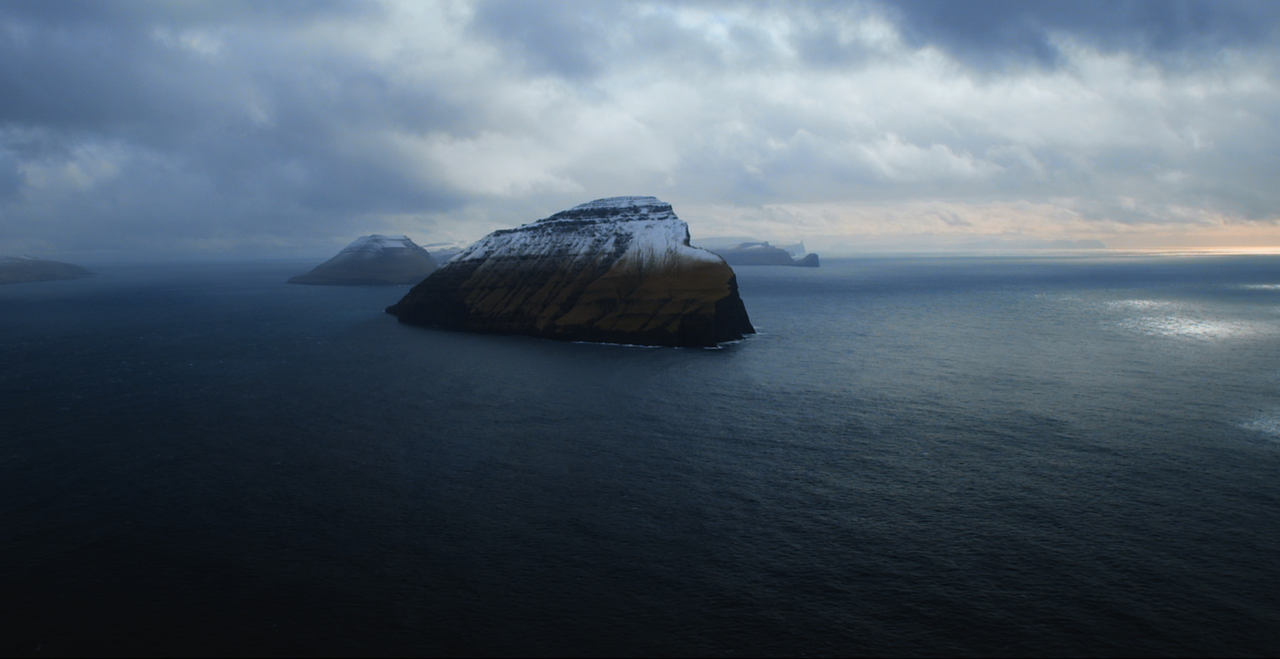 Its issues aside, The Islands and the Whales is a breathtakingly beautiful film, and Day divides his ruminations into chapters with brooding land- and seascapes in between. Even his scenes of whale slaughter, unflinching and stomach-churning as they are, border on a kind of mythic majesty, and his wind-driven soundscape makes an apt counterpoint to his austere imagery.
The big unasked question is: if it’s cruel, and if it’s damaging their health, why don’t the Faroese just stop hunting and eating whales? By the end of Day’s mournful, melancholy documentary, however, simple assessments seem irrelevant. This is a sensitive, profoundly moving portrait of a community forced to question its own identity as a result of environmental catastrophe, and a film with a serious resonance for all of us. As one interviewee remarks, the Faroes are like a barometer for the rest of the world. With no large industrial countries nearby, if it’s already that bad in the far north Atlantic, how bad must it be elsewhere?
Overleaf: watch the trailer for The Islands and the Whales
Jasper Rees

Ever nursed an immoderate fondness for Ingrid Bergman? In Her Own Words, a bio-documentary released in the cinema then on DVD in 2016 and shown last night on BBC One as part of the Imagine... strand, was an entrancing, melancholy memoir in letters, diaries and above all personal footage.
Saskia Baron

I Got Life!, originally released in France as Aurore, is a lovely, funny low-budget comedy that should definitely appeal to female movie-goers with a fondness for quirky, feisty women d’un certain age. It’s the kind of film that one would probably go to with a girlfriend rather than a male date… even though it would do middle-aged men a world of good to see it.
Fabulous Agnès Jaoui, who also collaborated on the script with director Blandine Lenoir, stars as Aurore, an amicably divorced mother of two adult daughters, living in La Rochelle. She’s going through the menopause with annoying hot flushes and the realisation that she’s become invisible to men, even ones her own age, who seek out younger girlfriends.
The bar she works at has been taken over by a boorish new propriétaire who can’t be bothered to call her by her real name and insists that she is now Samantha and should be confined behind the bar. She needs a new job and a new lover, especially as her older daughter has just announced that she’s expecting a baby and the younger one is besotted with a selfish young oaf and leaving home. Aurore and her gutsy gal pal Mano (Pascale Arbillot, pictured below with Jaoui) aren’t willing to embrace sexless grandmotherly status just yet and they embark on amorous adventures involving old school mates (twinkly Thibault de Montalembert) and strangers. 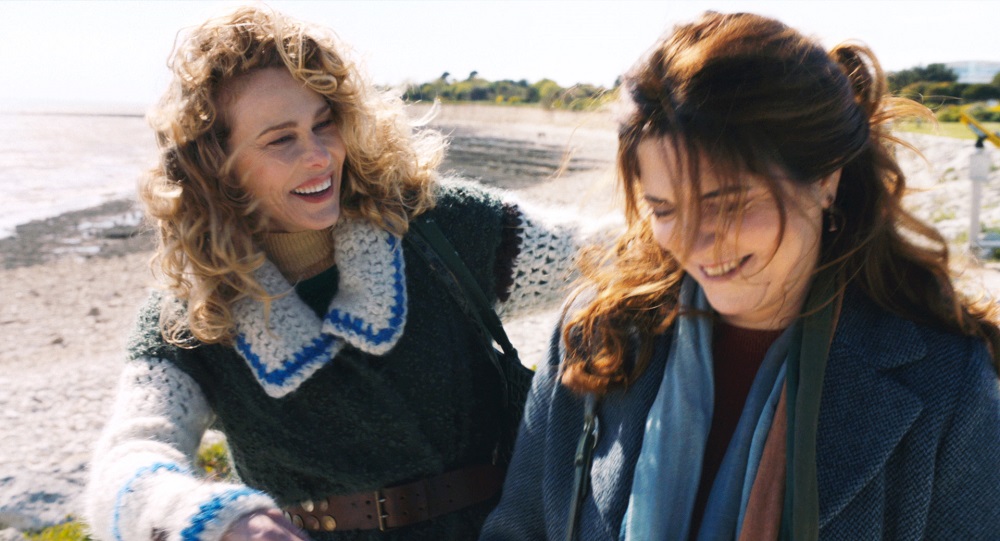 It’s fascinating to see everyday body fascism towards middle-aged women being tackled head on by French filmmakers – France is after all the country famous not only for its flirtatious culture but a nation which performs five times more bariatric surgery operations per year than the UK. It’s lovely too to witness a light-touched fight-back at grotesque stereotypes in a mainstream French comedy. While I Got Life! is not always entirely credible in its plotting – there’s one lucky coincidence too many and a perhaps over-hasty happy ending – this is still a highly enjoyable little gem of a movie.
Nina Simone belts out "I Got Life" on the soundtrack, there’s a cute reference to the William Wellman classic male-female grooming movie A Star is Born and clips of the late feminist anthropologist Françoise Héritier woven in. It’s interesting to compare I Got Life! with the over-engineered movies such as The Best Exotic Marigold Hotel that the British turn out or last year's frenetic Debra Winger vehicle, The Lovers. There’s a freshness and everyday comic realism to I Got Life! which puts those films to shame. It’s not as ambitious a piece of filmmaking stylistically as 20th Century Women which tackled similar themes, but it is warmly recommended.
Overleaf: watch the trailer for I Got Life!
Jasper Rees

Perhaps it’s fitting that Donald Crowhurst should once more find himself in a race. Even more aptly, it’s a race against himself. You wait half a century for a biopic about the round-the-world yachtsman who disappeared off the face of the earth, and then two turn up at once. This sort of clash sometimes happens in film, and one movie always ends up trouncing the other. Dangerous Liaisons seduced audiences away from Valmont. Capote killed off Infamous.
Tom Birchenough

Japanese director Kore-eda Hirokazu offers up mystery aplenty in his new film The Third Murder, enigma and riddle too. He also moves away from the territory of family drama for which he is best known. There’s similar intensity in some of the relationships between characters here as in his previous work, and it’s engrossingly atmospheric – some visual elements speak as strongly as anything the director has made, while Ludovico Einaudi’s piano/cello-dominated score is almost a player in itself – but even for Kore-eda fans it will surely come as a surprise.
The opening scene of The Third Murder does indeed depict a killing, but the director then spends the next two hours slowly demolishing any sense of certainty we began with about what was actually done, and by whom, let alone why. It isn’t a courtroom drama, though part of the second half does play out in that environment, but rather a legal procedural, overlaid with philosophical elements, and permeated with a sense of life’s strange whimsy that sometimes isn’t far away in feel from the work of Haruki Murakami.
The cycles and variations of parent and child relationships continue
The central relationship is between confessed murderer Misumi (Koji Yakusho) and his lead lawyer Shigemori (Masaharu Fukuyama, one of Japan’s top singer-songwriters, whose screen career includes Kore-eda’s 2013 Like Father, Like Son), who’s been brought into the case by his senior colleague to try to clarify things. Given the confession, the lawyers’ main preoccupation is to try to avoid the death sentence (which remains in force in Japan): the film’s title, we assume, is explained by the fact that Misumi had previously served 30 years for a double murder, making such a verdict all the more likely. The judge in that earlier case had been Shigemori’s father, prompting some reflection on the ethics of capital punishment (not to mention the human condition), but Kore-eda doesn’t take any strong stand on that issue per se.
Misumi’s position at the opening seems clear, and he has admitted his guilt: having stolen money to fuel a gambling habit, he bludgeoned to death the owner of the small factory where he had been working, and then burnt the body. It’s when he starts to change the details of that story that confusion sets in, prompting in Shigemori a growing engagement that sees him travelling to meet the victim’s wife and daughter (Hirose Suzu is particularly striking as the daughter, pictured below, right), as well as research other aspects of his client’s past. It takes him to some of the remoter regions of Japan, especially Hokkaido in the north – how far it all is from the big city environments that we more often associate with the country – with elements that take us back in time, too.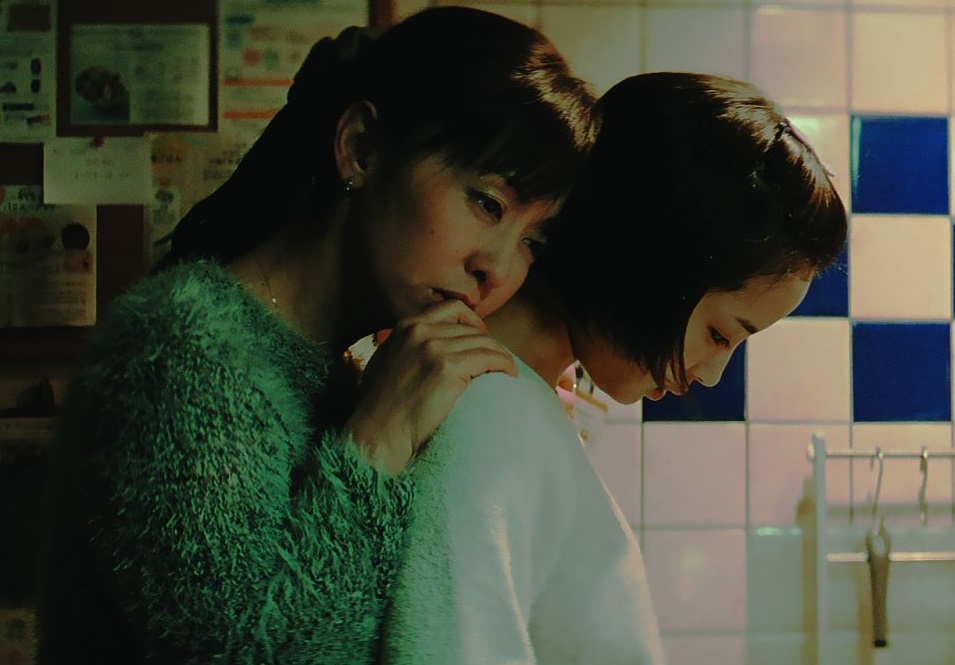
But the film’s central space remains the prison meeting-room in which the lawyers interview their client; the two sides are separated by a thick transparent screen which allows for strange degrees of close interaction between the two main protagonists when they face each other. In changing his version of events, is Misumi’s memory deceiving him, or is he playing with his lawyer, throwing out diversions from a motivation that may be anything but self-serving? First he uses a press interview to suggest he had committed his crime in collaboration with his victim’s widow as an insurance scam, then hints at much darker elements in that relationship between father and daughter. Kore-eda loosely links that latter element to Shigemori’s own circumstances – he’s divorced, and his relationship with his daughter has clearly been affected by his absorption in his work: the cycles and variations of parent and child relationships continue.
Questions and counter-questions arise as we circle the enigma of what may or may not be the truth. If it all seems something of a game, however macabre, for Misumi, Shigemori’s professional approach is equally ambiguous; as he suggests at one point, “legal strategy is the truth”. We certainly see a lot of legal strategy meetings – some include considerable atmospheric humour in the background – as well as more arcane conferences between judge and the defence and prosecution sides, but on the wider sense of who has the right to judge others, The Third Murder remains silent.
Visually the film reflects the story's interest in artifice. The widescreen cinematography of Kore-eda regular Takimoto Mikiya is darkly distinctive, especially when charting weather and landscapes. But it’s when he brings us into close-ups on the faces of the two main characters as they confront each other in that prison room that something uncanny happens, as their two images seem to merge in profile reflections in the perspex screen that separates them. It’s one of the most unsettling touches in a film that holds back far more than it reveals.
Overleaf: watch the trailer for The Third Murder
Jasper Rees

Steven Soderbergh has always been capable of a big Hollywood moment – Magic Mike, Oceans etc. But much of his filmography consists of curious sideways glances. He’s particularly drawn to the shifting distribution of power between the genders. From sex, lies and videotape to Haywire, by way of Erin Brockovich and Out of Sight, he has rifled through the genres to find fresh and intriguing stories about men and women. It comes up again in Unsane, a sort of horror comedy satire that makes great use of Claire Foy’s vertical rise to bankability. It also, for the record, features a fun cameo from Soderbergh regular Matt Damon as an adviser of domestic security.
Foy plays Sawyer Valentini, whose very name suggests a split personality. She’s a single young woman who has moved from Boston to Pennsylvania to take up an office job and, seemingly, escape her nagging, needy mother. The new job is no panacea. The clients at the end of the phone test her patience and her boss is soon hitting on her. But deeper anxieties assail her. She hooks up with a hot guy on a dating app and, having promised him sex, thrusts him away in disgust.
 Distraught, one lunchbreak she drives over to a hospital to talk to someone about her history of being stalked which, she concedes, has brought on bouts of suicidal ideation. Barely is the session over before she has unwittingly signed a form consenting to her forced hospitalisation. When she objects, agggressively, the period of what feels like incarceration is extended from 24 hours to seven days. The creepily long and empty corridors and impassive white-coated staff inevitably evoke One Flew Over the Cuckoo’s Nest.
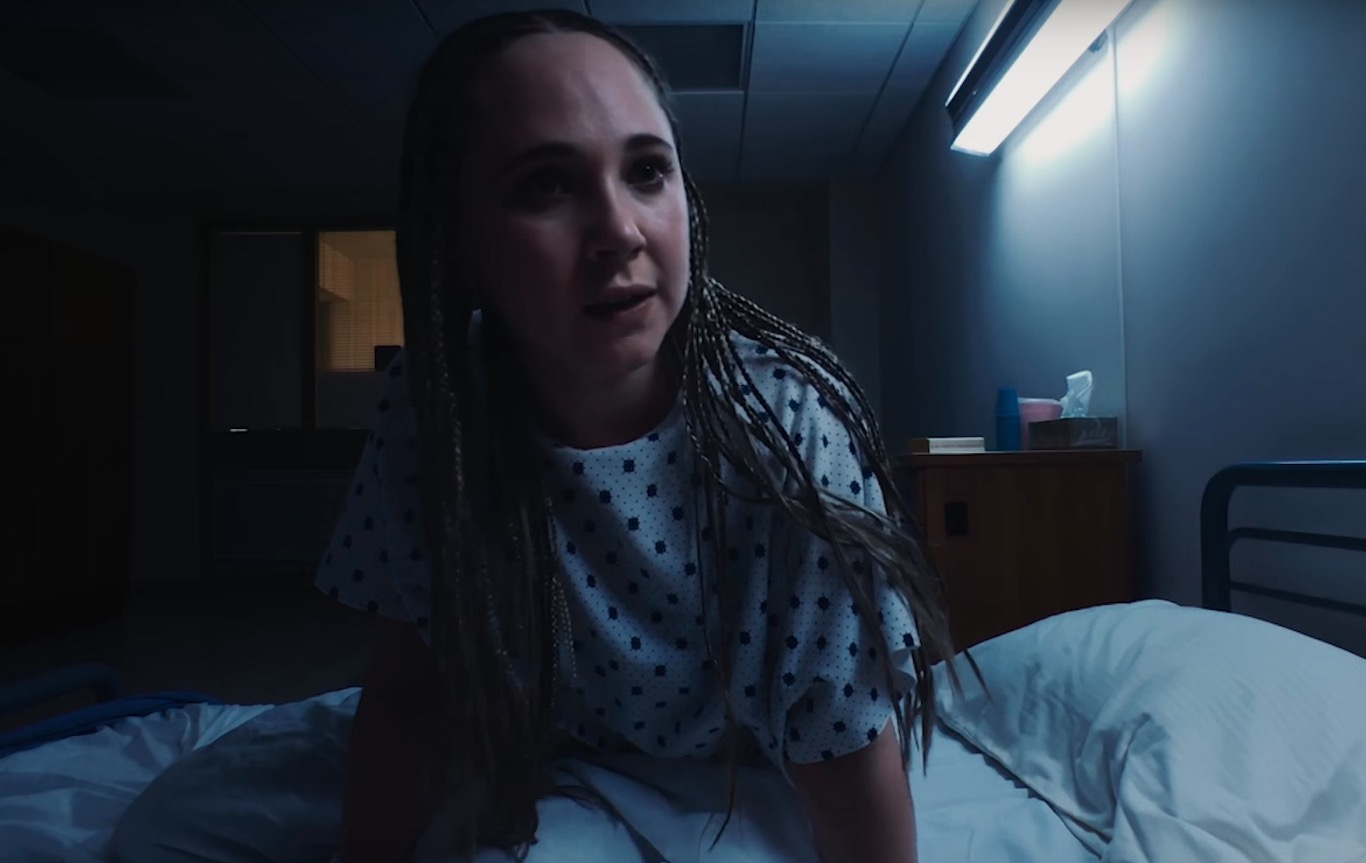
Sawyer's fellow patients would all seem to be as psychotic as Violet (Juno Temple, pictured above, very different from her wide-eyed turn in Woody Allen’s Wonder Wheel), who occupies the next-door bed. But she forms a bond with Nate (Jay Pharaoh), who counsels her to accept that everyone in Highland Creek Behavioral Center is being milked for their insurance money. When that runs out, they will be released. This would be reassuring if Sawyer hadn’t spotted her stalker from Boston wearing a nurse’s uniform and handing out the daily cups of medication. The nurse (Joshua Leonard, pictured below) insists he’s called George, not David Strine as she claims.
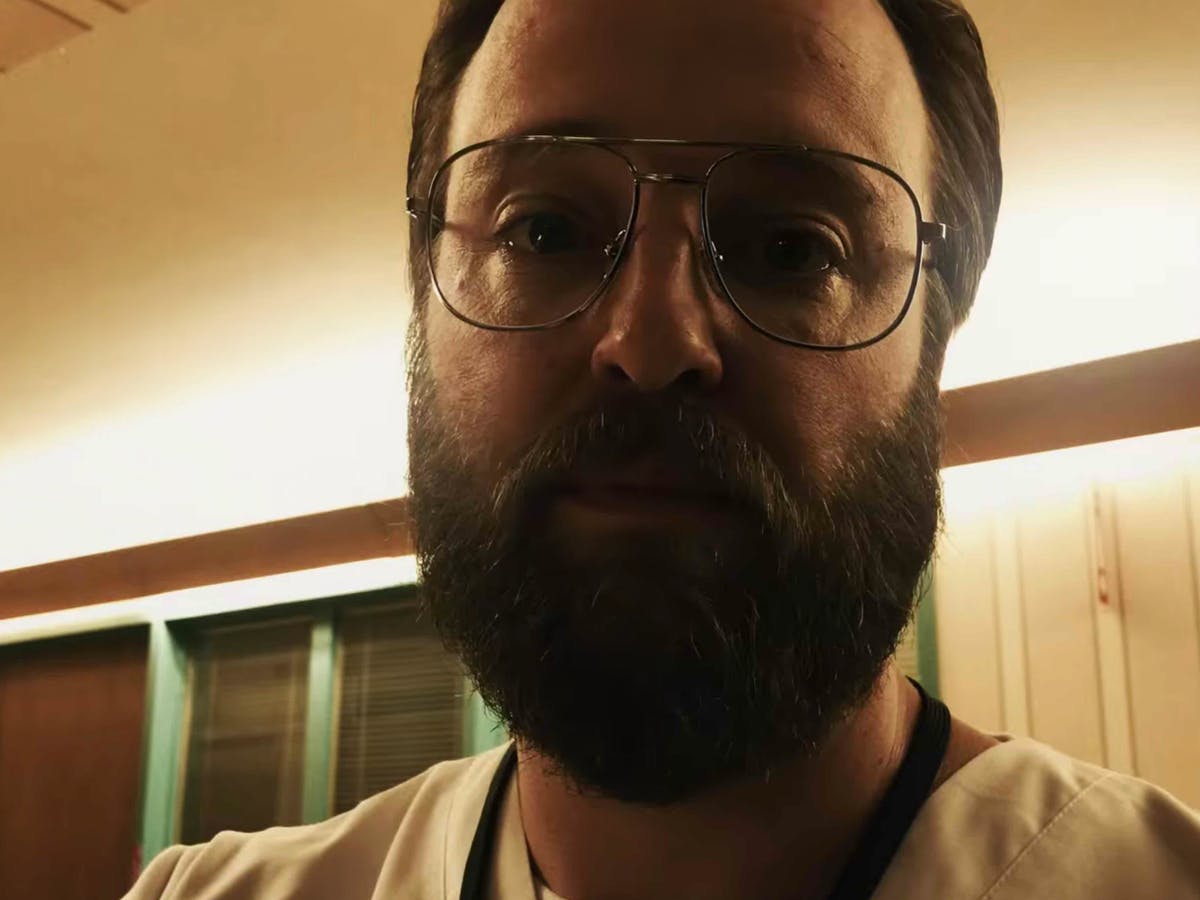 The script by Jonathan Bernstein and James Greer has no great truck with plausibility. How David/George could have landed this job and fetched up in Sawyer's life is not examined. The plot flirts with the idea that Strine is a figment of her imagination: is she hallucinating a beard, glasses and a lovelorn gaze onto every threatening male? But gradually scales fall from eyes as Sawyer is slipped her mind-bending medication, offering Soderbergh a chance to work up some woozy visuals (incredibly, he shot the whole thing on an iPhone). Then, after Sawyer summons her mother (Amy Irving) to rescue her, more disturbing things start to happen.
This is a robust breakaway for Foy, who has spent two years rei(g)ning it in as Her Majesty. She’s blonde, brittle and not altogether likeable here, and yet connoisseurs of her Queen Elizabeth will recognise her face’s powerful facility for exuding hurt and offence. She gets plenty of practice at that before the latter part of the film moves into new realms and calls for different colours. Unsane stops being a Kafkaesque satire of Big Pharma and the medical insurance racket, and mutates into a horror riff on the psychosis of delusional male sexuality. Perhaps insurers and stalkers are even cut from the same cloth. It’s all a bit bonkers, though nothing if not timely.
Overleaf: watch the trailer to Unsane
Nick Hasted

Mary Magdalene’s story hasn’t suddenly become the second greatest ever told, despite its radical expansion here. Garth Davis’s follow-up to Lion is, though, a profoundly thoughtful and convincing telling of the Christian main event.
Saskia Baron

One of the oldest pleasures of cinema is the opportunity it gives us to look at beautiful people in beautiful places, possibly having beautiful sex. Often audiences get exactly what they came for but sometimes it isn’t exactly straightforward. Take The Square, the Oscar-nominated film from Swedish director Ruben Östlund that won the Palme d'Or at Cannes last year. Its cast includes Danish heart-throb Claes Bang (tipped as a potential James Bond), handsome Dominic West (of Wire fame) and lovely Elizabeth Moss (freed from her Handmaid’s Tale wimple). The setting is Stockholm’s fashionable art world so there’s a visual feast of ultra-cool art gallery interiors, gilded halls, luxury apartments, modernist offices and a Tesla slicing through streets familiar from all those Scandi noir series.
This isn’t a thriller, although it is certainly filled with jeopardy, and it isn’t a romance, although it has one of the most startling sex scenes I’ve seen since Toni Erdmann. Instead The Square is a post-modern farce – a string of terrible mishaps befalls museum director Christian (Claes Bang, pictured below) as he tries to hype a new exhibit and we watch his life spiral from cool to chaos. It’s also a satire, gleefully poking fun at the pretensions of the art world and liberal Swedes’ earnest efforts to promote a dialogue on immigration and racism.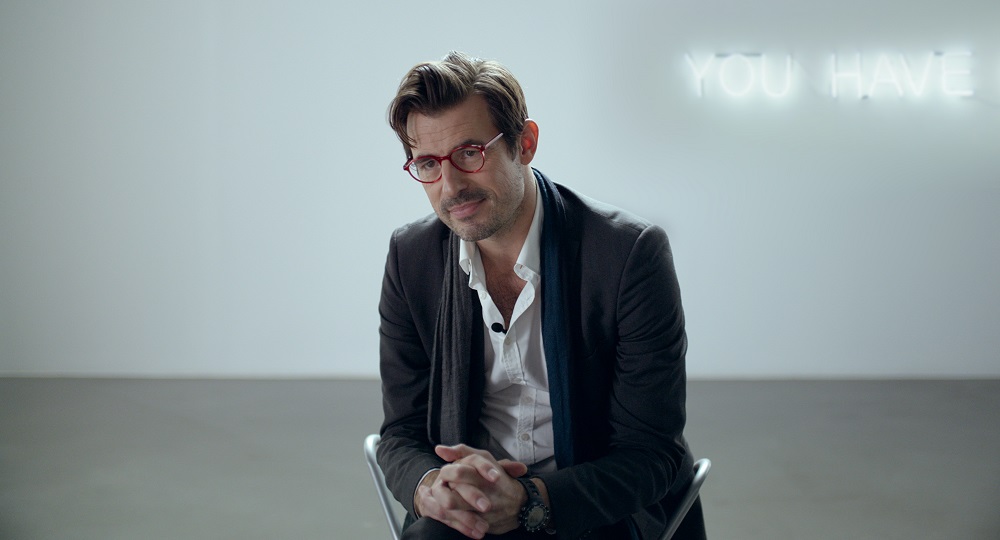 But most of all, The Square is brilliantly acted and very stylish, if at times just a little bit too pleased with how clever it is. To describe the plot in any detail would be to spoil the film’s unfolding pleasures; suffice to say there is a theft, inept revenge, social and professional humiliation, and an actor impersonating an ape who should make Andy Serkis a tad jealous.
Östlund is following up his disquieting hit Force Majeure and his budget has increased exponentially. For the first time he’s working with actors famous outside Scandinavia. But his directing style hasn’t changed – gruelling improvisations and multiple takes until the performance is just as he wants. Director of photography Frederik Wenzel's elegant shots are held at almost uncomfortable length; the audience is given plenty of time to observe closely each character as their thoughts and feelings flicker in front of our eyes.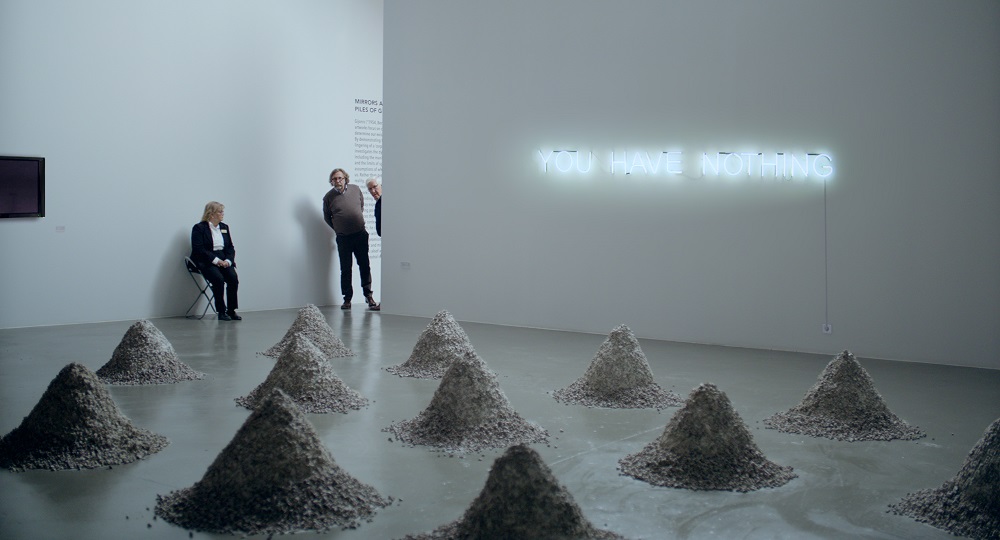 There’s much clever framing too, marginal figures edging into our vision. The spaces Christian navigates are both claustrophobic and hallucinatory. Confusing, faintly disturbing peripheral sounds come from off-screen with no explanatory cut-aways to their source. Dialogue is kept naturalistic and doesn't get in the way of the actors – Aaron Sorkin does not haunt this script.
The noodling a cappella score is a touch irritating in its over-signalling of wit and the child actors lack credibility, but The Square finds Östlund at the top of his game. It should provide the most fun to be had in an art movie this month if not an art gallery (installation pictured above). And Claes Bang's English accent, a homage to David Bowie, is startlingly good. This Danish actor would have no problem squaring up to Bond.
Overleaf: watch the trailer for The Square
Adam Sweeting

Mild controversy hovers over the new film by Alex Garland, the novelist-turned-screenwriter-turned-director. Garland’s 2015 directing debut, Ex Machina, was a slow-burning hit which found favour with critics and film festival juries.