

The jury was out when Ballet Nights first made its pitch to the dance-curious – a potential audience, the thinking went, that might be nervous about signing up to the full three-act deal in an opera house but could be tempted by something more akin to a variety show, a curated mix of classical and contemporary with a compère to schmooze them through it. With no item lasting longer than 10 minutes and some as little as three, Ballet Nights would be a tasting menu, in effect, and each would be a one-off event. A nice idea, but is it sustainable? Apparently, yes. Three years on, Ballet Nights has just filled the 950-seat Cadogan Hall with the 10th London edition of the project, has touched down on three continents and is about to launch a UK tour.
Key to the enterprise is the calibre of the performers, drawn from overseas as well as flagship British companies, but highbrow this is not. The mood at Cadogan Hall is showtime at the Palladium and the excitable microphone style of founder-compere Jamiel Devernay-Laurence frequently leads him to punch out the words “Ballet Nights!” at the climax of each long and carefully paced verbal crescendo.
It’s not all bluster, though. Our host, once a dancer himself, is genuinely keen to invite us into a closer connection with the performers and their world. This may take the form of biographical snippets, informing us that so-and-so has just married so-and-so, and now here they are in a pas de deux. Or it may be a case of filling us in on the making of a piece, the how and the why. It all helps to narrow the distance. Pleasing too is Ballet Nights’ determination to promote live music. At the top of each half of the dance programme is a piece of music presented as an act in itself. On this occasion Debussy’s Clair de lune set the tone, pianist Viktor Erik Emmanuel unfazed either by the amplified sound or the quantities of dry ice being pumped into the air above the Steinway grand. Serenity prevailed. The second half flipped the mood as demon fiddler Dominic Stokes, wild hair flying, blasted out a movement from Hindemith’s jagged Viola Sonata, a blizzard of double-stopped strings and furious bowing.
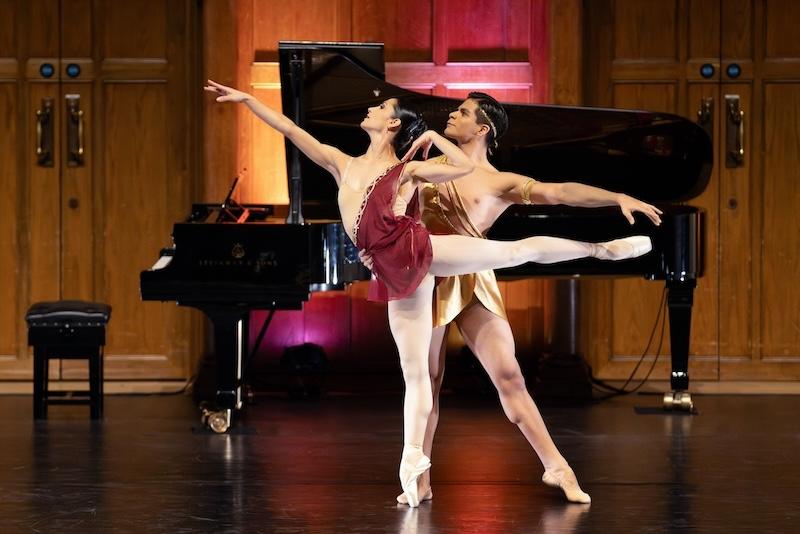
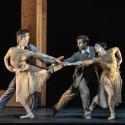
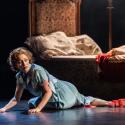
The gamut of dance styles was wide-ish too (though no hint of hip hop, and no tap on this occasion), from musical theatre through contemporary, neo-classical and classical. The latter was given a youthful spin by Harris Bell and Sae Maeda (main picture), both of the Royal Ballet, who delivered the Moszkowski Waltz, a bravura showpiece involving risky mid-air catches, with endearing freshness and poise. We were told that this work is “known for getting the party started”, and it did. Later a young pair from Mexico’s Ballet de Monterrey (pictured above) gave us the even more show-offy Diana and Actaeon pas de deux, Laura Rodriguez Quesada as the goddess-huntress working ballet’s archer pose, while her partner Gael Ventura, as the hapless mortal wearing nothing but a tiny gold chiton, delivered his spectacular stag leaps with airy precision.
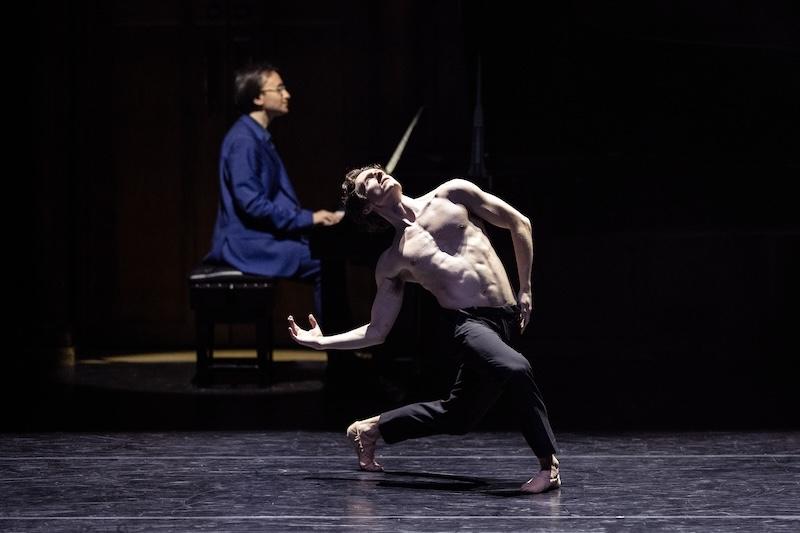
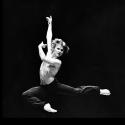
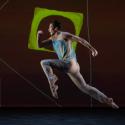
It has long been the case that some choreographers struggle with titles. After several minutes of extreme exertion and terrific synchronised leaps in a duet by George Liang called Out of Breath, Northern Ballet’s Alessandra Bramante and her partner Joseph Taylor seemed barely puffed at all. Proof if any were needed that in terms of aerobic fitness, ballet fitness is something else. Another rising star of the Royal Ballet, Joshua Junker (pictured above), mined a more contemplative seam in his self-choreographed solo 324a, so-called because this was the address where he was holed up during lockdown. With his gym-honed torso and expressively muscled back, he became a moving classical sculpture – like marble come to life in the Acropolis museum.
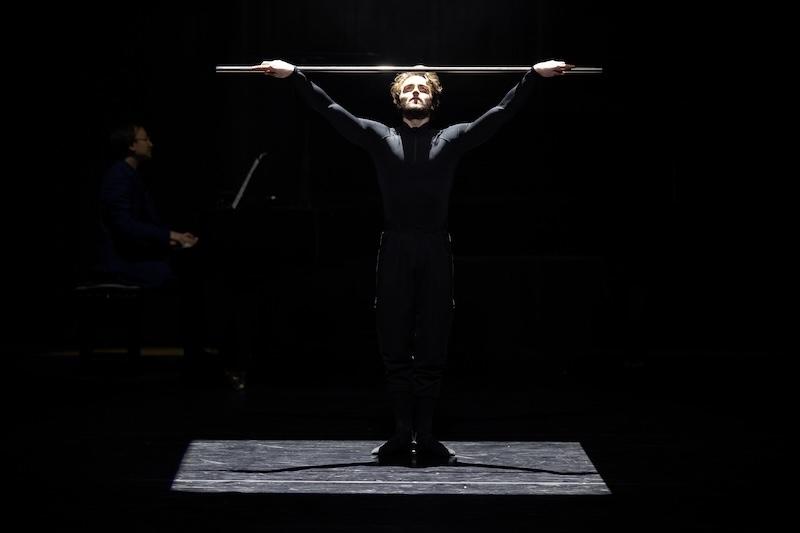
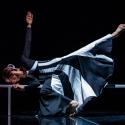
Faced with a dozen items packed into 90 minutes it’s impossible to mention them all, and not all, to be frank, were equally memorable. Impossible to exclude was the headliner – Royal Ballet principal Matthew Ball (pictured above) – in a solo he’d devised for himself called The Measure of Things (a decent title at last). With the aid of a two-metre length of chrome tubing – the sort you might install in a fitted wardrobe – he explored the variety of ways such an item makes a body move, or becomes an extension of it. In the course of an elegantly smooth and extensive sequence, we saw the pole’s use as a lance, as a barbell, a flute, a snooker cue, a fencepost and rail, a blowpipe and many more things besides. A lesser-known Beethoven piano sonata was an interesting choice alongside – the third outing of the night for house pianist Viktor Erik Emmanuel. Ballet Nights has been cultivating a connection with Ball for a while now, and it's already bearing fruit.


Add comment