Imagine you’ve inherited a castle in West Sussex plus five square miles of farmland. You continue the family tradition of mixed arable and dairy farming, but the soil is so depleted that yields decrease, year on year. Even with the help of government subsidies, after 17 years you are £1.5 million in debt. So what to do?
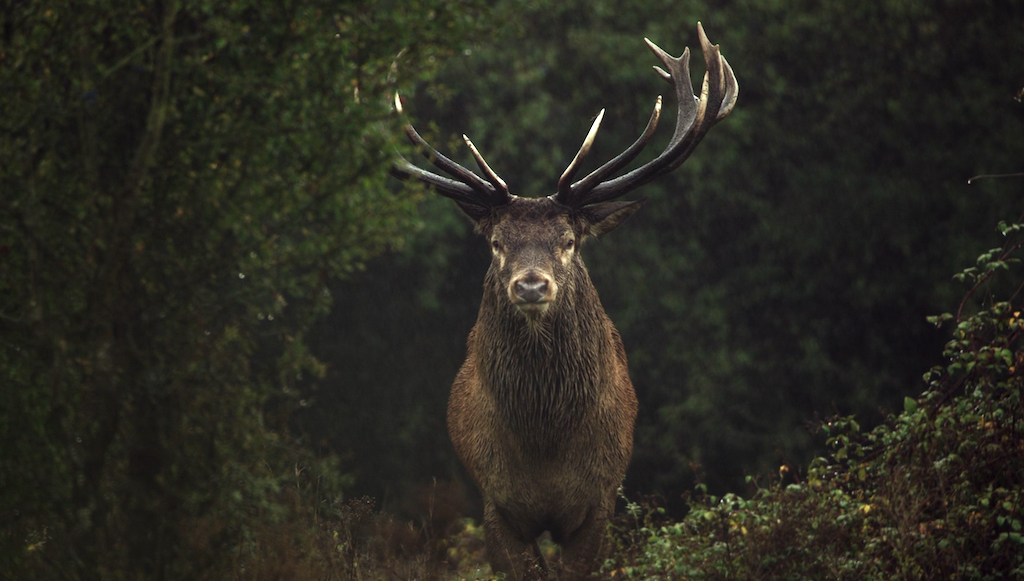
In 2000, faced with these dire circumstances, Isabella Tree and Charlie Burrell took a risky decision. Inspired by the nature reserve set up in Flevoland, Holland by Dutch ecologist Franz Vera, they abandoned farming, tore down the fences, introduced herds of Exmoor ponies, longhorn cattle and deer and some cute Tamworth pigs (pictured below) … and waited.
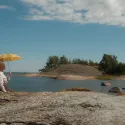
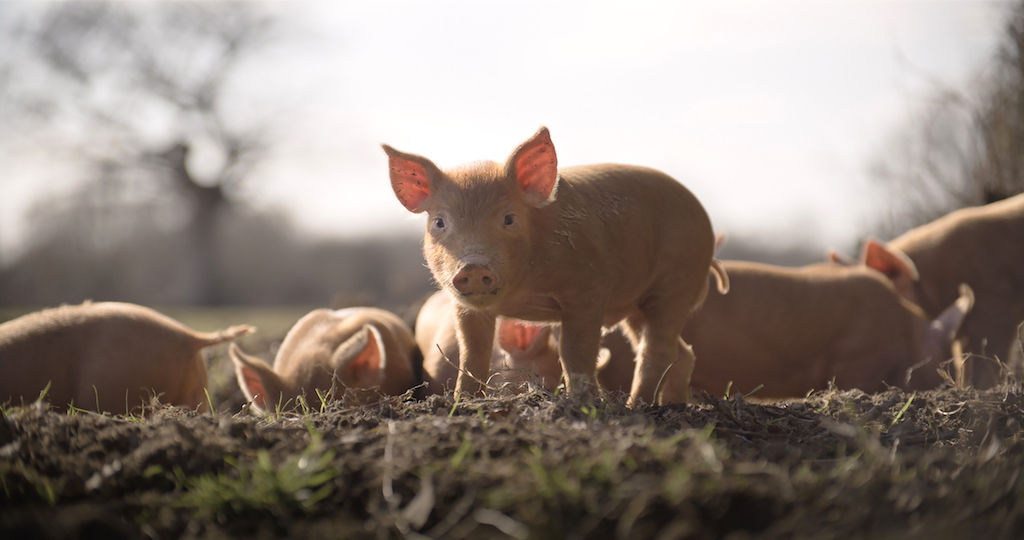 The rest is history. In just over 20 years, largely by helping nature restore itself, Knepp (main picture) has become a wild life haven – and a beacon of hope for nature lovers.
Directed by David Allen – winner of multiple awards for documentaries such as My Life as a Turkey – Wilding tells the remarkable story of Knepp’s transformation from a barren tract of marginal land to a fertile oasis. Not surprisingly, the film is visually stunning. A group of ponies wends its way across scrubby terrain in the late afternoon. Shot from above, their narrow backs are hardly visible among the bushes, but their long shadows waltz across the screen like a procession of paper cut outs.
We see a falcon snatch a dragonfly in midair, a sow tuck up her brood for the night with mouthfuls of dry leaves, a pair of storks build a nest on the chimney top then try to mate while balancing precariously on the unruly twigs.
An almost surreal animation portrays the strands of micorrhizal fungi that extend hundreds of miles underground, connecting trees and plants in what Isabella describes “as the fizzing chemical circuit board underneath our feet”. Ploughing severs this life support system and drenching the fields in chemicals finishes off the job. The result – soil bereft of life. Cue close-ups of blades slicing through the topsoil accompanied by the diabolic grinding and crunching of Jon Hopkins’ soundtrack.
Putting a stop to the ploughing has allowed 19 species of earthworms to return. Award winning cameramen Tim Cragg and Simon de Glanville record them after dark, busily tunnelling down to aerate and enrich the soil. Meanwhile Charlie creeps up on dung heaps to monitor the increasing numbers of insects which, in turn, attract a huge variety of birds such as endangered turtle doves.
 Then come moments of hilarity. To raise money, Isabella and Charlie hosted polo matches. But Exmoor pony, Duncan decided to see off the intruders by invading the pitch while hungry pigs broke into the catering tent and hoovered up canapés and boxes of Mr Whippy powdered ice cream. Incidents like these are funny in retrospect, but at the time, there were fears that complaints about unruly animals might jeopardise Knepp’s government funding, especially as they were already getting angry letters from ministers and being accused by neighbouring farmers of harbouring fields of ragwort, which can kill horses and cattle.
In terms of wild life, Britain is one of the most depleted countries in the world. A quarter of our mammals face extinction, but Wilding proves that it’s not too late; left to its own devices nature can recover. Missing from this gloriously uplifting film, though, is the broader picture. Isabella is an excellent narrator, but there’s no mention of the thriving business Knepp has become, as more and more people flock there to buy the meat produced from the herds and to experience this little piece of paradise. Nor is there any discussion of how this invaluable experiment might encourage farmers to employ less destructive practices. Without this wider perspective, Knepp could be viewed as a successful indulgence rather than a trail blazer for much needed change.
- Wilding is in cinemas from June 14th
- More film reviews on theartsdesk