Anyone who learned to love Bob Odenkirk from Breaking Bad and Better Call Saul (let alone his stints with Ben Stiller and Larry Sanders) was surely wrong-footed (but in a good way) when he appeared as a reclusive but lethal all-action dynamo in Nobody and Nobody 2. It was as if somebody had cast Harry Enfield as Ethan Hunt.
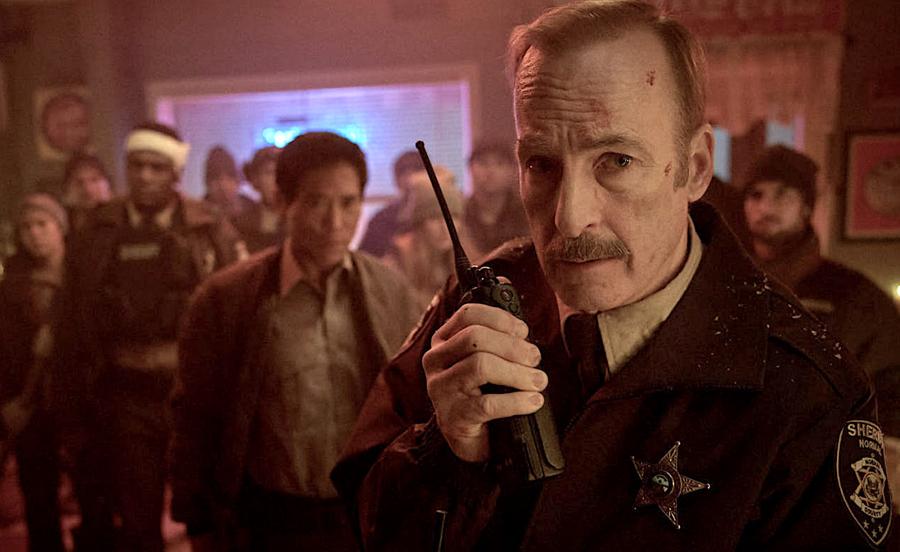
In Normal, under the firm directorial hand of Billericay’s own Ben Wheatley, Odenkirk deftly extends his range a little further as Sheriff Ulysses Richardson. In a story Odenkirk penned with co-writer Derek Kolstad (who created the John Wick franchise and wrote both Nobody flicks), he plays a veteran law enforcement officer who has been temporarily drafted into the eminently forgettable Midwestern town of Normal, Minnesota after the untimely death of the previous incumbent, Sheriff Gunderson, who somehow managed to freeze to death.
Ulysses, who has a melancholy seen-it-all-before air about him, wears his responsibilities lightly, sorting out minor infractions between squabbling senior citizens by the application of a little robust common sense. “Life’s a lot easier when you care a little less,” he remarks to his deputy. He likens his role to being “like a midwife with a gun.”
When he catches the dead sheriff’s daughter Alex (Jess McLeod) swigging a bottle of booze at the wheel of her truck, he doesn’t arrest her, but joins her in a tipple or two, before extending her the offer of a prison cell in which to sleep it off. Ulysses, we gradually learn, can empathise with people because he’s haunted by painful traumas of his own.
Normal seems to have nothing going for it whatsoever – you might call it a cow-town, except any available cows have given its sub-arctic barrenness a wide berth – but the film’s introductory sequence has tipped us off to the fact that there’s some weird sh*t lurking beneath the surface. This was a scene set in Tokyo, where Yakuza bosses meted out merciless punishment to their hapless underlings. The latter were obliged to pay for their misdemeanours by chopping off one of their own fingers.
So the revelation that the Japanese Mob have made improbably substantial investments in li’l ole Normal isn’t quite as astounding as it might otherwise have been. The plot thickens (and widens and deepens) when a couple of bungling local misfits attempt to rob the town bank. You might think that was a rather pointless ambition, until it’s revealed that the vault contains a vast stash of bullion, firearms and cash, enough to test the mettle of any honest man. Or woman.
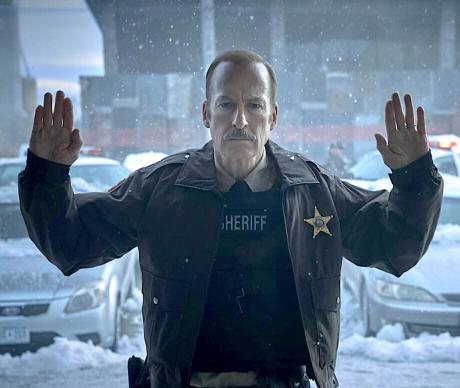
The fact that Ulysses’ deputies surround the bank and start blazing away at anybody inside, including the bank tellers, confirms that something here ain’t exactly right, and the town’s bizarre connection with the Japanese underworld starts to loom large (how else would Sheriff Gunderson have been able to afford a home Ulysses dubs “the Big Mac of McMansions”?).
The stage is set for a denouement of outrageous proportions, after Ulysses manages to stage a ceasefire in the midst of a snowstorm which cuts off Normal from the rest of civilisation. However, the Yakuza bigwigs were always going to have their say, and the resulting clash of civilisations ascends to ludicrous and lurid heights of mayhem. Damned entertaining, frankly.