In Mark Jenkin’s Cornish cinema, lost boats, drowned men and ways of life wash back in with the tide, nothing truly gone. Where his feature debut Bait (2019) tackled the violence stirred by second-home gentrification in a humiliated fisherman and Enys Men (2022) found elliptical folk-horror in tin mine echoes, Rose of Nevada falls through time in a fishing village which is barely hanging on.
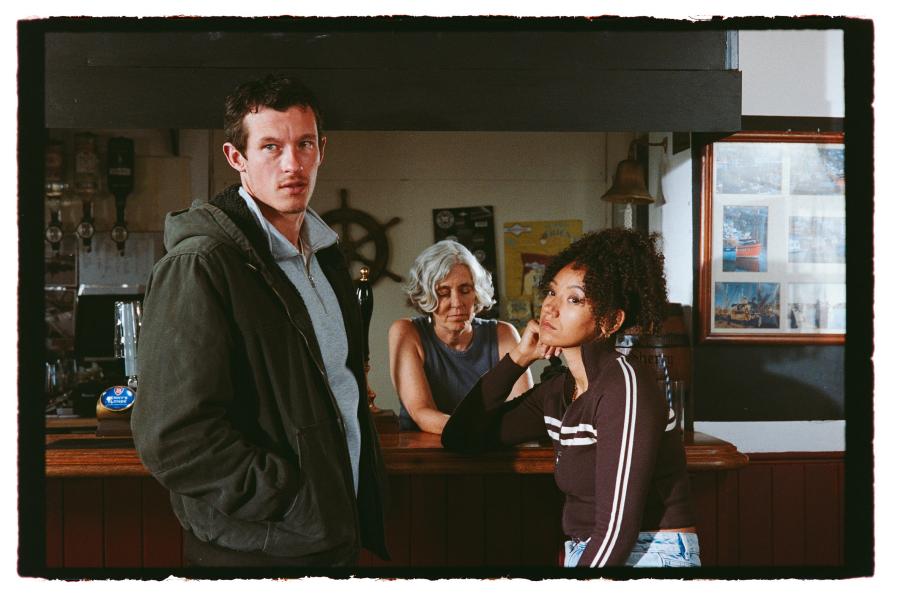
The new work is Jenkin’s biggest production by far, but still homemade in mainstream terms. Two name actors, George MacKay and Callum Turner, lead his cast for the first time, fitting happily into his eerie, soulful world. Nick (MacKay) depends on a food bank as he struggles to support his wife and young child; Liam (Turner, pictured below left) is first glimpsed on the run, a stranger tumbling into town with a roguish eye for female company. The local pub is near empty, and the place is haunted by the Rose of Nevada’s sinking three decades before. The drowned crew’s mourners include Mary Woodvine’s witchy, white-haired mother and Tina (Rosalind Eleazar), who keeps her late husband’s faded red hat, which her daughter hands to Liam, attracted by this new sign of life.
The Rose of Nevada has meanwhile returned to harbour like the Marie Celeste, its provenance kept hidden as it’s scrubbed up for the first fishing in years. Nick and Liam sign on with Murgey (Francis Magee), a weathered seadog whose past is as murky as the boat’s. Passing through fog, they land their bumper catch on the bustling harbour in 1993, where they are greeted as the original, youthful crew. Jenkin’s pleasure in jumping, Flowered Up-scored Cornwall back when he was 16, his Cornish hireth for such gone times and places, is clear.
Temporally unmoored messages flicker psychedelically on the TV and soundtrack, but Rose of Nevada retains its mystery. The village has been stuck in purgatory since the boat and fishing went. Here in the past, Nick may help avert the disaster, and their catches float the whole fleet’s health. Their presence is perhaps sacrificial, ensuring, like The Wicker Man, that the harvest returns.
Jenkin’s analogue technique is fundamental to his film’s power, winding clockwork cameras to silently shoot in 16mm, then post-syncing dialogue and experimental sound design. Solarised frames rhyme with oxidised hulls, film scratches match the worn chronology and the pounding sound holds you inside the storm-lashed boat. Jenkin’s seemingly archaic methods here meet the contemporary need for Imax immersion, as he brings fishing’s clanking, soaking reality roaring back to life. Like Mary Woodvine’s scientist’s survey routines in Enys Men and the tricks Murgey teaches his young charges, process defines the director’s idiosyncratic cinema.
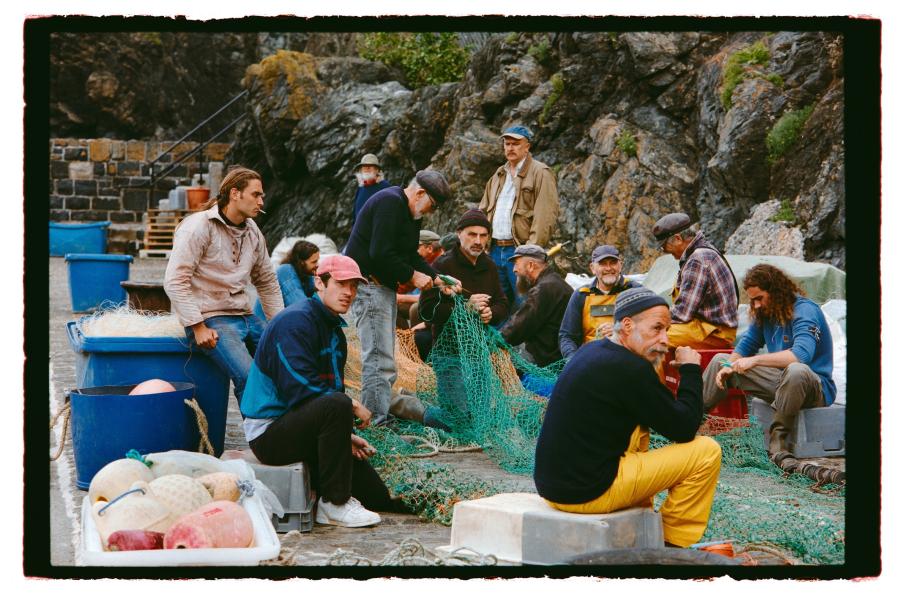
Jenkin was born and lives in Newlyn, where fishing survives, and community endures in Rose of Nevada, from shared net-mending in the past to undimmed kindness in the threadbare present, with its devoted families and the tenner Tina hands skint Liam for a drink. Jenkin’s technique embodies a living culture taken by outsiders to be dying, with his films as nutrients in its soil and sea.