François Ozon’s film of Albert Camus's The Stranger, one of the most iconic works of French existential literature, is as well-paced and restrained as the minimalistic novella from which the director faithfully adapted it.
Set in bustling 1940s Algiers, where escaping the fierce sunlight and oppressive heat is impossible, the movie was photographed by regular Ozon collaborator Manu Dacosse in gleaming black and white with dabs of chiaroscuro, but not to the extent that the atmospherics are fetishised.
It becomes clear almost instantly how the story is going to end. It will be in the darker world of the prison where Meursault (Benjamin Voisin), a settler in French Algeria, will await trial for having killed a man on a beach.
Ozon establishes early on the unwavering, studied moodiness and ennui of his protagonist, the outsider of the title. Dacosse's camera lingers on the astonishingly good-looking Meursault, who is intent on hiding behind his veneer of indifference, most apparent whenever anything resembling commitment or enthusiasm is required.
When Meursault's boss offers him a promotion and the chance to work in France, his response is so unambitious – so unhungry – that the offer is immediately withdrawn. When Meursault’s girlfriend Marie (sensitively played by Rebecca Marder) gently floats the idea that they might want to get married, making it plain that she definitely does, what she receives is nothing more definitive than a Gallic shrug. Meursault’s levels of apathy and passivity are truly Olympian.
At a key moment, Ozon changes tack, halting the film's objective narration. He has Meursault speak to us directly, as the novella's Meursault (speaking in Camus's impeccable prose) does from the start. He describes in voiceover what happens when he draws his gun and delivers the five fatal shots at an Arab that bring him a trial and a death sentence. Those words feel like sprinklings of deadly magic dust. Ozon makes this turning point unforgettable,.
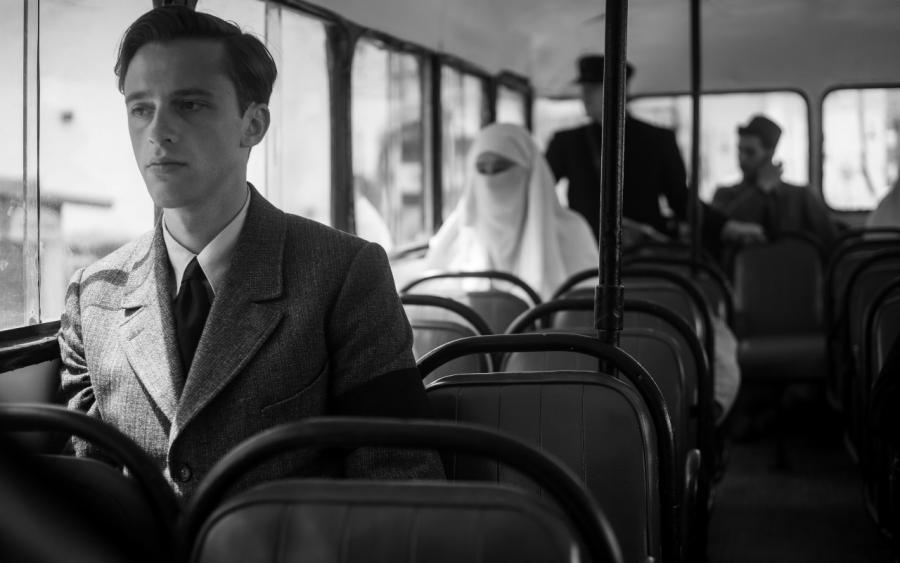
Voisin (pictured above) leaves a memorable impression in The Stranger (more so than did Marcello Mastroianni in Luchino Visconti's wan 1967 version). Cameras have lingered lovingly on him before, most notably when he played the bad-boy celeb pastrycook role in the first season of Apple TV's Carême.
But Voison's pertormance as Meursault is more defining, not least in the way he transforms the character in the final scene. With a burst of energy that comes out of the blue, Meursault breaks through his torpor – which has determined the film's languour – when faced with a priest's platitudes. He rejects all societal and religious norms of behaviour with fervour and aggression, revealing the turmoil that must have lurked beneath his impassive demeanour.
This gear shift in Meursault might be considered too extreme, but it throws into relief the numbing irrationality of European social conventions and the bland but coercive language of the Church in the context of French colonial rule in Algeria.
After Mersault's trial, Marie has a conversation with Djemila (the excellent Hajar Bouzaouit), the sister of the man Meursault killed. Djemila talks about the expendability of Arab lives. In questioning whether racism is systemic, the scene goes straight to the heart of the debate in contemporary France.
Nothing remotely like this occurs in the novella, nor did Camus use the loaded word “indigènes" that appears on a sign forbidding Arabs from entering the cinema where Meursault and Marie go on a date. The questioning is reinforced when The Cure's controversial 1978 single "Killing an Arab", itself inspired by the novella, is played over the final credits
Ozon has made much more than a very beautiful film about one man's detached response to the absurdity of existence. The Stranger quietly but unabashedly confronts the horror that the West visits on what is now known as the Majority World – "horror," as meant by Conrad in Heart of Darkness, being the operative word here.