

Even in a performance as well-organised as this one, masterminded by Gianandrea Noseda, there is still something of the codebook about the Missa solemnis. Its length and scale simultaneously attract devotion and repel the kind of affection drawn by earlier, spaciously conceived and more abstractly “spiritual” works such as the “Pastoral” Symphony and Violin Concerto.
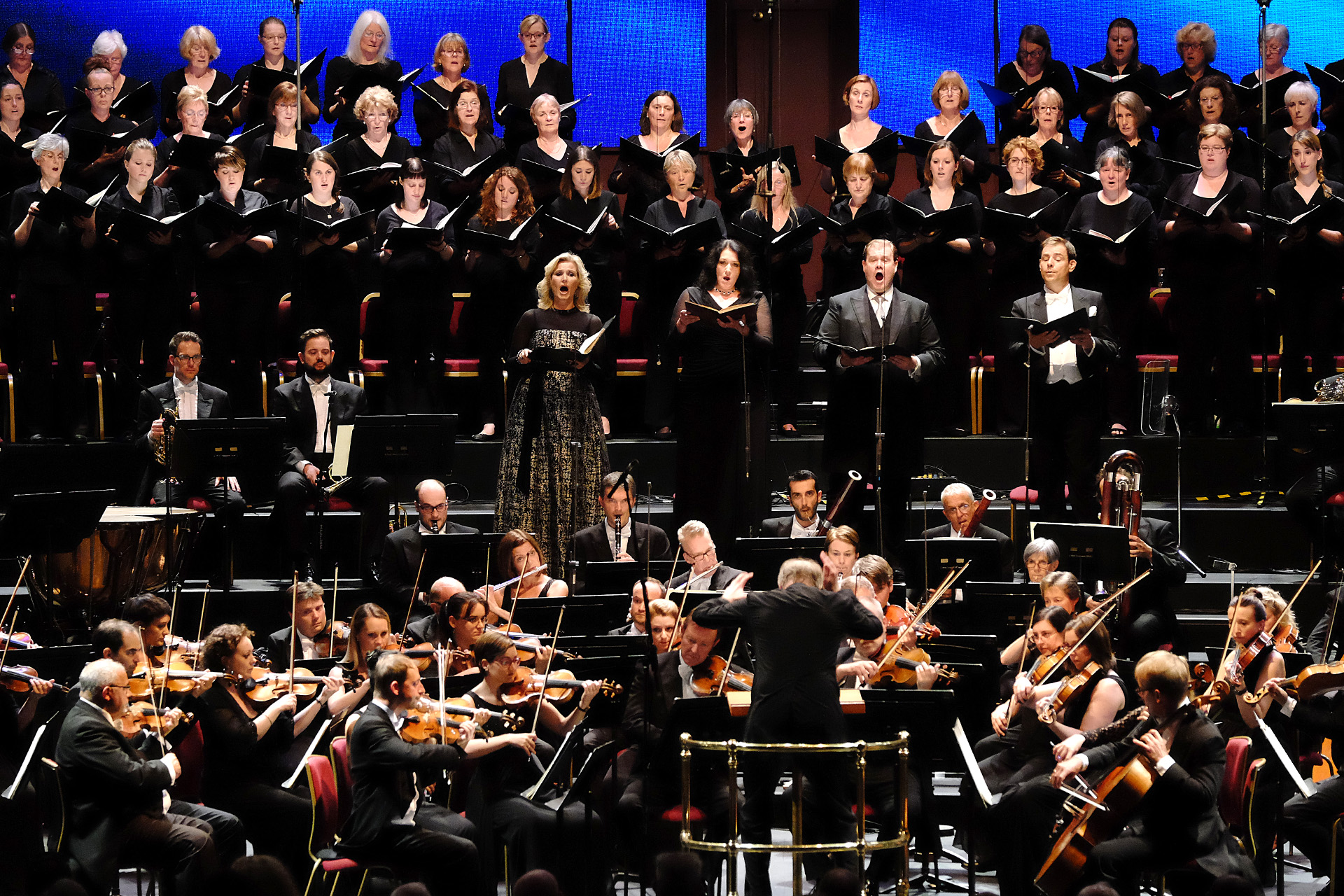
On a practical level, Noseda staged the work to best advantage across the resounding space of the Royal Albert Hall. The 200-strong combined forces of the Hallé Choir and Manchester Chamber Choir made no concession to the kind of period-style miniaturisation which disappointed some listeners at the King’s College Prom of Haydn and Fauré. Underpinned by the hall’s Willis organ, the BBC Philharmonic played as a beefed-up Classical orchestra with the glaring tone and primary colours remembered from Noseda’s Beethoven cycle with the orchestra during his tenure as principal conductor, which concluded in 2008 with a raw and rabble-rousing Ninth Symphony. Placed between chorus and orchestra, the vocal soloists (pictured below, centre) carried to the back of the stalls without dominating the stage: elevated communicants in an all-too-human rite.
Memories of that Ninth were immediately stirred by the Kyrie, which snapped into action with business-like pleas for mercy, unrelieved by any lyrical broadening for the Christe. Solemn this mass may be, in language and intent, straining towards the harmony of the spheres with scant consideration for humble musicians and listeners on earth. But Noseda follows Sir John Eliot Gardiner’s insistence that the execution not be laboured by trappings of religiosity, the siren-call of plastic profundity in the shape of slow tempi and massive volume. In force and spirit if not refinement, this Missa was near to Gardiner’s late-night Prom of two years ago; and galaxies distant from Nikolaus Harnoncourt’s final return to the work in concert and on record, which realized “late style” in sound much as Edward Said defined it on paper.
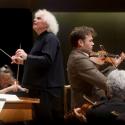
At points Noseda even outstripped Gardiner. The fugue to wind up the Gloria is not a race but so it seemed at this challenging speed, which required the insertion of some fussy articulation marks and still defeated the choir’s best efforts. However, such expulsion of energy effectively cast the Mass in two unequal parts. The turning point of reflection and consolation came with the sublime interlude between Sanctus and Benedictus. This featured superbly poised work from the BBCPO’s principal flute, Richard Davis, who in turn ceded the limelight to the leader, Gordan Trajkovic. He rightly stood (more evidence of Noseda’s nous as a man of the theatre) for his extended solo, chaste and pliant, in the Benedictus.
The orchestral soloists contributed many such highlights. Less so their vocal counterparts. Mostly effective on their own terms, apart from the gruff and straining bass of Hanno Müller-Brachmann, they struggled to find a harmonious blend in company. When not fighting to be heard against each other, in the Berliozian prayers of “Et incarnatus” and Benedictus, alto Birgit Remmert and tenor Stuart Skelton fined down their projection with a focused mezza voce. Camilla Nylund raised the temperature on a sweltering day with blazing warmth of soprano tone, and real tenderness when required. A word of praise for the choral sopranos, too, for heroically sustained high singing whatever the volume. Do you have to be deaf, or a sadist, or a visionary, to write a top B flat as a quiet offbeat? Only Beethoven.



Add comment