

“And suddenly there came from heaven a sound as of the rushing of a mighty wind, and it filled all the house where they were sitting.” To fill the Albert Hall – where a sizeable number of participants are standing, of course, in the best place – as handsomely as this, and as clearly, takes some work. Sir Andrew Davis and the BBC Symphony Orchestra know how to manipulate the space to best effect, and Elgar’s oratorios, of which The Kingdom is the third and last, are among the few works which mostly benefit from the warm halo it places around the sound.
I only wish this one had been The Kingdom’s great predecessor, The Apostles, which the same team performed earlier this year in their Barbican season. The Kingdom boasts similarly diaphanous orchestration at the right moments, introspection and a multitude of themes of great individual beauty. But what’s the plot? Christ’s right-hand men hold a meeting, the “mighty wind” kicks off babbling in tongues, they do a half-hearted miracle, they get arrested and released, say some prayers. There’s no place here for the big action nor for the fine-drawn psychological studies which fire up The Apostles (the characters of Mary Magdalene and Judas provide the pillars to the Passion there).
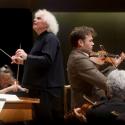
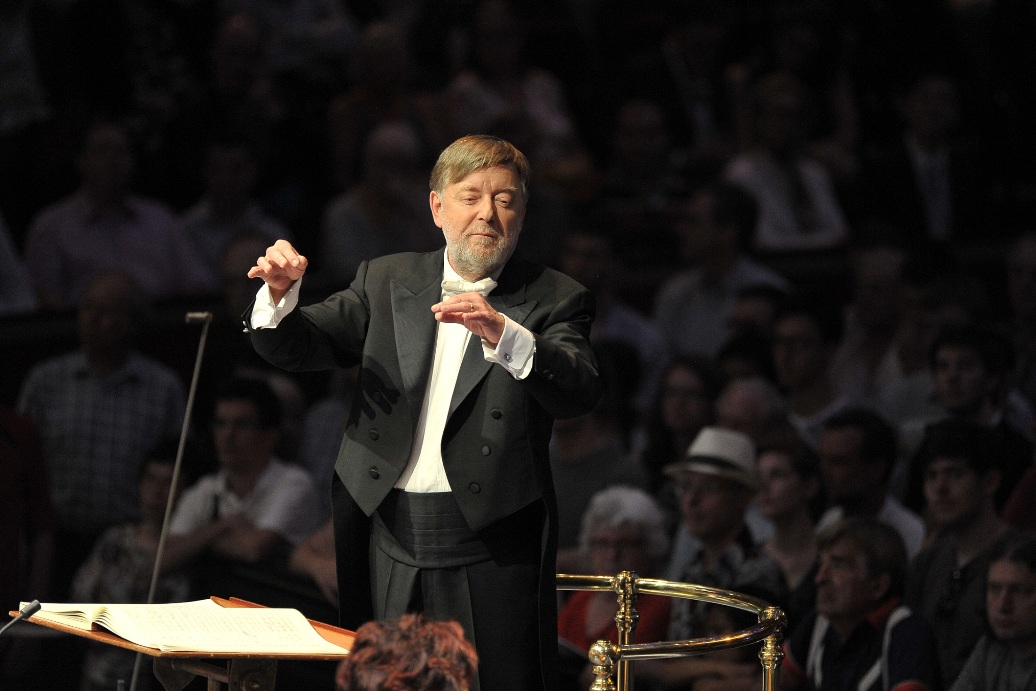 Nor is there the great arch structure of The Dream of Gerontius, though no-one could have stitched in and phrased the episodic detail better than Davis (pictured right last night), starting with a Prelude that felt almost as impulsive and fluid as the opening of the Second Symphony. Wistful details like the bittersweet clarinet and the violin solo (welcome back, Stephen Bryant) floated into the big space effortlessly, while the sound had height and depth from seraphic strings down to baleful tuba. Remarkable, too, the buzzsaw effect of muted horns which accompanies a mystic chorus.
Choirs? Remarkable. We already know that the BBC Symphony Chorus is the best in London – which isn’t to say that their counterparts aren’t very fine – and the BBC National Chorus of Wales simply amplified their togetherness, the blazing climaxes and the soft, paler casts of thought.
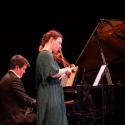
 How you hear the solo voices in the Albert Hall is a lottery: from my perspective they all swam in and out of focus, so it’s probably not fair to judge the actual quality. But it did seem to me that of the two veterans Christopher Purves, one of our finest singer-actors, lost force at the top of the voice and Catherine Wyn-Rogers sometimes needs to steady her rich distinctive tone. Tenor Andrew Staples rang out with conviction as chief disciple's sidekick, and Erin Wall (pictured left in Marian blue) brought Straussian-soprano radiance to the great solo for The Blessed Virgin, where Elgar is careful not to let the full orchestral swell impede her more gently-scored lines.
That, inevitably, was a pensive highlight, bringing cool thoughts of night to the end of a sweltering day. The other was the slow final epilogue to the Lord’s Prayer. How extraordinary that Elgar introduces yet another theme of disconsolate sadness at the last minute. What is he trying to say: faith is dying out, no longer exists, dark times lie ahead? Remember that The Kingdom was premiered only eight years before the outbreak of the First World War (and how could I forget that, having stumbled out in tears earlier from the Imperial War Museum's extraordinary new galleries devoted to that?) So this quiet and troubling curtain may well have served as the first of the Proms’ many tributes to the centenary of a terrible event.




Add comment