

Carl Nielsen: The Ultimate Solo Piano Collection Rikke Sandberg (OUR Recordings)
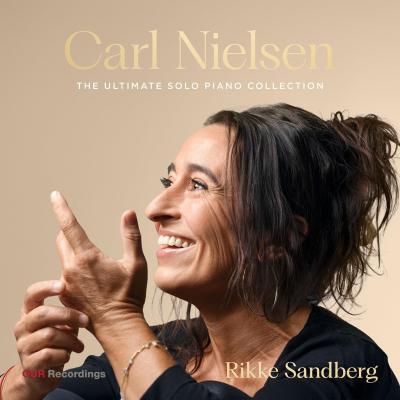
Good compilations of Nielsen’s piano music are available: I like Leif Ove Andsnes’ single disc collection, and Martin Roscoe’s excellent Hyperion double album presents what was previously thought to be the composer’s complete keyboard output. But Danish pianist Rikke Sandberg’s new box has three well-filled discs and really does contain everything, some of the new material made up of recently discovered piano transcriptions of orchestral pieces. If you’re a Nielsen newbie, start with CD3. Piano excerpts from Nielsen’s 1920 incidental music to the play The Mother were published shortly after the stage premiere, and they’re delightful. “The mist is lifting” has carved out an existence as a lilting duet for flute and harp but sounds equally delectable in piano form. Other movements include a catchy “Gramophone-Waltz” and a typically Nielsenian march. The gorgeous little “Elves Dance”, taken from the score to Sir Oluf he rides, is an expanded version of one of Nielsen’s early Five Piano Pieces (included on the first disc), and we get snippets from rarities like Hagbarth and Signe and Snefrid. Plus six dances from Aladdin, Sandberg just heavy-footed enough in the “Oriental Festival March” and suitably enigmatic in the “Hindu Dance”. If you know and love the familiar orchestral suite, you’ll need to hear this, Sandberg’s playing full of wit and colour. Like Sibelius, Nielsen was a brilliant miniaturist, and even the shortest works here sound utterly characteristic.
Disc 1 opens with a blink-and-you’ll-miss-it gem, the 22-second “Welcome to 20 Della Grazia, Little Marie!”, a musical greeting to Nielsen’s wife Anne-Marie after the couple had visited Naples in 2020. The Op. 8 Symphonic Suite has an impact that belies its modest size; the first movement’s “Intonation”, inspired by a favourite oak tree, lasts less than three minutes but feels epic in scope. Sandberg handles the big works very well: the mighty Op.32 Chaconne’s sequence of variations is mesmerising here, the music evaporating after 11 minutes until all that’s left is a pianissimo high D. It’s interesting to compare it with the Op. 40 Theme and Variations written shortly afterwards. Nielsen’s theme reflects his admiration for Brahms though the subsequent variations become increasingly outlandish (the work was composed in 1917). The last variation is terrifying, described by the composer as being like “the wild response of a man who fights with his back to an iceberg”, its final seconds offering some consolation. The Op. 45 Suite is a masterpiece, its six movements showing Nielsen’s harmonic language at its most adventurous. Try Sandberg in the remarkable third movement, directed to be played “with supreme calm and strength”, the thunderous neo-baroque opening thrilling.
Works like the Humoreske-Bagatelles offer light relief, six miniatures believed to have been written for Nielsen’s own children. And there’s his final published piano work, the Piano Music for Young and Old (1930), 25 “short and easy” pieces in every key intended “to expand the concept of five-finger piano pieces”. They’re like a Danish Mikrokosmos, Sandberg dispatching them with affection and incredible precision. Highlights include a delightful “Allegretto civettuolo” and a catchy, lopsided “Marcia di goffo.” There's loads more to explore. This is a life-enhancing box set, then, brilliantly engineered and superbly annotated. I’d come across Sandberg through OUR’s release of a two-piano version of Nielsen’s Sinfonia Espansiva (my favourite album of 2024), and this new release exceeded my expectations. Do read Sandberg's own essay in the booklet, her affection for this most likeable and humane of composers shining through.
Mike Batt: Symphony No. 1 “Ukraine” London Symphony Orchestra/Mike Batt (Dramatico)
You’ve got to admire someone with the energy and chutzpah to compose a first symphony in their late 70s. Not that Mike Batt is a novice, having started his prolific musical career in the late 1960s, initially as a session player and record producer. Batt’s own notes outline how the symphony came to be, this four-movement musical response to Russia’s invasion of Ukraine based on a quickly sketched out plan. He admits to being “blissfully unaware of much of the repertoire and many of the rules… I just wrote what I felt”.
The resulting symphony reflects Batt’s comments; this is more stream of consciousness than conventional symphony, though it’s very well-orchestrated and does contain some startling moments. Try the eerie string writing at the close of the first movement, or trombones imitating air raid sirens in the ensuing “Blitzdream”. The third movement, “Loss and Love”, features a tender string hymn accompanied by tolling bells. What’s missing is structural clarity; while this is an emotionally charged, exciting piece of orchestral music that would work brilliantly as a film score, it fails to hang together as a symphony. Arresting ideas flare up then abruptly disappear, never to return. The symphony’s ending feels much too abrupt. Batt draws punchy playing from the London Symphony Orchestra, the brass especially impressive. But do sample Prokofiev’s 6th Symphony (reviewed below) for a tauter and more cogent response to geopolitical events.
Copland and Walker: Symphony no.3, Sinfonia no.5 London Symphony Orchestra/Sir Antonio Pappano (LSO Live)
Copland’s Third Symphony was completed in 1946, and intended as a celebration of the end of war and the triumph of the American spirit of liberty and democracy. (A pertinent message for today, for sure.) It incorporates his Fanfare for the Common Man (1942) into its large-scale design (at over 40 minutes it is one of Copland’s largest abstract statements) and there is a self-conscious attempt to write The Great American Symphony which largely succeeds.
It is performed here by the London Symphony Orchestra and their still new-ish Chief Conductor Sir Antonio Pappano. They have recently been tackling British repertoire on their LSO Live label – Vaughan Williams symphonies, Holst’s Planets etc – but they are great in this American repertoire too. Recorded live in the Barbican in autumn 2025 it sounds pretty good considering the acoustical challenges of that hall, and – as is so often the virtue of this label – recreates the concert experience in preference to an endlessly polished studio version.
Pappano gives the work its necessary space but also has an edginess that avoids complacency. There is fine trumpet playing throughout, not just in the Fanfare: the end of the second movement is spectacular. The third movement has a marvellous strangeness – the Copland hallmarks of the scoring but with a harmonic vocabulary more astringent than the popular ballets of the 40s. But the heart of the piece is the 14-minute finale, which starts with the Fanfare, but hushed in the woodwinds, before emerging in familiar terms in the brass and timpani. There follows a long expansion of its ideas which the LSO navigate with the seriousness the music demands but with less bombast than other interpretations.
George Walker (1922-2018) wrote his Sinfonia no.5 at the age of 94, at the end of a long and productive career that was finally getting international recognition in his final years. It is a pained response to the racist killings in a South Carolina church in 2015, in a musical language that has quite a lot in common with Copland’s, spare and cleanly textured, even if there is obviously no trace of Copland’s triumphalism. It’s a piece I’m pleased to know, and the LSO play it with commitment and sincerity. It’s also fitting that a composer like Walker is now represented in the LSO’s discography.
There are plenty of other recordings of the Copland in the catalogue. I am always a sucker for the 1986 Leonard Bernstein – a close friend of the composer – with the New York Phil, which has all the virtues and some of the downfalls associated with Bernstein. Michael Tilson Thomas is also good with San Francisco, and John Wilson’s lean and no-nonsense 2018 recording on Chandos is one of a flurry in recent years restoring the bars to the finale that Bernstein peremptorily cut in 1947, and which remained cut till a new edition of the score in 2015. But this is a strong performance and fascinatingly paired with the Walker. Bernard Hughes
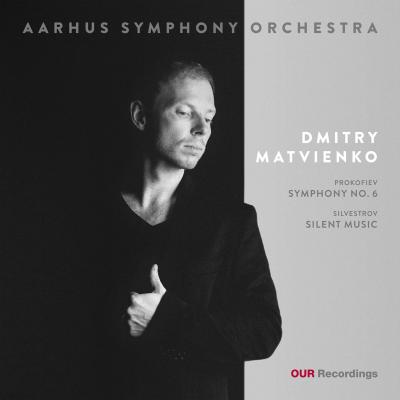
Prokofiev: Symphony No. 6, Silvestrov: Quiet Music Aarhus Symphony Orchestra/Dmitry Matvienko (OUR Recordings)
Neeme Järvi’s spectacular 1985 performance with the Scottish National Orchestra put Prokofiev’s 6th Symphony on the map, this dark, brooding work formerly a real rarity. That Chandos disc still sounds impressive, easily outshining later recordings from the likes of Ashkenazy and Litton. This new account is the first I’ve heard with a bite and punch to match Järvi’s, Dmitry Matvienko getting his Aarhus Symphony Orchestra to play out of their skins. Sample the symphony’s stark opening, the brass notes stinging, the strings delivering a lacerating response 45 seconds in. Matvienko sensibly keeps things moving, the transitions between the three thematic groups deftly managed, as with the mechanistic third theme’s sudden shift into the 6/8 development section. It’s both exciting and terrifying, the music’s tragic collapse devastating. Few passages in the orchestral repertoire are quite so bleak, the horns seemingly gasping for breath before the second subject returns. And fascinating to compare the movement’s soft E flat major resolution with the very end of the finale, the same chord revisited as a brutal kick in the teeth. The opening of the “Largo” is hair-raising (is this the loudest opening to a symphonic slow movement?), principal trumpet Jeppe Lindberg nailing the twisty main theme. Prokofiev wrongfoots us with a jaunty start to his finale, though the jollity soon dissipates. Matvienko compares the two “catastrophic explosions” in the symphony’s coda to the dropping of nuclear bombs on Hiroshima and Nagasaki, the orchestral response a huge scream of protest. This is one of the great 20th century symphonies, and this performance left me reeling. It’s that good, and stunningly engineered to boot.
Veteran Ukrainian composer Valentin Silvestrov’s 2002 triptych Quiet Music makes for an intriguing coupling. Listening to these three short pieces is akin to gazing through a misted-up window, Silvestrov’s nostalgic late style as disconcerting as it is beautiful. Matvienko draws some exquisite, muted colours from his players. This is the most exciting, emotionally charged disc of orchestral music I’ve heard so far this year: investigate forthwith.




Add comment