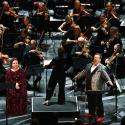
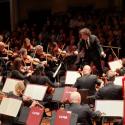
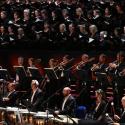
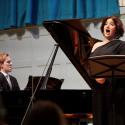
In a moving short programme interview, the BBC Philharmonic Orchestra's Principal Guest Conductor Anja Bihlmaier sums up the essence of her miraculous way with Mahler's Das Lied von der Erde (The Song of the Earth): "I find it is both a work about saying farewell and a celebration of being fully present in the moment." The orchestral musicians were unforgettably present in the rainbow of moods and moments, as was tenor Clay Hilley. Mezzo Jamie Barton, the promised star of the evening, was harder to catch, though that may have been something to do with hearing her from the side.
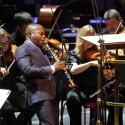
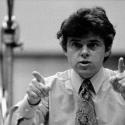
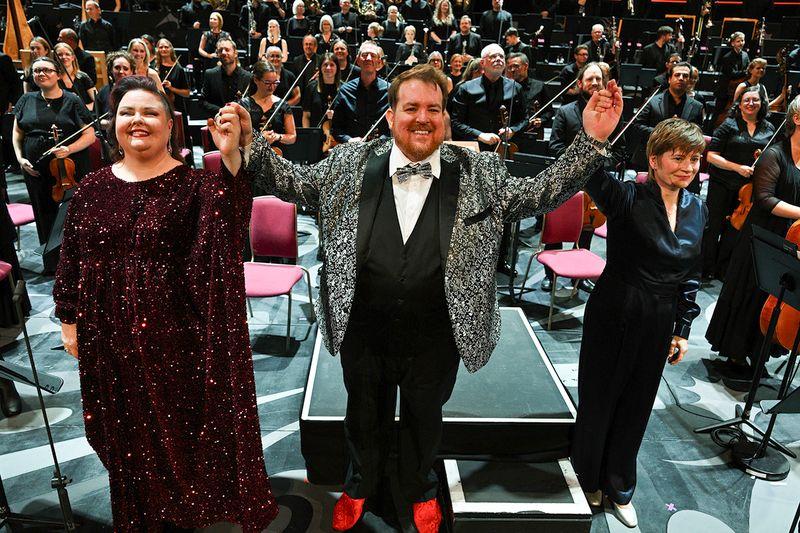
The sequence was totally satisfying, even if I'm not quite sure I grasp Lebanese-British composer Bushra El-Turk's declaration of Mosaic's kinship with the Mahler song-symphony (the composer pictured below after the performance). Her short work did what very few contemporary pieces manage, matching familiar process with "hooks", so often absent: its "quasi-Byzantine chant" works its way through the thicket to clear the air and sing quietly, and movingly, on middle strings. What a blessing, for once, to be liberated from the usual battery of percussion.
The connection of Haydn's Symphony No. 45 in the extraordinary key of F sharp minor with the Mahler is given in the nickname, "Farewell". When I last heard it, beautifully marshalled by Carolin Widmann in a superb Brothers Haydn programme with the Irish Chamber Orchestra, what must originally have been a surprise concluding Adagio, with the players leaving the stage as their parts end, was played entirely for comedy - puzzling in the light of the rage and melancholy beauty which came before.
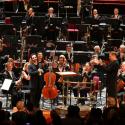
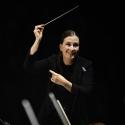
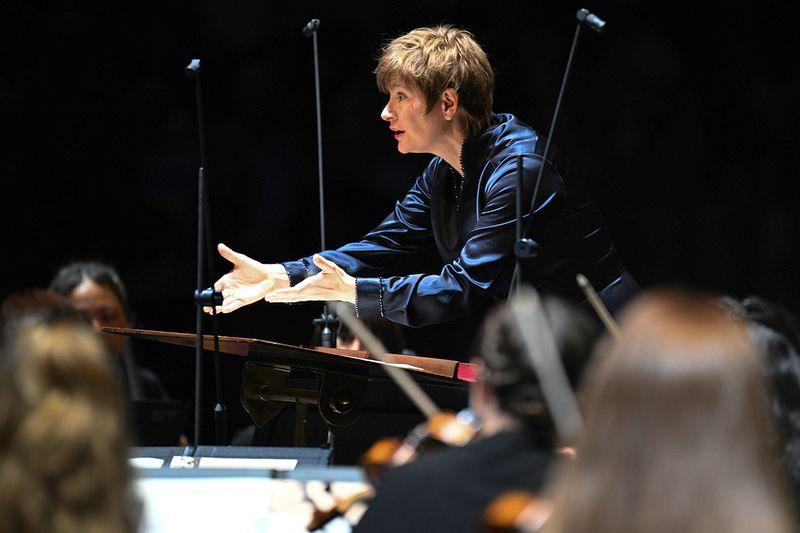
Here, simply by leaving before the final trio and duo, Bihlmaier broke the strangeness by getting a big laugh. Again, what we'd had in the other movements was deeply serious, soft phrasing drawing the Albert Hall listeners in, Bihlmaier using hands sans baton to shape the muted-string first Adagio as if the music was coming from her. Haydn's unconventional genius always came first.
There was more theatricality, unexpected but effective, from heldentenor Clay Hilley, showing the same dramatic instincts he had given us as Tristan with Pappano and the LSO earlier in the summer. In Mahler's opening "Drinking Song of Earth's Sorrow", he conjured up lute, earth and the ape howling in the moonlight with bold gestures. The little miracle of the evening was how light and fleet he was able to be in the mostly-Chinoiserie porcelain delicacy of "Youth", Bihlmaier setting a tempo to which the wonderful BBC Philharmonic woodwind were able to respond with supreme character. More detail than I've ever heard before also came through in Hilley's last song, "The Drunkard in Spring", and in Mahler's one song of joy for the mezzo, "Beauty".
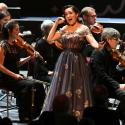
Matching poetic, haunting contributions from flautist Alex Jakeman and first horn David Pyatt, there was something very special, too, about oboist Jennifer Galloway's aching vocalisations, starting with "Der Einsame in Herbst" ("The Lonely One in Autumn"). Barton's task here was to be very much part of the orchestral textures, surging sumptuously at the great yearning for "sun of love", and her paean to beauty was in tune with sweetest strings; the galloping steeds of young bucks is always a difficult passage to keep together, but Barton and Bihlmaier were very much as one.
If I missed anything - and again, this must be qualified by where I was in the hall - it was the mezzo's total, aching identification with the two Chinese farewell poems in what is arguably music's deepest utterance, "Der Abschied": the consolations of sadness here didn't bring quite the expected sense of release. But as Barton faded back into orchestral textures in the last "Ewigs" ("eternallys"), transcendental meditation took over. The "enormous inner calm and patience" Bihlmaier declared in that interview as necessary for this supreme challenge paid off. The long silence afterwards was tribute to the impact.