In his mesmerising 2023 novel Brian, Jeremy Cooper told the story of a reclusive middle-aged council worker who is rescued from loneliness by watching nightly screenings at the National Film Theatre (before it was renamed the BFI Southbank a couple of years ago). It was “only in the cinema that he became a person,” the narrator says at one point of the eponymous hero’s celluloid journey. The work of Werner Herzog, Yasujiro Ozu, Agnès Varda and even Clint Eastwood, among others, seems to deepen his experience of living but doesn’t make him any less of an outsider.
The same transformative power is at work in Cooper’s latest novel, Discord, but here the lived experience of art is seen from the inside. Its protagonist is a middle-aged composer, Rebekah Rosen, who is almost as neurotic as Brian, yet she is ultimately rescued from loneliness by the gift of creativity – and by a process of collaboration in particular.
At the start of the narrative, Rebekah has been commissioned by the BBC Proms to write a piece for saxophone and orchestra inspired by a wartime nature journal chronicling the annual crops on a Peckham allotment.
Unfortunately, like Brian, she is “cautious, distracted, painfully indecisive”. As a result, self-doubt causes her to struggle with the commission to the point where her soloist, a young saxophonist from Leeds, considers abandoning the project.
Evie Bennet possesses character traits that are diametrically opposed to Rebekah’s. She isn’t introverted for starters, or middle-aged, or a right-wing bigot who detests the "trendy" architecture of Zaha Hadid. And so the many dissonances between the two women give the novel its title.
As an art historian and chronicler of the YBA scene in the 1990s, Cooper is fascinated by the struggles and rewards of the artistic life. In the two novels he published before Brian, he focussed on writing (Ash Before Oak, 2019) and the visual arts (Bolt from the Blue, 2021). Now he’s turned his attention to the contemporary classical music scene but the nature of his inquiry remains the same.
So, for instance, each time Rebekah and Evie have a misunderstanding or disagreement in a café or a train or a rehearsal room, Cooper tells the story from both perspectives in alternate chapters. At first the lack of harmony due to a clash of their personalities as between discordant musical notes seems to create friction between the composer and her soloist.
Yet, as the world premiere at the Royal Albert Hall approaches, and Cooper fills in his parallel narratives with common themes and leitmotifs in the two women’s very different back stories, the reader begins to sense a kind of contrapuntal harmony underpinning their collaboration, and the significance of discord in music as well as in life.
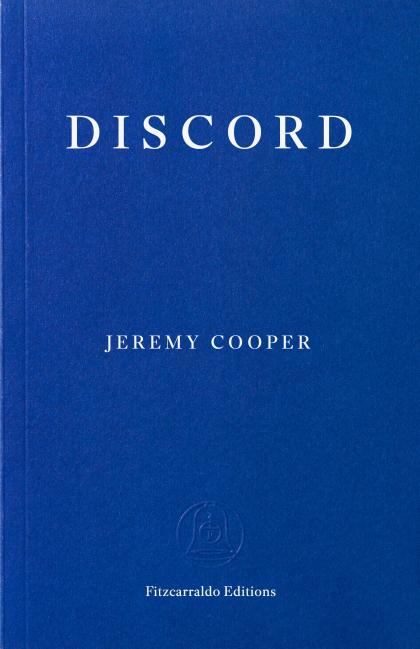
- Discord by Jeremy Cooper (Fitzcarraldo, £14.99)
- More book reviews on theartsdesk