
En Atendant, Anne Teresa De Keersmaeker’s Rosas, Sadler’s Wells | reviews, news & interviews
En Atendant, Anne Teresa De Keersmaeker’s Rosas, Sadler’s Wells
En Atendant, Anne Teresa De Keersmaeker’s Rosas, Sadler’s Wells
The Belgian choreographer goes back to the Middle Ages. And finds modernity
Tuesday, 06 November 2012
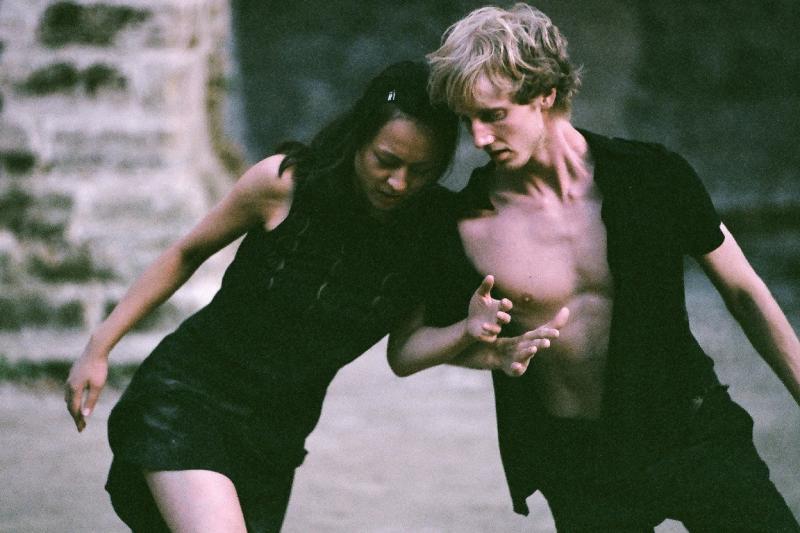
Rosas in action: 'a sort of proto-Renaissance exploration of the golden ratio' All photos Anne van Aarschot
No one ever accused of Anne Teresa De Keersmaeker of thinking small. Or not thinking, for that matter. Her international career began with a bang, when with only her second work she created Fase, Four Movements to the Music of Steve Reich. And Reich’s music, filled with repetitive figures, harmonic rhythm and canons, is not a million miles – even if it’s 600 years – away from the ars subtilior of Avignon, De Keersmaeker’s new musical focus.
A type of 14th-century polyphony, the songs of this mannerist style are highly complex technically: difficult to perform, they are more like 20th-century avant-garde music than anything that falls between now and then. Their attraction to De Keersmaeker, in other words, must have been instantaneous. She too has always focused on highly complex pieces, on patterns, on shapes, on mathematical workings-out of a musical style.
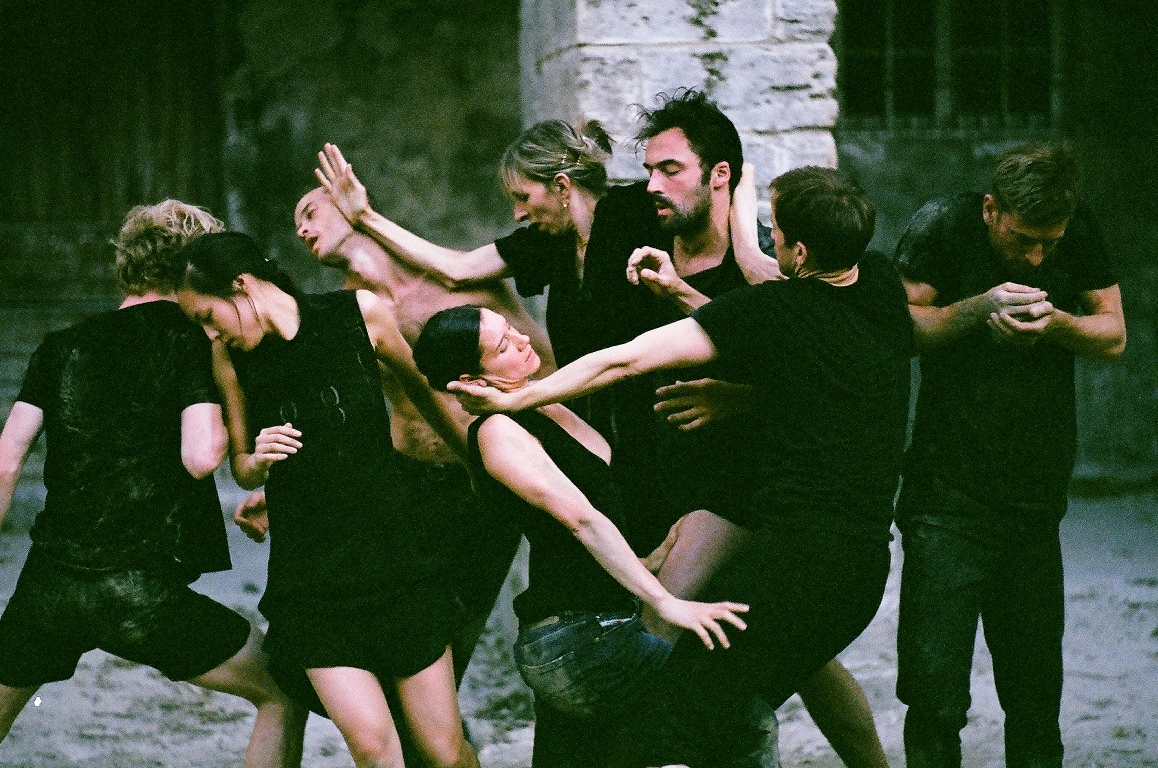 En Atendant was originally staged in Avignon, on the medieval walls at dusk. Here the stripped back flats of Sadler’s Wells have to stand in, and some atmosphere is obviously lost. Yet when flautist Michael Schmid appears, to create a range of sounds that no modern flute was ever designed to make, the archaism of the sound world is established immediately. As always with De Keersmaeker, it goes on for longer than seems entirely sane, and yet, also as always, you come out the other side feeling altered, stripped back.
Then eight dancers appear, five men and three women. Based entirely on a walking step, they pace out what swiftly becomes clear is the score: one note, one step. This is intermittently entwined by three musical performers, the wonderfully lush soprano of Annelies Van Gramberen, Thomas Baeté on viol and Bart Coen on recorder.
Gradually it is possible to distinguish the different musical “voices” among the dancers – two men perform a stamping quick-step, while a third marks time more slowly, as though he’s the continuo.
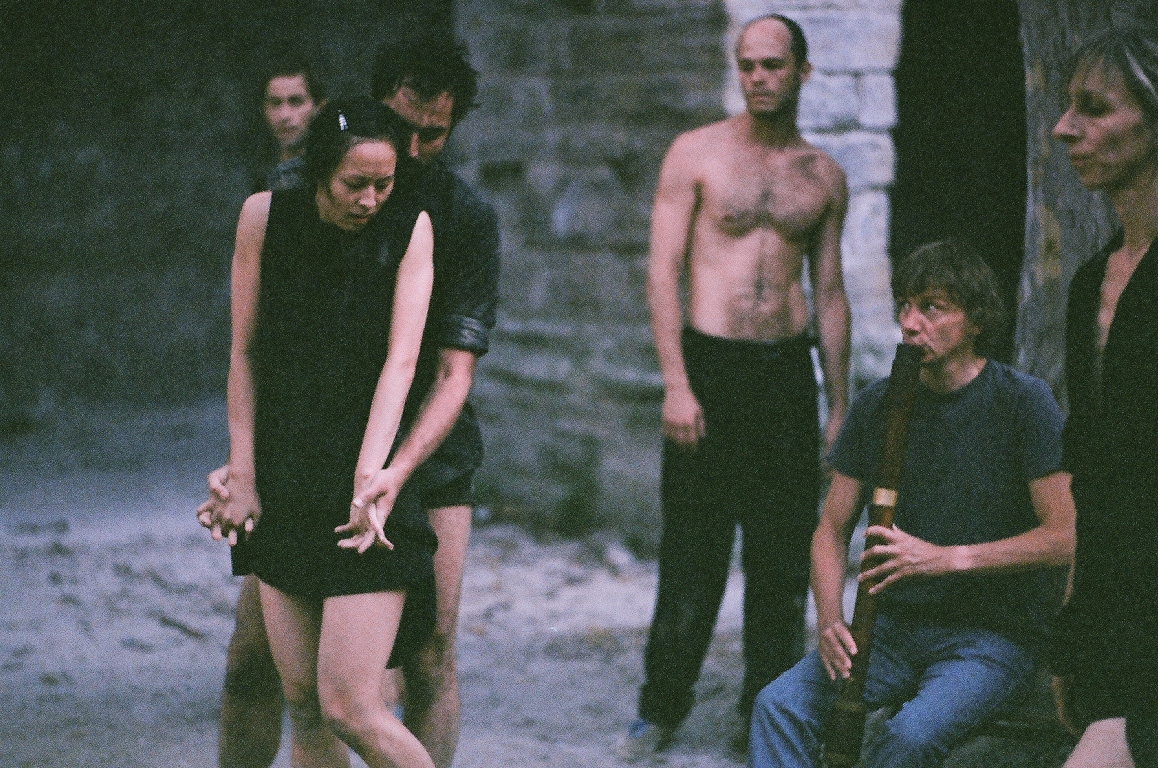 De Keersmaeker is not content to leave it there, however, and a further theoretical layer is added as she divides each dancer in two – the lower body dancing, the upper body shaping out a series of mathematical points on a grid, a sort of proto-Renaissance exploration of the golden ratio.
I’m not really sure that this layer adds anything, and in some ways it is a distraction. When the music is absent, the works can fail to cohere, producing work that is intelligent, and interesting, but not felt.
The second part of De Keersmaeker’s engagement with ars subtilior is her Cesena, which will be performed later in the week; it is only then, I suspect, that the overall pattern will emerge.
Watch En Atendant from the Festival d'Avignon
As always with De Keersmaeker, it goes on for longer than seems entirely sane, and yet you come out the other side feeling altered, stripped back
Share this article
Add comment
The future of Arts Journalism
You can stop theartsdesk.com closing!
We urgently need financing to survive. Our fundraising drive has thus far raised £49,000 but we need to reach £100,000 or we will be forced to close. Please contribute here: https://gofund.me/c3f6033d
And if you can forward this information to anyone who might assist, we’d be grateful.

Subscribe to theartsdesk.com
Thank you for continuing to read our work on theartsdesk.com. For unlimited access to every article in its entirety, including our archive of more than 15,000 pieces, we're asking for £5 per month or £40 per year. We feel it's a very good deal, and hope you do too.
To take a subscription now simply click here.
And if you're looking for that extra gift for a friend or family member, why not treat them to a theartsdesk.com gift subscription?
more Dance
 'We are bowled over!' Thank you for your messages of love and support
Much-appreciated words of commendation from readers and the cultural community
'We are bowled over!' Thank you for your messages of love and support
Much-appreciated words of commendation from readers and the cultural community
 Peaky Blinders: The Redemption of Thomas Shelby, Rambert, Sadler's Wells review - exciting dancing, if you can see it
Six TV series reduced to 100 minutes' dance time doesn't quite compute
Peaky Blinders: The Redemption of Thomas Shelby, Rambert, Sadler's Wells review - exciting dancing, if you can see it
Six TV series reduced to 100 minutes' dance time doesn't quite compute
 Giselle, National Ballet of Japan review - return of a classic, refreshed and impeccably danced
First visit by Miyako Yoshida's company leaves you wanting more
Giselle, National Ballet of Japan review - return of a classic, refreshed and impeccably danced
First visit by Miyako Yoshida's company leaves you wanting more
 Quadrophenia, Sadler's Wells review - missed opportunity to give new stage life to a Who classic
The brilliant cast need a tighter score and a stronger narrative
Quadrophenia, Sadler's Wells review - missed opportunity to give new stage life to a Who classic
The brilliant cast need a tighter score and a stronger narrative
 The Midnight Bell, Sadler's Wells review - a first reprise for one of Matthew Bourne's most compelling shows to date
The after-hours lives of the sad and lonely are drawn with compassion, originality and skill
The Midnight Bell, Sadler's Wells review - a first reprise for one of Matthew Bourne's most compelling shows to date
The after-hours lives of the sad and lonely are drawn with compassion, originality and skill
 Ballet to Broadway: Wheeldon Works, Royal Ballet review - the impressive range and reach of Christopher Wheeldon's craft
The title says it: as dancemaker, as creative magnet, the man clearly works his socks off
Ballet to Broadway: Wheeldon Works, Royal Ballet review - the impressive range and reach of Christopher Wheeldon's craft
The title says it: as dancemaker, as creative magnet, the man clearly works his socks off
 The Forsythe Programme, English National Ballet review - brains, beauty and bravura
Once again the veteran choreographer and maverick William Forsythe raises ENB's game
The Forsythe Programme, English National Ballet review - brains, beauty and bravura
Once again the veteran choreographer and maverick William Forsythe raises ENB's game
 Sad Book, Hackney Empire review - What we feel, what we show, and the many ways we deal with sadness
A book about navigating grief feeds into unusual and compelling dance theatre
Sad Book, Hackney Empire review - What we feel, what we show, and the many ways we deal with sadness
A book about navigating grief feeds into unusual and compelling dance theatre
 Balanchine: Three Signature Works, Royal Ballet review - exuberant, joyful, exhilarating
A triumphant triple bill
Balanchine: Three Signature Works, Royal Ballet review - exuberant, joyful, exhilarating
A triumphant triple bill
 Romeo and Juliet, Royal Ballet review - Shakespeare without the words, with music to die for
Kenneth MacMillan's first and best-loved masterpiece turns 60
Romeo and Juliet, Royal Ballet review - Shakespeare without the words, with music to die for
Kenneth MacMillan's first and best-loved masterpiece turns 60
 Help to give theartsdesk a future!
Support our GoFundMe appeal
Help to give theartsdesk a future!
Support our GoFundMe appeal
 Light of Passage, Royal Ballet review - Crystal Pite’s cosmic triptych powers back
Total music theatre takes us from the hell of exile to separation at heaven’s gates
Light of Passage, Royal Ballet review - Crystal Pite’s cosmic triptych powers back
Total music theatre takes us from the hell of exile to separation at heaven’s gates
Comments
In over 40 years of watching
I love the fact that Anne
I love the fact that Anne Teresa de Keersmaeker keeps evolving. And i do believe her work to be more and more interesting. i love her love ot working on dance, and not reproducing or saying satisfied with her past work (as great as it may be). En atendant is for me a come back to the importance of music. It has a certain classical formalism. It is splendid. Long live to ATK!