There’s a moment of stunned silence in Imelda Staunton’s storming Mama Rose at the Chichester Festival Theatre, a long, long, moment where neither speaking nor singing she conclusively demonstrates what a difference a great actress makes in this most iconic of musical theatre roles.
Just like her mother and husband before, her daughter June has run off with the act’s hoofer Tulsa (excellent Dan Burton) and she (Rose) sits with the letter taking in all its implications. Suddenly everything else happening on stage dissolves into a kind of background blur as we read first the shock, the heartbreak, and then the scheming in Staunton’s face and posture. By the time she turns to her other daughter Louise and asks forgiveness for the years of neglect (and, my goodness, we see the favouritism writ large in Staunton’s performance) she has already decided on plan B and the ruthlessness and single-mindedness of that decision will enflame the act one closer “Everything’s Coming Up Roses”. I didn’t see the role’s great originator Ethel Merman but I’ve seen pretty much everyone since - including Angela Lansbury, Tyne Daly, Bernadette Peters and Patti LuPone - and I’m here to tell you that no one has dug deeper. Make no mistake, this is the performance of the year.
The very first thing that was written for this show was the ending
It might be the show of the year, too, because director Jonathan Kent and his team honour a great musical without trying to reinvent it (it’s too good to tinker with) and one leaves the theatre thinking and feeling how pitch-perfect it has all been. Of course, Arthur Laurents‘s book is in itself pitch-perfect and just needs the kind of truth and timing to make it land. Staunton is cracking with the one-liners, the smarting retorts, the mean determination, and her drive powers the show and makes crystal clear before the final scene with her and daughter Louise/Gypsy that the theatre is a drug that SHE needs, that it’s all for her: “Everything’s coming up roses for ME and for you”.
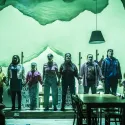
But there isn’t a weak link in this company and the pacing is furious and incisive as we fast-forward through the death-throes of vaudeville and witness the birth of burlesque. Is there anything funnier, sadder, more apposite than “You Gotta Get a Gimmick” where three strippers - the gloriously contrasted Louise Gold, Anita Louise Combe and Julie Legrand - defy their sell-by dates, bumping and grinding their way into the back room of immortality?
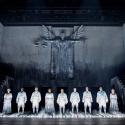
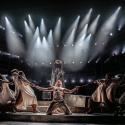
But this is a moving show, too, and I love the fact that Kevin Whately’s beautifully observed Herbie feels like a little bit of an outsider having left the theatre behind in favour of the more reliable candy business. He’s the best thing that Rose lets go of and when he finally does walk out on her you barely notice that he has because, like her, you don’t quite believe he will. Gemma Sutton’s June and Lara Pulver’s Louise are terrific, too, the latter moving with greater ease than I’ve ever seen from “Little Lamb” (the one song in the show I would have re-written) to the headlining Gypsy Rose Lee’s sophisticated strips, simply but sumptuously mounted in and around Anthony Ward’s gilded proscenium and cat-walks.
Nicholas Skilbeck directs a terrific band (though I slightly mourn the absence of strings other than harp and smiled ruefully when Tulsa announced “Strings come in...”) and great that it’s in the pit where it belongs and that from the classic overture on it’s firing on all three of its stratospheric trumpets.
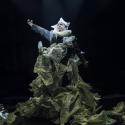
The very first thing that was written for this show was the ending. Laurents, Styne and Sondheim began at the end with “Rose’s Turn” (I have this from Laurents himself) because this is where all roads would lead. So Mama Rose finally gets her moment in the spotlight and Staunton devours it - not in the LuPone too-much-too soon kind of way but ultimately something much more scarifying. And when she stumbles over the word “Mama....” all the hurt in her life finally comes home to haunt her.
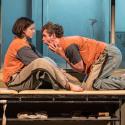
In the little exchange between mother and daughter at the close Kent has the roles reversed with Rose now trotting behind to keep up with Gypsy before the daughter’s arm goes around her in a simple, subtle gesture of forgiveness. Kent and his company honour this great show - and frankly we’ve no right to expect better.