Over the last 20 years or so, the genre of music we have learnt to associate with the violent assault of a regime upon its adversaries is hard rock blared out on massive speakers at ear-splitting volume, 24/7. First tried out with decisive results by the American military on General "Pineapple Face" Noriega of Panama in 1989, it has been refined in recent times to break down the resistance of innumerable presumed jihadis and insurgents in US detention.
The juxtaposition between those two dynamic elements contrived by Tom Stoppard and André Previn in 1977 with Every Good Boy Deserves Favour was something much more subtle and much more recondite, both in musical and dramatic terms: a full-sized orchestra sharing the stage with actors, not being drummed into the skulls of the detainees so much as emanating from the deranged brain of one of them.
The perfectly sane political dissident Alexander Ivanov (Adrian Schiller) has been imprisoned for his public denunciation of the Brezhnev-era policy of incarcerating political dissidents (a neatly illogical circle of the sort Stoppard favours). He is thrown into a cell in a KGB-run mental hospital with a schizophrenic (also named Ivanov, played by Julian Bleach) who is tormented by the music he hears in his mind, pretty much 24/7.
In a brutal corollary of the famed formula first expounded by Sartre in his 1944 play Huis Clos, Alexander soon discovers that hell is not just other people, but above all a deranged and frequently aggressive cellmate who won’t stop banging on his triangle (worn around his neck like a chain of office) or banging on about the finer points of the performances of the orchestra that he – but not Alexander - can hear at all times, and which we, the audience, both hear and see, for most of the 65 minutes of the play.
But there is a considerable degree of cognitive dissonance between what we can see and hear, and what Ivanov hears, and Alexander hears about from his cellmate. The presence on stage of the Southbank Sinfonia, conducted with spirit and aplomb by Simon Over, is an unalloyed pleasure for the audience, as the orchestra glides and weaves its way through the score composed by Previn. His is a masterful pastiche of the Soviet/nationalist symphonic canon of the time: whole strands of Shostakovich and Prokofiev, snatches of Berg.
Likewise, the almost relentlessly sophisticated calembours and jeux d’esprit, riffing on both musical and geometrical themes (the mad Ivanov’s triangle segues into the brisk maths lessons given by the unsympathetic Soviet school teacher to Alexander’s hapless young son Sasha), are vintage Stoppard of a very high order.
To contemporary ears they do seem widely removed from the urgency and the horrors of Soviet oppression of dissidents. Alexander's setpiece speech, delivered with great conviction by Schiller, is a faithful re-elaboration by Stoppard of a long sequence of arrests and detention of actual Soviet dissidents. At the height of the Cold War it would have carried a strong resonance. As the direct memories of the Soviet regime fade from our collective consciousness, it struggles to have the same sense of compelling immediacy.
The author calls our attention in his programme notes to the return of the worst aspects of state persecution of independent journalists and commentators in Putin’s Russia – 50 journalists murdered since the fall of Communism, in his estimation – and we are obviously reminded by more recent examples of state-sponsored brutality of detainees. But does the play still work on its own terms?
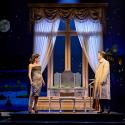
It certainly helps that there is a constant stream of visual stimuli to draw on, thanks to masterful direction from Felix Barrett and Tom Morris, superb staging from designer Bob Crowley and lighting designer Bruno Poet, not forgetting a violent and comic ballet sequence choreographed by Maxine Doyle. And without revealing the revised play’s secrets - back here for a limited run after last year's revival - the final cataclysm brilliantly evokes the breakdown of the Communist system, opening up a pathway to a vague and distant “elsewhere”. Not without hope, after all.
- Every Good Boy Deserves Favour is at the Olivier Theatre, National Theatre until 17 February
- Check out what's on at the National Theatre this season