

January 1966 is a half a century back but some of the music released 50 years ago this month remains fresh, vital and timeless. With its biting invective and energy, Bob Dylan’s “Can You Please Crawl out of Your Window” will never lose its visceral edge. Dusty Springfield’s joyful, kinetic “Little by Little” is eternally alive. Author Jon Savage goes further and pinpoints the whole of 1966 as “the year that shaped the rest of the century”. His proposition uses the year’s pop music as evidence for 1966 as a year like no other: one which was pivotal and irrevocably changed the world.
Savage explores his thesis in the eloquent and essential book 1966: The Year the Decade Exploded. It takes the year on a month-by-month basis, with a chapter dedicated to the music from each month and the issues a particular record or records illustrate. The period was not about albums and the pegs are singles. So, for example, chapter one is dedicated to January and CND, Protest and the Conspiracy of Silence. The relevant record is “The Quiet Explosion” by Bimingham’s The Uglys, a just-over two-and-a-half minute confirmation of the-then prevailing fears of an impending nuclear holocaust.
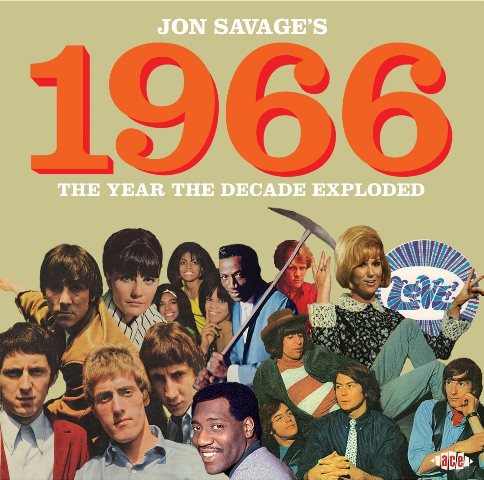 The book examines drugs and pop art; black America and youth rebellion; the position of women and barely concealed gay ambits. Always, though, the way in is through music. The double-CD set Jon Savage's 1966: The Year the Decade Exploded soundtracks the book.
Reading the book isn't necessary to enjoy the compilation’s 48 tracks. With annotation by Savage in the booklet and sequencing running chronologically by release date through 1966, the collection is, as he explains, “designed to stand alone – a mix of the familiar and the obscure, informed by memory”.
“The Quiet Explosion” kicks things off. It is, undeniably, a disquieting recording and one which was consigned to a B-side. “Each helpless voice is a quiet explosion” declares the band’s singer Steve Gibbons. The collection ends with Tim Hardin’s “Hang on to a Dream”, the unmediated sound of a defeat engendered by the recognition that ambition or looking forward may be pointless.
Much of 1966 is not this heavy. There is garage rock, nascent psychedelia, oddball one-offs, out-and-out pop, peppy instrumentals and various flavours of soul. The Who’s “Substitute” catches the almost-impossible to assimilate pace of 1966’s changes. As does their character-questioning “I’m a boy”. Four Tops’ “Reach Out I’ll be There” advocates the need for stability in a world moving faster than ever. The Velvet Underground’s debut single “I’ll Be Your Mirror” touches on solipsism and the search for identity. Even without The Beatles, Dylan and The Rolling Stones – none of whom are present for licensing reasons – the white-light speed of 1966 is captured.
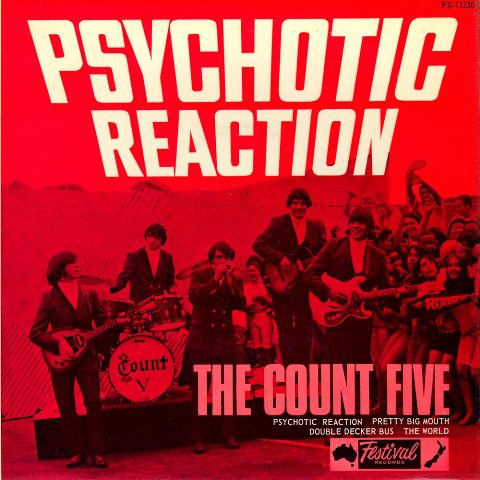 The year was musically radical and became more so as it went on. A kaleidoscopic aural barrage, The Yardbirds’ “Happenings Ten Years Time Ago” took guitar rock and lyrical themes of LSD-inspired regression to places they had never been before. As Savage points out in the book, early or proto-psychedelic music was not at all peaceful as it reflected or was inspired by the disturbance brought on by drugs. Witness The Count Five’s berserk Yardbirds rip-off “Psychotic Reaction”.
Black America's music was also mutating, but partly in response to social issues rather than changes in the nature of chemicals consumed. James Brown’s extraordinary 100-second “Tell Me That You Love Me” prefigures both funk and jungle, and cannot have sounded like music as such in 1966. It’s as if the needle were stuck in the groove. A high-velocity riff taken from a live recording repeats incessantly like blows breaking a door down while Brown’s looped vocal roars over the top like a riot control cop.
Most radical of all was a B-side by the past their sell-by-date British instrumental group The Tornados. With a completely different line-up to that of the 1962 “Telstar” hit band, their producer Joe Meek had them record “Do You Come Here Often?” It begins as a rinky-dink organ instrumental. Then, 2.15 in – long after anyone would have ceased paying attention – a pair of obviously camp men begin a bickering conversation. “Pyjamas are out as far as I’m concerned,” says one. They then size up a couple they’ve seen. This almost-secret reportage went way beyond any of Ray Davies’ nods to the gay. It was the sound of two queens – queens which the gay Meek would have known in the year before homosexuality was decriminalised.
Jon Savage's 1966: The Year the Decade Exploded is an eye-opener. It is great fun, too. As 2016 cannot be as momentous musically as 1966, this collection of bulletins from the frontline of rapid cultural change is a timely reminder that popular music should never stand still and always break boundaries. As Joe Tex puts it on Disc Two, “You Better Believe It Baby”.


Add comment