“This is our last concert, ever. And we’d love to do you for now on our last concert ever…” After the words peter out, a ragged, yet blistering, five-minute version of “(I Can’t Get no) Satisfaction” explodes from the stage. Show over, The Rolling Stones leave Hawaii’s Honolulu International Center to…what?
It’s not as noteworthy a stitch in rock’s rich tapestry as David Bowie’s 3 July 1973 announcement at the Hammersmith Odeon that “not only is it the last show of the tour, but it's the last show that we'll ever do.” Or even George Harrison’s “that's it, then. I'm not a Beatle anymore” comment after playing San Francisco’s Candlestick Park on 29 August 1966 – what turned out to be The Beatles last-ever (conventional) live show. But it was unequivocal. On 28 July 1966, Mick Jagger told the audience and listeners to the radio broadcast of the show that what had just been seen and heard was The Rolling Stones’ “last concert, ever.”
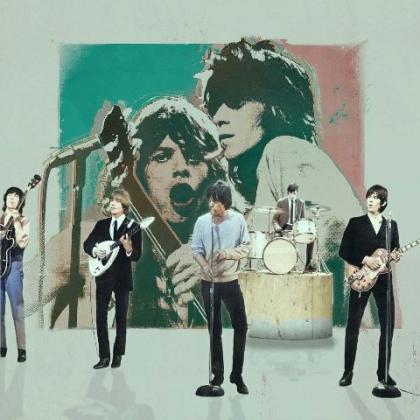
It certainly was the last date on a US tour which had begun a month earlier. And, clearly, the band was on fire. As well as “(I Can’t Get no) Satisfaction,” the Honolulu set included paint-peeling runs through “Paint it, Black,” “Get Off my Cloud” and “19th Nervous Breakdown.” Incredible versions of “Lady Jane” and “Mother’s Little Helper” also featured. The Brian Jones-era Stones were at a peak.
Of course, it was not the end of their stage career. Soon after, the Stones began a UK tour on 23 September 1966. The words uttered in Hawaii were a quip. An off-the-cuff tease. Probably also an acknowledgment of the capriciousness of the pop audience. A passing moment. But they were significant: an indication that The Rolling Stones remained the “we piss anywhere, man” subversives of a year earlier, were still not playing the please-‘em-all pop game.
The full Hawaii show is heard on the mammoth 10-CD clamshell box set Live & Sessions 1963-1969. Overall, 158 tracks are collected. The earliest set of recordings is from a BBC Saturday Club session (recorded on 23 September 1963, broadcast 26 October 1963). The latest thing compiled is the second show played on 9 November 1969 at the Alameda County Coliseum, Oakland, California. This epic journey encompasses BBC radio sessions, live appearances on television and radio, shows broadcast on radio and studio sessions. This is, manifestly, a lot.
On Disc Four, seven tracks recorded at Chicago’s Chess Studio prove as eye-opening as the Hawaii show. There are two sets of sessions: 10 and 11 June 1964, and 8 November 1964. The songs recorded conform with the Stones as they were then: blues, R&B cover versions. However, the November recordings include a song titled “Goodbye Girl.” An up-tempo, blues-rooted shuffler in the “Fanny Mae” or “Baby What You Want me to do” vein, it’s good. Chugging along, it has a nice, spindly guitar solo and barrelhouse piano from Ian Stewart. “Goodbye Girl” is a complete entity.
However, it was never issued. Instead of Jagger and Richards, “Goodbye Girl” was written by Bill Wyman. It was recorded two months before "The Last Time": the Jagger-Richards original which became the Stones first in-house composition released as a single A-side. Up to this point, the only Stones originals – i.e. Jagger-Richards songs – which were issued were the first LP’s “Tell me,” a few single B-sides, including throwaways, some credited to Nanker or Nanker-Phelge, and the songs they gave to other performers. Until “The Last Time,” nothing Jagger and Richards came up with was good enough to top a single. What was the intended fate of the robust “Goodbye Girl”? A releasable version had been laid down in Chicago. It could have been issued. But would a Bill Wyman song have been a distraction from – or slowed – Jagger and Richards’ increasing domination of the band? Nonetheless, “Goodbye Girl” was taken seriously enough to record.
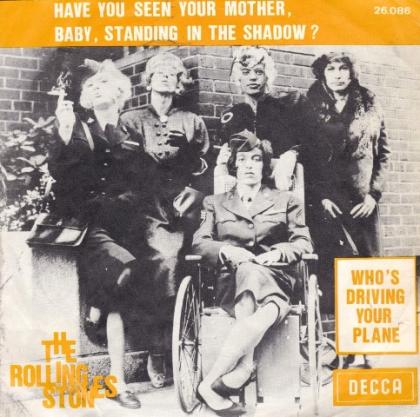
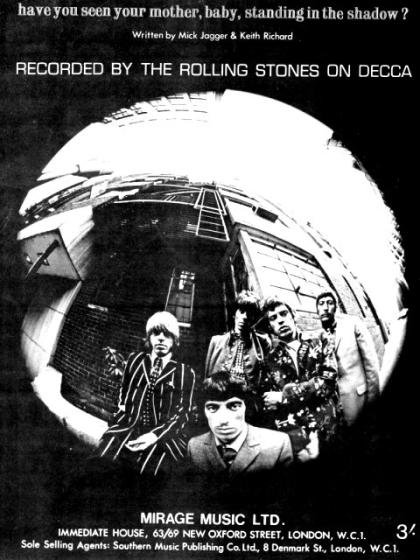
Live & Sessions 1963-1969 is stuffed with similar thought-provokers, but its main job is to track The Rolling Stones in real time from R&B cover band to the white-light innovators of 1965 and 1966. Along with the November 1969 Oakland show on Disc Ten, there is some further 1969 stuff on the end of Disc Nine. Otherwise, the latest material heard is the 15 January 1967 Ed Sullivan show appearance (also on Disc Nine). Late Autumn 1963 to Summer 1966 forms the bulk of it. This is the material catching the Stones moving forward, working out who and what they were, who they would be – doing so rapidly, reaching a form of artistic buffer with the September 1966 single “Have You Seen Your Mother, Baby, Standing In The Shadow?”, this period’s ultimate expression, The Rolling Stones’ supreme sonic vortex. So time-compressed a creative velocity was never achieved again. Following this, consolidation, directionlessness, further consolidation, the loss of Brian Jones and the establishment of a template.
Much of the sound quality of Live & Sessions 1963-1969 is way better than would be expected, though some of the off-air recordings are exactly what would be expected – though still absolutely listenable. Radio sessions (and the TV appearances) are heard as discrete units unlike 2017’s risible On Air set which spread tracks randomly, hither and thither. And unlike that set, there had been no post-fact aural messing. This is as it was. Live & Sessions 1963-1969 is an expanded version of the 2019 six-CD Live & Sessions 1963-1966 set, and is a no-frills release. Each disc comes in a card sleeve. There are tracklists and annotation indicating the source of each track. That is it. And, really, with so vital a package, it’s enough. Get this, it will not disappoint.
- Next week: Woo’s Whichever Way You Are Going, You Are Going Wrong. Maverick duo Mark Ives and Clive Ives’ 1982 debut album is reissued
- More reissue reviews on theartsdesk
- Kieron Tyler’s website