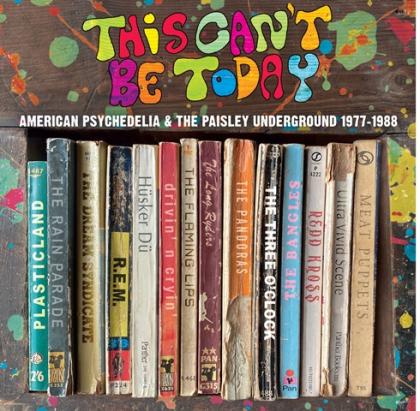
This Can’t Be Today - A Trip Through The US Psychedelic Underground 1977-1988 is marketed as a “3CD set documenting the 1980s American ‘paisley underground’ scene” which includes “over 65 scene setting, taste making tunes inspired by all things 60s, thrift store and Rickenbacker” with “scene staples, underground nuggets, leftfield gems and everything else between.”
Indeed, this is pretty much what this clamshell set, titled after a Rain Parade track (it’s on Disc Two), does. However, the words “leftfield gems and everything else between” imply that this umbrella shelters more than The Bangles, The Dream Syndicate, Green On Red, The Long Ryders, R.E.M., The Rain Parade, The Three O’Clock and similarly minded outfits. The Flaming Lips, Hüsker Dü and Meat Puppets are also here.
In his introductory note in the booklet, Pat Thomas – who was in The Absolute Grey, heard here – notes “as you scroll through the track list, you may ask yourself ‘what do bands like Hüsker Dü, Flaming Lips, Wire Train, Translator and Meat Puppets have to do with some of the other bands?’ A lot. At that time we all felt like one big army against MTV, Rolling Stone (who rarely covered any of these artists in this collection), mainstream FM stations, hair metal and British synth pop. We embraced guitars over keyboards, organic songwriting over sampling, humans over drum machines.”
And, yes, pre-grunge and looking beyond US hardcore – which Hüsker Dü and Meat Puppets graduated from – and art rock (Mission Of Burma, their successor band Volcano Suns, or Pylon, say), the agglomeration represented by what’s on This Can’t Be Today sang from the same non-mainstream hymn sheet as well as – whatever the quantities of quirk – sharing a Sixties-derived fondness for straight-ahead songwriting, melody and delivery.
Elsewhere in the booklet, compiler James Barber writes “only the hippest American kids [in the mid Seventies] had a clue about Roxy Music or Soft Machine. By the end of the decade, a new generation was re-discovering ‘60s bands that were mostly forgotten in the States. Records by Love, The Byrds, The Velvet Underground, The 13th Floor Elevators, Syd Barrett-era Pink Floyd, The Chocolate Watchband, Nick Drake, The Creation, The Zombies and The Stooges were passed around the underground like revolutionary tracts in a resistance against Journey and Kansas. Fans started figuring out that Rubber Soul and Revolver were better than Sgt. Pepper’s and The White Album…Big Star should have been huge, ‘Shake Some Action’ was a masterpiece, and Television were the great guitar heroes of the era. Pet Sounds was so great that you could…finally understand that The Beach Boys used to be great.”
It’s impossible not to get where he's coming from.
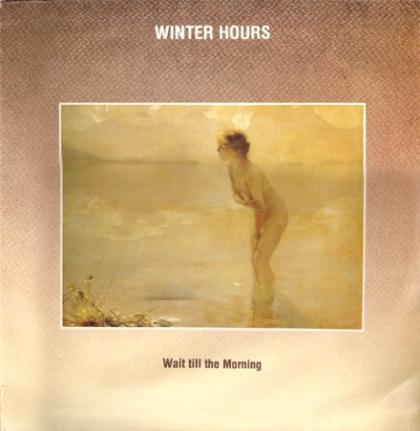
In this spirit, take New Jersey's Winter Hours, who crop up on Disc Three. Their lovely, vaguely R.E.M.-ish “Hyacinth Girl,” originally issued on the 1986 Wait Till The Morning mini-LP (pictured left), is a chiming, instantly arresting recording which owes as much to Sixties folk rock as it does Television. Little about it, apart from the drum sound, ties it to one era.
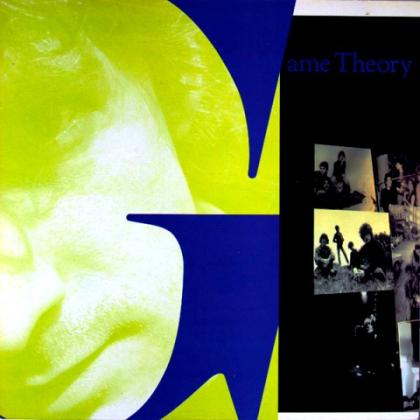
Or the beautiful “Regenisraen” by California’s Game Theory, from 1986's The Big Shot Chronicles album (pictured below right). There’s a Beach Boys clarity to this vocal-centred baroque-leaning song, but it is hard to place beyond acknowledging a Sixties influence.
Then there’s “Death and Angels” by the pre-roots-embracing Green On Red, from 1982’s Green On Red EP. Muzzy and psychedelia-inclined, it suggests the band could have gone in a quasi-shoegazing direction.
Pat Thomas also says “every musician on this collection was accessible - you could show up at most venues during soundcheck, sneak in and have a conversation with Peter Buck or Mike Mills, ask Peter Holsapple what Chris Stamey was up to, badger Mitch Easter or Steve Wynn to listen to your demo tape and, more often than not, do impromptu interviews with folks like Tommy Keene, Scott Miller of Game Theory, Vicki Peterson or even Alex Chilton.” There is a sense that the bands, formed by music fans, were musically addressing each other, talking to each other, reaching out to the like minded, preaching to the converted: an insularity, at least initially.
This changed. R.E.M. became huge. So, for a while after modifying their approach and the nature of the songs they played, did The Bangles. Winter Hours signed with Chrysalis, scraped into the Billboard charts but did not break though. The Three O’Clock also followed the major-label path, but fizzled out soon after that pact was made. Dreams So Real, heard on Disc Two, ended up on Arista, on MTV and in the Billboard charts. Their label dropped them and that was pretty much it for them. It’s apparent the major-label deals could kill off bands. In general, the bands which did sign to major labels who are collected on This Can’t Be Today did not breach the mainstream. Shift the dial a few years on, and it would take what was dubbed grunge – to a degree – to do this. What’s on this set laid the table for what was coming.
Who’s not here? The Connells are not, which is surprising. The same applies to Let's Active – especially as their driver Mitch Easter produced material included on the set. Opal are also absent. Maybe licensing issues prevented these bands inclusion? Mitch Cooper and LMNOP would have been good. So would Lifeboat. Given that the set’s starting point is a 1977 track by The Last and that Chris Bell’s "I am the Cosmos" (recorded in the mid-Seventies but issued in 1978) is here, perhaps the 1976-formed Slickee Boys could have been a candidate. Possibly also The Cramps?
Anyhow, This Can’t Be Today - A Trip Through The US Psychedelic Underground 1977-1988 really does its job – coming across as a distilled hybrid of the college-radio-focussed 2004 box set Left Of The Dial: Dispatches From The '80s Underground and the next year’s Children Of Nuggets - Original Artyfacts From The Second Psychedelic Era 1976-1995 box. Get this. It is a thoughtfully compiled, significant examination of an important strand of America’s pre-grunge musical landscape. It’s also a terrific listen.
- Next week: Eternal Journey - The Arrangements And Productions Of Charles Stepney. First-ever collection of the work of the American arranger/producer/songwriter
- More reissue reviews on theartsdesk
- Kieron Tyler’s website