The title comes from the August 1965 Paul Revere & the Raiders single “Steppin' Out,” a paint-peeling stomp which just missed the US Top 40. While it wasn’t a massive hit – a UK release made no mark at all – the track can be taken as helping to define a strand of American pop which is, well, identifiably American. It didn’t matter that “Steppin' Out” was released by a major label: it’s directness, heft, reductiveness, snotiness, unbridled pep and lack of sophistication positioned it as garage rock.
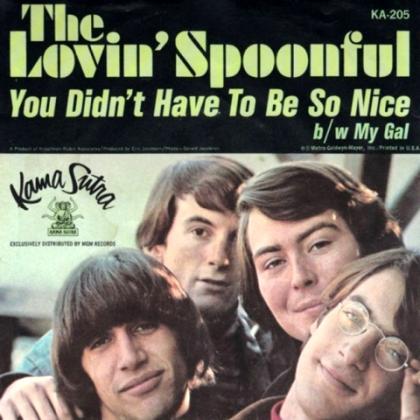
“Steppin' Out” is one of the great Sixties singles. So are The Beach Boys’ “I Get Around,” The Beau Brummels’ “Don’t Talk to Strangers,” The Byrds' “I’ll Feel a Whole Lot Better,” The Everly Brothers’ “Man With Money,” The Lovin’ Spoonful’s “You Didn’t Have to be so Nice” and The Sonics’ “The Witch.” All are collected on Steppin' Out - The Roots Of Garage Rock 1963-1965, a 94-track, 3-CD clamshell box set.
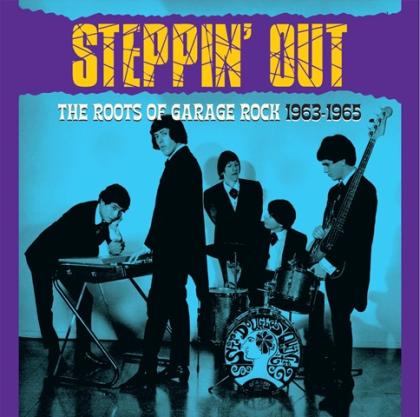
Only one of the above – “The Witch” – unequivocally fits the garage-rock bill. The operative word in this set’s title is "roots," indicating this is a primer in how garage rock came to be. The accompanying booklet’s essay says "this box contains plenty of the raw, exciting 1960s music retrospectively named garage punk…though [it] spreads its net wider adding surf, frat rock and folk rock gems to the mix. These American genres combined with the influence of the British Invasion led to a garage rock explosion in 1965.” And indeed, it was the arrival of The Beatles and, especially, the Stones which fired up tons of musically minded US teens. Add in influences from The Animals, The Kinks, Them, The Yardbirds and a few others and, boom, a “garage-rock explosion.”
Obviously, none of the influential Brits appear on Steppin' Out, but ex-pat Anglo outfit The Liverpool Five do crop up. There are also bands which, as well as the co-opted hairstyles, adopted British-slanted names: The Dovers, The Gentrys, the set’s cover stars Sir Douglas Quintet. None of the records they made could have fooled anyone. The sound is through-and-through American.
Of the 94 tracks compiled, 11 are from 1963, 15 are from 1964 and 62 are from 1965 (more below on what’s missing if these figures are totalled). The imbalance towards the final year might have been amended by deeper digging into the Pacific Northwest (for example, the early Paul Revere & The Raiders, The Wailers and more – from this well, it’s great to hear The Bootmen’s “1, 2, 3, 4”), Minneapolis (say, The Gestures’ 1964 “Run, Run, Run” single), east Los Angeles (The Premiers are here – as could be Thee Midniters, whose first single was issued in late 1964) and other regional US scenes, as well as frat rock. More boss cuts from 1963 and 1964 may have been found. A disc each for 1963, 1964 and 1965 would have been nice.
From a similar perspective, while surf – in its instrumental and vocal forms, plus its car and hot rod offshoots – fed into what became known as garage rock, there is a disproportionate skewing towards the genre here: from The Chantays' "Pipeline" (the set’s opening track) to The Astronauts' "Baja," from Jan & Dean's "Dead Man’s Curve" to The Beach Boys’ “I Get Around."
Questions of equilibrium are a matter of taste, of perception. However, considering the set’s title, the presence of six tracks from 1966 – including The Thirteenth Floor Elevators’ January 1966-recorded “You’re Gonna Miss me,” the set’s closer – is most odd. Despite a “hmm, really” inducing get-out clause in the booklet's introduction, couldn’t the designated years have provided enough tracks?
Nonetheless, everything – bar none – which is heard, even a most un-garage track such as The Lovin’ Spoonful’s "You Didn’t Have to be so Nice" (perhaps it was in the repertoire of a teen band from, maybe, Pennsylvania), is amazing. Taken as a primer in the co-habiting stylistic strands of US pop from (mostly) 1965 and earlier rather than strictly as per its title, Steppin' Out - The Roots Of Garage Rock 1963-1965 works a treat. And when it hits home in a bona fide garage-rock fashion – The Brogues "Don’t Shoot me Down," The Lyrics' "They Can’t Hurt me," The Wailers' "Hang up" – it burns rubber.
- Next week: Three CDs of This Can't Be Today - A Trip Through The US Psychedelic Underground 1977-1988
- More reissue reviews on theartsdesk
- Kieron Tyler’s website