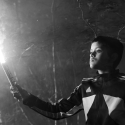
Fear of being alone with our own thoughts, as much as fear of missing out, prevents most of us from disconnecting from our electronic devices and braving even a few hours in total darkness. For a brave assortment of teenagers, though, the task of unplugging from social media – and reconnecting with their still-developing minds – is a year-long journey into the wilderness and back.
Folktales, the new documentary from Heidi Ewing and Rachel Grady, explores the Norwegian Folk School movement, which began in the mid-1840s as a way to bring education to rural children. Now the folk schools invite international students, but the curriculum still features Scandinavian arts and crafts, snowy survival techniques, and character-building – a sort of gap-year Outward Bound adventure for older teenagers.
Where the directors' earlier film, the Academy Award-nominated Jesus Camp depicted young children being indoctrinated and browbeaten at a Christian Evangelical summer program, Folktales takes a subtler approach. Jesus Camp was so grim and grim looking that it appeared to be shot with a VHS camera and lit with a 60-watt bulb, but the gorgeous Folktales has the advantage of being set in pristine winter forests. What a relief, and a pleasure, after shocker docs like Hell Camp: Teen Nightmare to see a documentary about kids managing to navigate life's big questions on their own terms.
Folktales focuses mainly on three students, including the soulful Hege, a suburban girl who grieves for a father lost to an act of shocking violence. She's drawn to the Pasvik Folk High School because it will give her a chance to grow up and a sense of kinship with her late father, a keen outdoorsman.
As Hege packs for school, her mother persuades her to pare down her makeup collection (seven different mascaras!) to a travel-size package. Despite that rocky start, Hege soon sets aside her beauty regime and social media to become an Arctic-arts star, bonding with her team of husky dogs, foraging for firewood, and solo-camping overnight.
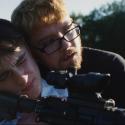
Her classmates include Bjorn, a jokester who worries that he's annoying and yearns for a way to make friends, and Romain, a Dutch teenager who has trouble listening to his teachers and forgets to wear his hat and gloves, even way up north. "Is there just one day that we don't have to get wet shoes?” he complains. (It's not giving much away to reveal that the two boys become best pals.)
Folktales' real stars may be the school's motley pack of hardy running dogs, mostly Siberian Huskies, who become the students' constant companions in sledding and camping. "The dogs are just the method," says Thor-Atle, a dog sledding instructor. "Dogs teach us to be patient, to pay attention. You are more than good enough for a dog, just the way you are."
The directors lean rather hard on a Norwegian voice-over recounting Odin's search for knowledge and some on-the-nose montages in which the youths trade blaring nightclub light shows for the Northern Lights. But Folktales reveals some deeper truths about how the young, and maybe all of us, are simply overwhelmed and overstimulated by the modern world.
A lesser film would have ended with the triumph of graduation day, but Folktales goes further, following Hege as she goes home, back to her old life, where she frets over not fitting into last year's party frock, almost forgetting her year of triumphs.
The film begins and ends with close-up sequences about the dogs, bathed in eerie red light, as they gaze at the night skies, sniffing the Polar Night air for clues about predators and rough weather. The huskies' blazing eyes seem half-human, half-wolf – how lucky we and the folk school kids are that they decided to let us join their pack.