Maggie Gyllenhaal’s sophomore feature is a punkish, gothic, genre-dancing, feminist riot, whose verve, imagination and serious intent don’t really need the enforcement of an exclamation mark. If an extremely enjoyable film suffers from anything, it might be a tendency to overegg.
This is a rare and atypically fulsome outing for The Bride herself, a macabre mate for the lonely monster, who was literally never completed in Mary Shelley’s novel, and was a mere cameo in James Whale’s Bride of Frankenstein in 1935. Here, as manifested by the astronomically ascendant Jessie Buckley, she’s front and centre, and then some.
And beyond her protagonist, Gyllenhaal’s daring script contains a handful of radical conceits, from making a character of Mary Shelley herself, to setting her action in Prohibition-era America, to positing her angry, brash, tempestuous Bride as an instigator of female rebellion.
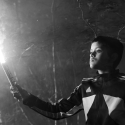
It opens in black and white, with Shelley (also played by Buckley) in ethereal close-up, with chalky features and a gloriously rich, plummy English accent. The author appears to be in a sort of purgatory, still wanting more from her female monster, refusing to budge until she can get this story “out of my head”.
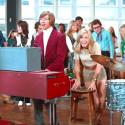
Cut to 1936 Chicago, to colour, and a restaurant full of gangsters and their molls, bustling with noisy revelry. Buckley is now Ida, in a dazzling, silky orange dress but clearly uncomfortable receiving the demands of the leering men around her. Suddenly, she becomes possessed – by Shelley no less – adopting her voice to berate and taunt the company and declaring that “here comes the mother fucking Bride”. Not knowing what to do with her, one of the hoods pushes her to a violent death.
Gyllenhaal now moves to a more familiar figure. Christian Bale’s appearance couldn’t be more different to the alien beauty of Jacob Elordi’s monster in del Toro’s recent, far more conventional Frankenstein. This is closer to the original, iconic, Boris Karloff version – less towering, less of a lump, but still a horrible sight, his forehead heavily stapled, his nose at a bulbous angle from his face, the patchwork of cadavers down his torso awash with gashes and seeping wounds.
But we can still see Bale in here, and hear the soft lilt of his voice, which dials up Karloff’s pathos, instilling “Frank” with a sweetness and warmth. This is a regretful killer who’s trying to mend his ways, exceedingly courteous, more than 100 years old and “dying of loneliness”. Calling at the Chicago home of Dr Euphronius (Annette Bening), he urges her to extend her infamous research into “reinvigoration” and make him a companion.
Bening is fabulous value as the doctor, eccentric, irreverent, unafraid of the hideous creature before her. And, at first, Euphronius is dismissive of his request. “I don’t run a mail order catalogue for fallen women,” she tells her visitor. “I thought you were a mad scientist” he chides, and successfully appeals to her curiosity. When they go digging for materials, who should they find but Ida.
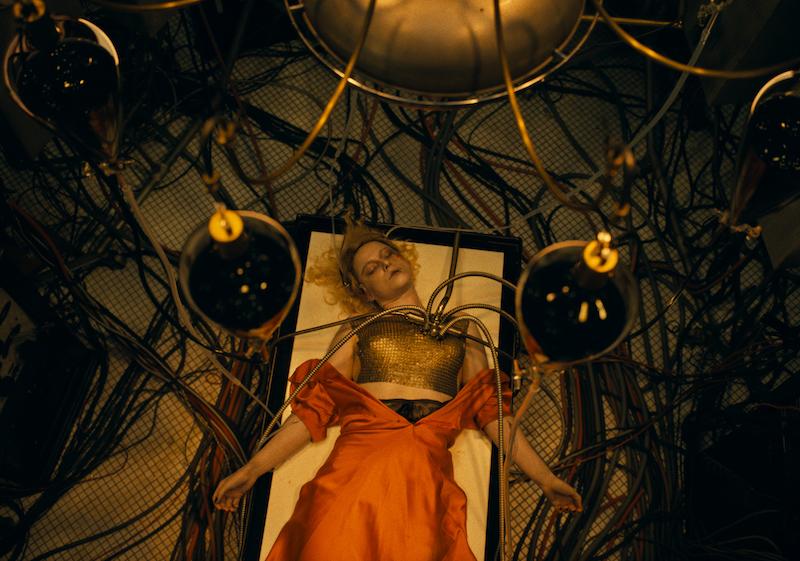
The reanimation scene is modestly achieved, thankfully devoid of high towers and bolts of lightening and all the more fun and effective without them. Returned to life, Ida’s hair has turned white, her tongue black, with a smear of vomited blood leaving a permanent, black gash across her cheek. She needs a calliper for her broken leg and will spend the rest of the film with a jagged walk, which makes life on the run particularly difficult. And, inevitability, the pair will become fugitives, because this is what society does to its supposed monsters.
An accomplished actress, Gyllenhaal turned her attention to writing/directing with her adaptation of the novel The Lost Daughter, in 2021, and demonstrated a willingness to tackle taboo subjects, an ability to weave different narratives and to steer excellent performances from her stars (including Buckley). All these traits are in evidence here.
Gyllenhaal’s mission is to finally give The Bride her agency, not least through language. In the 1935 film, Elsa Lancaster didn’t say a word; Buckley doesn’t stop talking. Her performance contains all three women – The Bride, Shelley and Ida, with the last mostly hidden, struggling to rediscover herself, while the other two battle it out with each other and the world in a startling, schizophrenic barrage of words – baroque and filthy, eloquent and violent, posh English and Chicago bolshiness.
The Bride’s favourite phrase, a riposte to Ida’s enslavement to men, is “I would prefer not to.” While Frank withholds Ida’s true identity, for his own, selfish motives, Shelley’s voice urges her to “find your name”. The whole piece is a feminist clarion call – whether it’s the female movement engendered when The Bride's exploits hit the newspapers, or the growing revelation of Ida’s attempt to expose the woman-killing gang boss, or this conflicted woman's desire to forge her own identity and destiny, which will only accommodate Frank when it suits her.
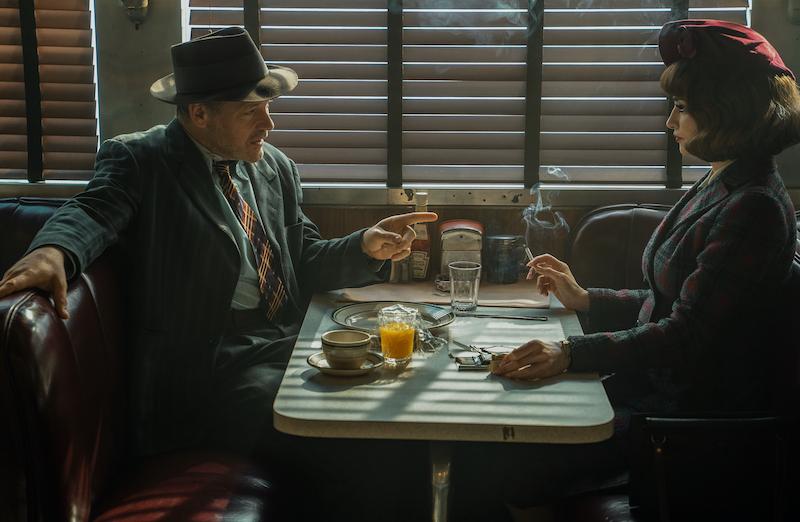
The theme also extends to the cops on the couple’s trail, with Penelope Cruz’s secretary a far better detective than the man she’s working for (Peter Sarsgaard, pictured above with Cruz) who of course is the only one with a badge.
It’s when Frank and Ida go on the run that the film starts to lose its grip, with too much thrown into the air that isn’t fully developed, whether the heavily signposted Bonnie and Clyde vibe, the detective subplot, or the national mania the monsters are creating. It’s striking how connected The Bride! feels, thematically, to Yorgos Lanthimos’s Poor Things; but despite its own heroine’s travelling adventures, the earlier film is the more consistent, focussed and rewarding.
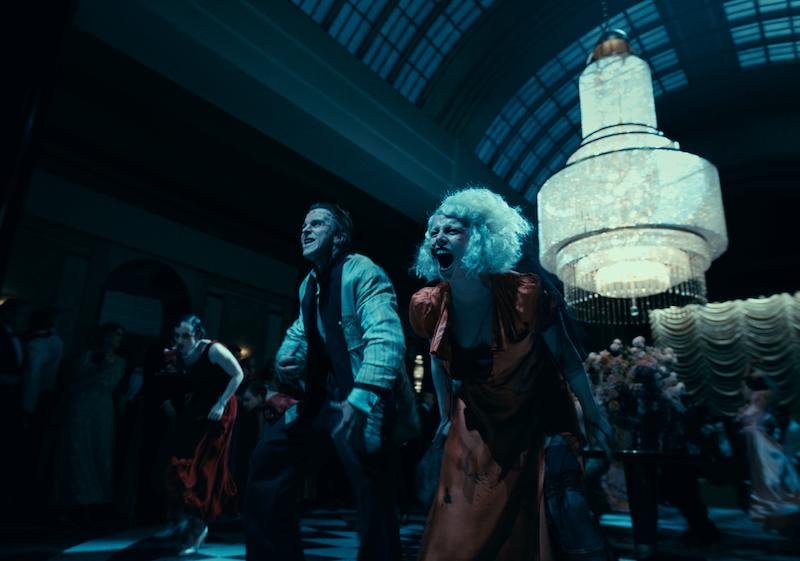
But this remains quite the rollercoaster, with numerous wholly surprising pleasures along the way, not least Frank’s love of movie musicals, particularly those of matinee idol Ronnie Reed (Jake Gyllenhaal). It is weirdly endearing to see Bale’s monster imagining himself in top hat and tails, dancing on screen with a sort of bestial grace; and arguably the film’s standout moment is when Bale and Buckley break into a dance routine to counter a police raid, with some of the monster energy of Michael Jackson’s "Thriller" video.
The timing of this film's release, just as Buckley is winning every gong going for her searing performance as Agnes in Hamnet, just testifies to a fearless and virtuosic talent: Agnes's cries of anguish aside, that character was marked by stillness and nuance; in contrast, The Bride is a bazooka.
For his part, Bale is the most unassuming of great actors, who never feels the need to showboat or hog the limelight yet is invariably brilliant. His portrayal of Frank as a lovesick sidekick to Buckley’s ferocious Public Enemy Number 1 is exactly what’s required. And the pair’s chemistry absolutely delivers the atypical, warts-and-all love story Gyllenhaal is gunning for.
Hats off to the technical team, notably cinematographer Lawrence Sher, production designer Karen Murphy and costume designer Sandy Powell; the whole thing is a luxuriant treat. Composer Hildur Gudnadóttir serves a tone that is jazzy as well as punk, an action sequence accompanied by soaring, screeching strings a scintillating standout.