Bart Layton’s class-conscious pulp fiction gives Chris Hemsworth his most convincing lead role since Thor as Mike Davis, an LA jewel thief on one last job while tentatively facing his hollow life. An all-star cast including Marvel compadre Mark Ruffalo, pictured bottom right, and Halle Berry happily sink into character parts to give the familiar heist set-up flesh and bone.
Mike’s ice cool hijacking of high-end diamonds along LA's 101 freeway almost gets him a bullet right at the start. His empty, expensive apartment, glum servicing by a prostitute and hand-wringing discomfort on an actual date (courtesy of A Complete Unknown’s Joan Baez, Monica Barbaro) show the personal chasm beneath his pursuit of other people’s money, neutering his looks. Childhood poverty and unspecified trauma then humanise his bad choices. As young rival Ormon, Barry Keoghan, pictured below, forces home crime’s human cost by pistol-whipping victims, but complicates even this vicious wrong’un, passive-aggressively muttering “I’m not gay” when Mike gets up close and suggesting his own child-like fear in extremis.

This slow-burning ensemble piece unhurriedly locks its characters into the same sweaty hole. Ruffalo’s rumpled cop Lou breathes decency, his languid, nasal whine at odds with his results-pressured, amoral colleagues. Reading the paper in the loo when his wife (Jennifer Jason Leigh, briefly) barges in stands for a marriage on the rocks, leaving him free-floating, before a speculative yoga session connects him to Sharon (Berry). Fifty-something face bare in the bathroom before work, Sharon’s daily survival at a corporate insurer which only sees her perishable looks, and of dumb plutocrat clients, makes crime tempting.
This inevitably recalls Michael Mann’s Heat, but British writer-director Layton, best known for slippery false identity doc The Imposter (2012), is less interested in the process of elite crime and punishment, instead empathising with lonely lives, while using Hemsworth notably better than in his actual Mann film, Blackhat (2015). Here even a master criminal, honest cop and insurance broker are disappointed members of the precariat, driven to desperate measures by capitalist contempt. Around the periphery hovers 85-year-old Nick Nolte’s waxen, husky threat as the bad dad flipside of Heat’s paternal fence Jon Voight.
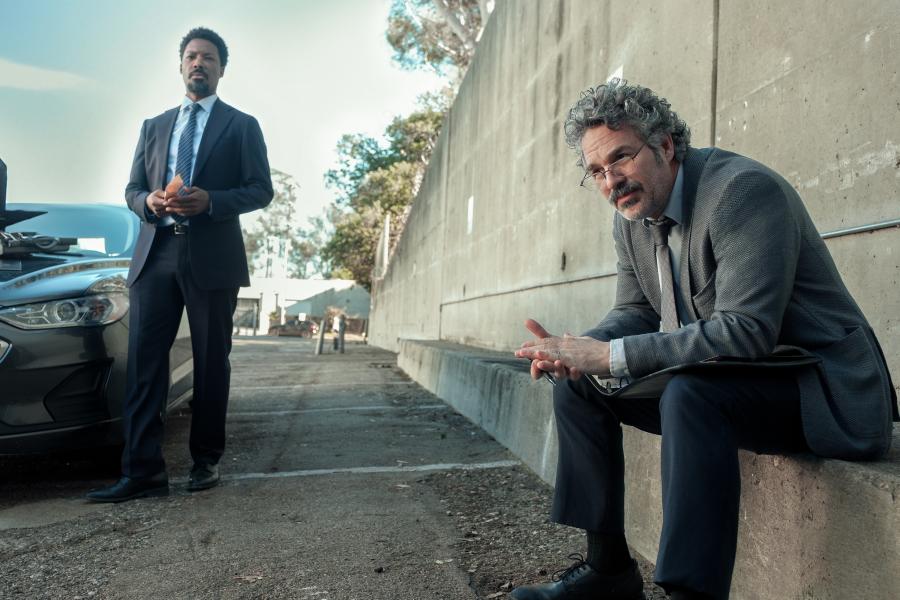
This is a grey-filtered LA where the sun barely rises, an underside where everyone owns or wants a beachfront property, eyes fixed away from the city grind. A freeway-feeding hinterland of warehouses and pizza joints is far from Hollywood, not least because many of these street-scenes are clearly London. Anonymous bug-cars populate the 101 as it cuts through the night, and the camera giddily tilts like the city’s moral and financial equilibrium.
Based on a 2020 Don Winslow novella, Crime 101 looks back to the socially conscious pulp milieu of Charles Willeford (Miami Blues) and Newton Thornburg (Cutter and Bone), even as Sharon zones out with soothing ChatGPT mantras, Mike predates digital trails and the director is too focused on contemporary ills for pastiche. Chris and Lou swap favourite Steve McQueen flicks, but despite brief, slick car chases, Bullitt’s lean, mean cool isn’t the film’s model. Tarantino’s Elmore Leonard-adapting Jackie Brown is closer, sharing an interest in middle-aged anti-heroes running out of road, scanning narrowing horizons for an exit.