

The first words we hear in The Piano are the thoughts of Holly Hunter’s Ada, and they set up the film’s premise perfectly: “I have not spoken since I was six years old. No one knows why… not even me. My father says it is a dark talent …Today he married me to a man I have not yet met.” Ada and her young daughter (a deservedly award-winning turn from a young Anna Paquin) pitch up on a bleak New Zealand beach. With them is Ada’s beloved Broadwood piano, transported from Scotland and left abandoned on the sand when her colonist husband claims he has no room for it in his house. Ada’s keyboard is her main means of communication, so what ensues is bleak indeed.
Writer/director Jane Campion’s screenplay is an enthralling Victorian gothic melodrama, its sharp edges softened by Stuart Dryburgh's exquisite cinematography and a mellifluous Michael Nyman soundtrack. Sam Neill plays Alisdair Stewart, Ada’s emotionally stunted partner. Neill’s is a career-defining performance, his haunted features conveying a world of pain and frustration behind a stiff upper lip. There’s a shocking moment near the end when Alisdair’s self-control deserts him, Neill making the scene alarmingly credible. Alisdair’s rival for Ada’s affection is Harvey Keitel’s Baines, an illiterate settler with Maori tattoos who buys the titular piano and offers to sell it back to Ada in return for lessons. Despite an erratic Scottish accent, you can understand his appeal to Ada, Baines’s plain-spoken earthiness a stark contrast to the prissy Stewart.
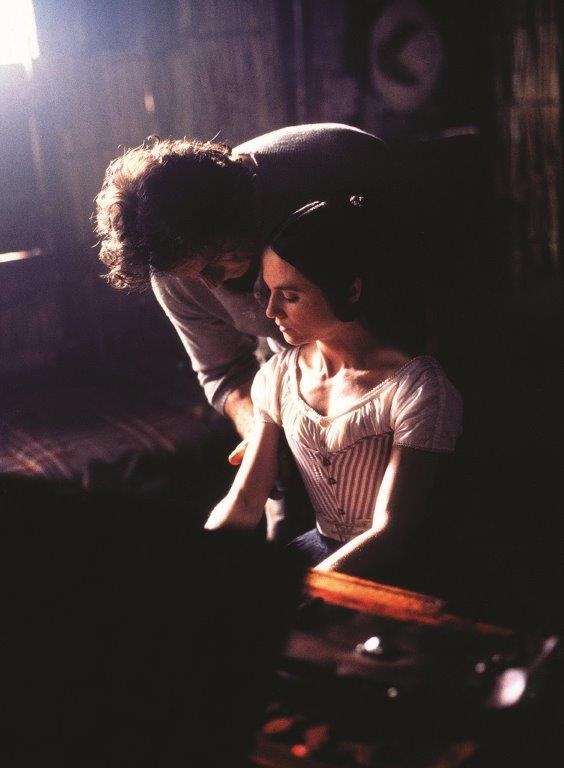 But the film is stolen by Hunter and Paquin, the former’s mesmeric, mute performance overwhelming. As with Neill, it’s all in the eyes and the posture, Ada’s feistiness, anger and sorrow expressed with the tiniest gesture or glance. Paquin’s outspoken Flora unwittingly initiates The Piano’s violent climax, Hunter collapsing in the mud like a punctured balloon. Though Campion originally intended The Piano to have a tragic ending, the coda is unexpectedly upbeat, Dryburgh’s autumnal colours finally giving way to something warmer and brighter. I won’t say any more in case there are still readers who haven’t seen this, surely one of the truly great films of the past few decades.
Studio Canal’s two-disc set looks and sounds marvellous. The commentary by Campion and her producer Jan Chapman is illuminating, the pair revealing that they initially rejected Hunter as too short for the role of Ada, and that Neill’s eruption of anger terrified them. There’s also The Piano at 25, an interview with Campion and Chapman filmed at Karekare beach. Hunter appears in a brief "Making Of" extra, her gregariousness and actual speaking voice a delicious surprise.
- Read more film reviews on theartsdesk
- Read more of Graham Rickson's Classical CDs Weekly on theartsdesk
Overleaf: watch the new trailer for The Piano


