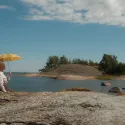
It’s the summer vacation and eight-year-old Sasha (Eylul Guven) and her three brothers have moved into a new house on Vancouver Island with their Hungarian parents. The kids trampoline, visit a wildlife preserve with their mother, walk on the beach, make paper boats and sail them in the kitchen sink. Dappled sunlight is filtered through trees. There’s a feeling of boredom and of time passing slowly. Their father (Adam Tompa) silently films everything on his video camera.
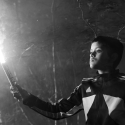
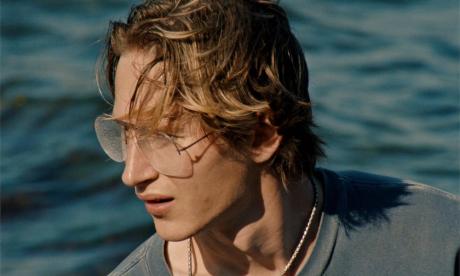
Jeremy (an impressive Erik Beddoes, pictured below), a teenager, is several years older than the other three and a lanky, unsettling presence. He rarely speaks but is grimly disruptive – he shoplifts and is brought home by the police, he walks on the roof and won’t come down, he lies motionless on the front step so the neighbours think he’s dead and call his parents to check. “I told them not to worry, that he’ll come to life soon,” his father tells his mother (Iringó Réti), who doesn’t look amused. His siblings treat him with resigned wariness. He draws intricate maps, one called Fantasyville, in his basement bedroom.
Canadian director Sophy Romvari’s first feature film, set in the 1990s, is intensely atmospheric, a beautiful meditation on memory and childhood. Her autobiographical short film, Still Processing (2020), addresses similar themes of unresolved grief over the deaths of her two older brothers.
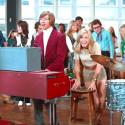
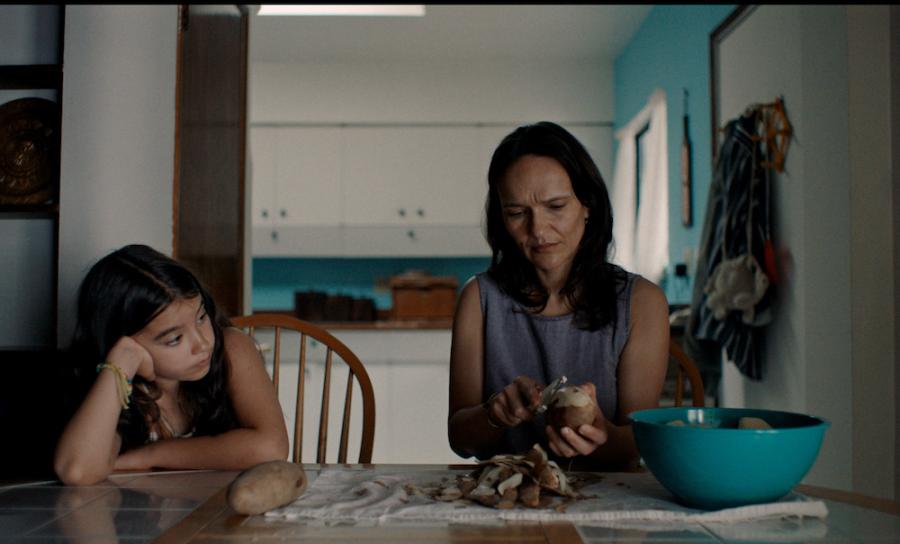
Blue Heron, however, is more about Sasha’s parents’ increasingly hopeless struggle to help Jeremy at the same time as safeguarding the three younger kids. “Why do you think he’s like this?” Sasha’s mother asks her. “I don’t know, mom.” Later, they peel and grate potatoes together quietly (pictured below). You sense the love between them, which throws Jeremy’s alienation into relief.
We often see the world through Sasha’s eyes (Maya Bankovic’s subtle cinematography is excellent). She crouches down to watch through the window of Jeremy’s bedroom as his father tries to calm him after the shoplifting episode. She peers round doors and listens to her parents talk about what the most recent in the long line of child psychologists has to say. A lot of jargon: social difficulties, adaptive living issues, oppositional defiant disorder. “What’s that?” He’s decided he’s the boss, says the shrink. “You must show him you are the boss.” His parents chuckle bleakly. They seem to want a diagnosis. But would it help?
Still, there are happy moments. While they’re sailing their paper boats, Jeremy sieves flour over everything, causing much merriment (though not to his mother). They all help the dad develop photos in his makeshift dark room – a Beethoven piano concerto is a fine accompaniment – though of course Jeremy decides to turn the light on at a critical moment. “Lesson number one, never do that,” says the dad calmly, as though he was expecting it.
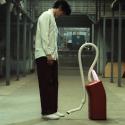
We don’t see extreme behaviour or violence (apart from Jeremy cutting his hand with broken glass) so you do sometimes wonder what all the fuss is about – isn’t he just being a difficult teenager? But later, when the film jumps forward to the present day with Sasha as an adult filmmaker played by Amy Zimmer (pictured below), we hear more about his distress.
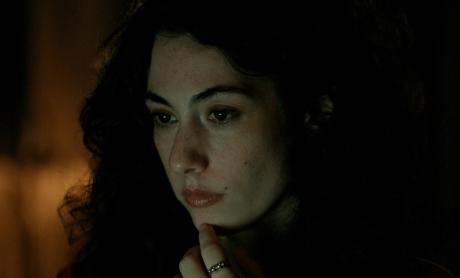
This section, where Sasha asks real-life psychologists to review his case (there wasn’t much family support back in the 90s and there isn’t much now, says one) and re-enacts her parents’ interview with social services, is exceptionally powerful and devastating. Daniel Johnston’s "Some Things Last a Long Time" plays as the credits roll. Blue Heron’s perspective on the elusive past stays in the memory.