It’s a sobering thought that had Marianela Nuñez joined the Paris Opéra Ballet at 16 instead of the Royal Ballet, she would have been compulsorily retired by now, thanks to the French company’s pension policy.
At 44, the Argentinian is proving she is indeed ageless, or "timeless", as her self-devised show for the Royal Ballet is styled, her dancing still wonderfully impressive with its blend of rock-steady, meticulous technique and emotional intelligence. In a programme interview, she states that the evening was devised to show off the male dancers in the company to whom she owes such a lot, not to put a spotlight solely on her. And so it proves, in generous helpings for all concerned.
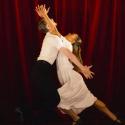
The evening, like all in a gala-format, is one of snippets and gems, impeccably danced by some of the company’s top talent. (The rest of the company is resting after its annual tour to Japan.) What it lacks, inevitably, is one of Nuñez’s greatest assets: taking a role she can sustain and deepen over three acts. The closest she gets to that is in the final item on the bill, Ashton’s Marguerite and Armand, premiered in 1963 and an instant crowd-pleaser, thanks to the popularity of its two leads, Fonteyn and Nureyev. The Lady of the Camellias and her fiery young lover were ideal roles for the mature Royal Ballet star and the tempestuous Russian defector, and the piece has featured regularly in the RB repertoire since 2000.
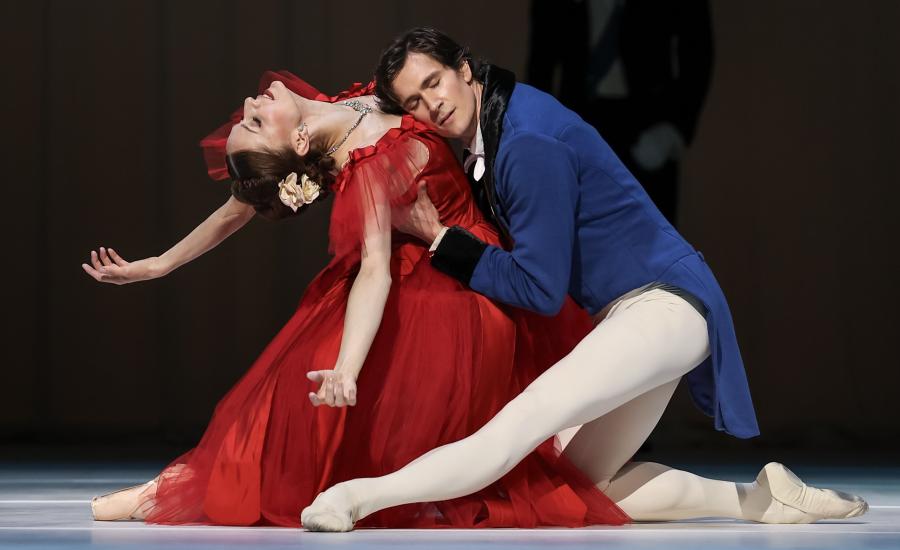
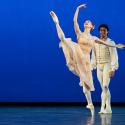
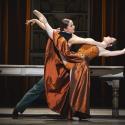
Nuñez is partnered here by William Bracewell (pictured above), whose lithe muscularity and subtle acting skills serve his character well, especially in his tender duet with Marguerite as she secretly prepares to obey his father and leave him. And the sober uprightness of Christopher Saunders as Armand’s father, dictatorial at first but softening towards the doomed Marguerite, is a brilliant cameo. Nuñez throws herself into its passionate clinches and lifts, executing it all to perfection, right down to timing her consumptive coughing to a little motif in the score (Liszt’s Piano Sonata in B minor). But even she can’t quite raise up the part to the tragic heights of her Manons and Giselles: it simply doesn’t allow it, cramming its three-act story into a scant 25 minutes, almost a pocket-melodrama.
But this is an evening of many Nelas, in the different styles of choreography she has performed over her 28 years with the company. The bill opens with In the Night (1970), a 25-minute Jerome Robbins piece for three couples, to Chopin nocturnes. The first duo, dancing against a starry backdrop, are Fumi Kaneko and Vadim Muntagirov, all swooning back-bends and playfulness; it's a slo-mo romance at first, quickening to the extraordinary lift in which she performs a cartwheel over his head. By contrast, the second couple (Mayara Magri and Lukas B Brændsrød), both in autumnal russet and burnt ochre, are slightly awkward, their relationship stuttering slightly until it shifts a gear into something more aggressive, almost volcanic.
The third couple (Nuñez and Matthew Ball), the most sophisticatedy dressed, have reached a more combative stage still, eluding each other’s grasp, stomping off and returning for a big finish, as she kneels and strokes his body from head to toe, then is pulled up into a lift before dropping into his arms. Of the three relationships, it’s the one you fancy seeing more of. All three couples arrive on stage in the final section and acknowledge each other before exiting. It’s an enigmatic piece, rather too keen to shadow the music with synchronised gestures, but an ideal showcase for lead dancers.
In the middle section of the bill come the bonbons. I rather wished they had come at the end, to send the audience home cheering. Which they duly did for the grands jetés, spins and demanding footwork of Petipa’s Corsaire pas de deux (Nuñez and Muntagirov). Macmillan’s Romeo and Juliet extract survived being a balcony-less Balcony Scene, with Ball and Magri an affecting lovestruck pair; and in the Tchaikovsky Pas de deux, Nuñez and Patricio Revé revelled in Balanchine’s usual crisp neo-classical moves with a twist, giving the audience a cheeky conspiratorial grin as they closed the piece with show-off fish-dives.
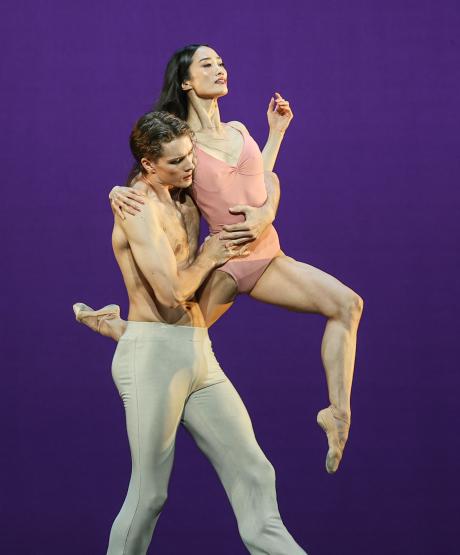
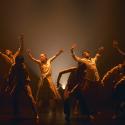
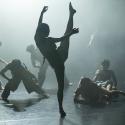
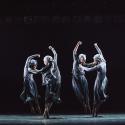
In between came extracts from works Nuñez has appeared in frequently, one of them made on her by Wayne McGregor for Infra (2008), to a Max Richter score, a sinuous, writhing duet engagingly performed here by Calvin Richardson and Akane Takada, though not with its backdrop of Julian Opie animated figures, sadly. Then came a snippet by the company’s other resident choreographer, Christopher Wheeldon, from his After the Rain (2005), to Arvo Pärt’s delicate Spiegel im Spiegel. Kaneko and Brændsrød (pictured above) excelled in this, their usual exuberance channelled into matching elegant moves to the glacial pace of the score. It’s a piece that risks inelegance, too, with feet often turning out at a 90-degree angle, limbs going rigid, or Kaneko’s ultra-bendy body moving effortlessly into back arches or 180-degree sideways splits. But the acrobatics didn’t detract from the delicate beauty of the performances.
My abiding image of the evening, though, is the sheer joy on Nuñez’s face as she performed a seemingly endless set of fouettés, as fit and limber as if she were 20 years younger. It's a generous evening, if not a perfectly packaged one, from a very generous artist.