
Mattila, Hampson, LPO, Jurowski, Royal Festival Hall | reviews, news & interviews
Mattila, Hampson, LPO, Jurowski, Royal Festival Hall
Mattila, Hampson, LPO, Jurowski, Royal Festival Hall
Richard Strauss's odyssey towards the voluptuous horrors of Salome: ambitious in principal, flawed in practice
Sunday, 20 January 2013
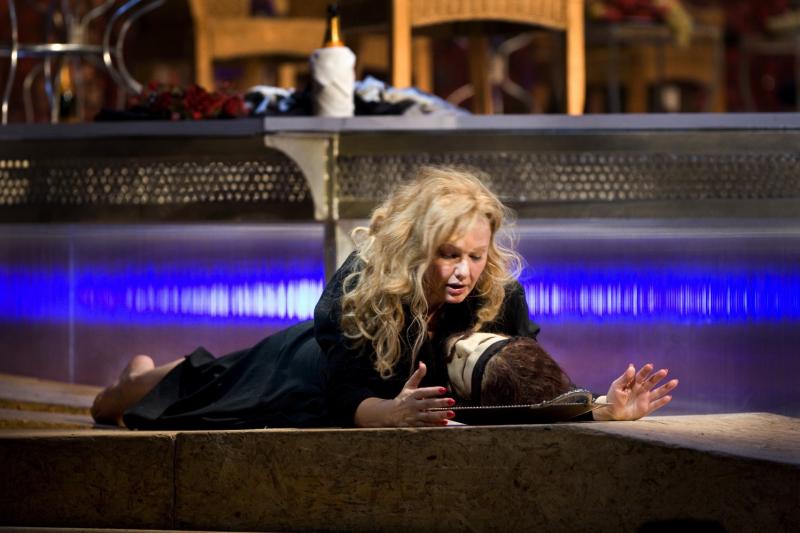
Karita Mattila as Salome with Jokanaan's head in the Metropolitan Opera production of Strauss's operaKen Howard
This may have been the official, lavish fanfare for the Southbank’s The Rest is Noise Festival, which if the hard sell hasn’t hit you yet is a year-long celebration of 20th Century music in its cultural context and based around Alex Ross's bestseller of the same name. For Jurowski and the LPO, though, it was very much through-composed programme planning as usual, though with a sweeping bow towards the festival theme of how modernism evolved as it did.
In this case Jurowski fashioned a very selective, very long (it could have been a three-parter) and often unusual nine-year odyssey for Richard Strauss towards the voluptuous horrors of his 1905 opera Salome. Ambition, though, for once outstripped some of the execution, with even the star singers, Karita Mattila and Thomas Hampson, finding that the vocal embodiment of Strauss’s huge demands couldn’t always match the dramatic, much as that thrilled in Salome’s final love-death.
There was none of the sweeping involvement or the jaw-dropping blazes that can churn up the adolescent in us
Only Jurowski would dare to place Also sprach Zarathustra, Strauss’s giddying poetic homage to Nietzsche, not only in the first half of the concert, but a first half to be shared with some of Strauss’s next steps. Premiered in 1896, It’s certainly one of those preludes to the 20th century which seems way ahead of its time, and has a special claim in that a 1902 Budapest performance turned the young Bartók back to the path of composing.
You can’t get more C-majorish than the Kubrick-immortalised opening sunrise, trumpeter Paul Beniston leading a carefully graded light in each of his three famous summons. On the other hand, what could be wackier than the fugue which takes the theme through the 12 notes of the chromatic scale – the first tone-row? – as a dark meditation on the dryness of academic learning, a stage Nietzsche decided man had to pass through on his way to transcendence. This was one of the many irreproachably balanced strange sounds Jurowski judged to perfection, starting with the back row of double-basses.
 Yet despite all the orchestral revelations, there was none of the sweeping involvement or the jaw-dropping blazes that can churn up the adolescent in us. In short, too much Apollonian objectivity and not enough Dionysian wildness.
A chilliness in the delivery wasn’t helped by what sounded like lack of ideal preparation this complex work needs, nor by Jurowski’s decision to follow the line of Strauss the conductor rather than indulgent Karajan in speeding through some of the sections, and not always taking the whole of the orchestra with him.
Perhaps the rough edges were not surprising, given that more rehearsal time might have been needed for the rest of the programme: the LPO would probably not have played the final scene from Salome in living memory, and certainly not the five colossal orchestral songs that we were so lucky to hear in the concert. Of the four from Op. 33, the leisurely glow of "Verführung" ("Seduction") and the hieratic calm of the "Song of Apollo’s Priestess", with its surprising thematic anticipation of Salome’s demand for John the Baptist’s Head, are the gems. Mattila was imposingly at home in the second, though the first showed up what has become a problem in the break between chest voice, a gauzy middle that is beginning to wobble and the still beautiful diaphanous top of the range.
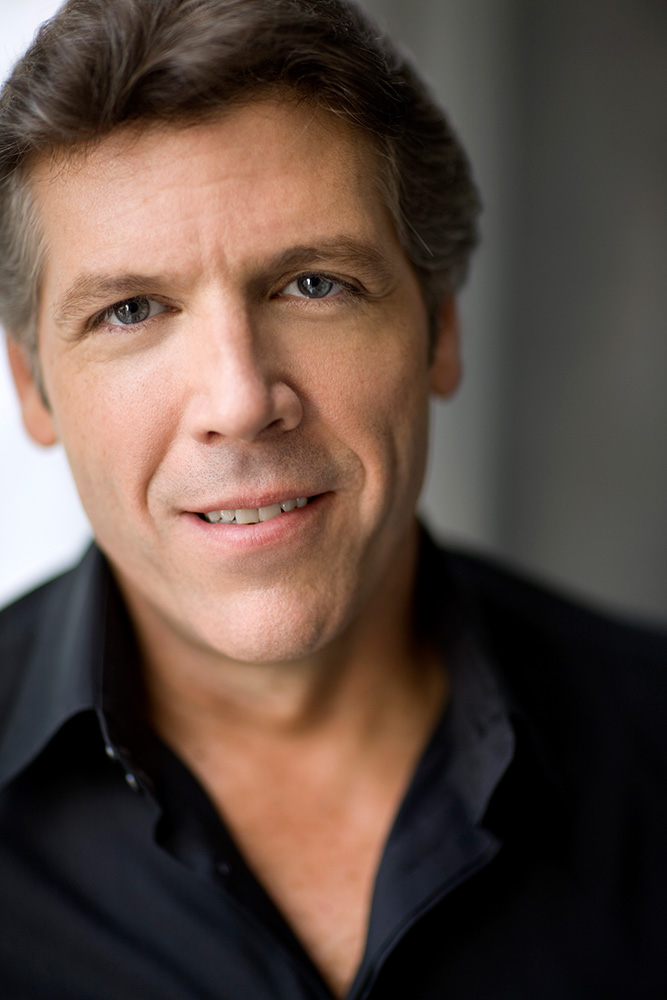
Hampson (pictured above by Dario Acosta) had a harder job, though proudly stepping up to a song-contest like similarly harp-announced Wolfram in Wagner’s Tannhäuser to voice his flattering Hymn. Here the low notes tended to vanish, suggesting that although Strauss stipulated a high baritone for this and the less convincing rhapsody setting Goethe’s “Pilgrim’s Morning Song”, a more bass-baritonal approach might work better.
That’s certainly the case in the biggest surprise of the evening, the fully-fledged tone poem for voice, solo violin and selective orchestra Notturno of 1899. The narrative is by that same Richard Dehmel who inspired Schoenberg’s Transfigured Night, and tells a dream vision of fiddling death appearing in the guise of a beloved friend. The harmonies and the weird woodwind moonshine mark this out as one of Strauss’s most individual scores, and with Hampson supplicating a similarly standing leader, the flawless Peter Schoeman, we were witnesses to a masterpiece reborn.
Side-of-stage chat between the ever articulate Jurowski and his baritone filled us in on the background, and there was an invaluable moment when the conductor told us how he had sought out a Dresden score of Salome, the only one to incorporate Strauss's changes for lighter sopranos than Marie "Auntie" Wittich who sang in the premiere, for cues as to how to ease the burden for his own singer.
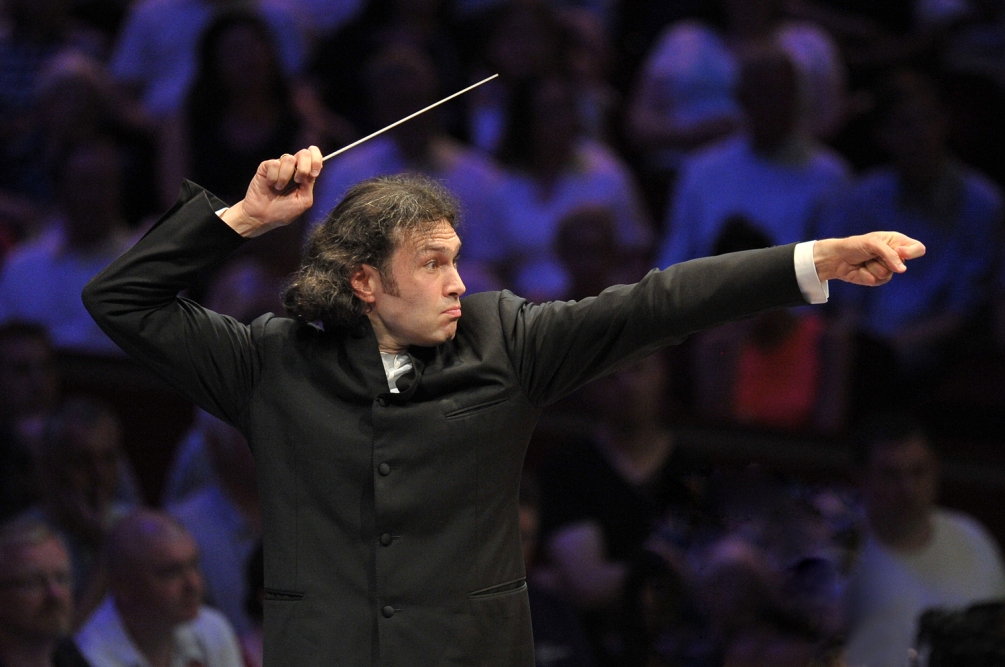 Even so, the only perfect performance of the evening came in Salome’s Dance of the Seven Veils - its wrapping round of airy sensuousness and lurking threat deliciously held in fine balance, its teasing characterfully launched by oboist Ian Hardwick and a fabulous guest principal flautist, Clara Andrada. Jurowski (pictured right by Chris Christodoulou) floated the waltz-strains begun in the Superman’s Dance of Zarathustra, reminding us that in the real world they were about to tumble into the abyss.
Which we could palpably envisage as Salome peers into the cistern awaiting Jokanaan’s head, that queasy pinched, high double-bass note insisting on her anxiety. There could have been no more vivid start for Mattila’s instinctive dramatic artistry, and though she was bathed in a horrid pinky-red light which gave her bad sunburn, her acting out of the teenager’s necrophiliac lovesong astounded. What we saw was not always what we heard, though: pushing some of the upper notes towards an alarming sharpness, her knife-thrust gestures only complemented the cutting low notes.
By force of her sheer will-power, though, you could almost believe there was more focus to the swimmier rest of the voice than actually emerged. In the opera house, any reservations would by this stage be totally suspended; but the concert platform is a less enveloping world, and vocally this wasn’t the ideal Salome by some way. Most of the audience, however, clearly felt otherwise and were on their feet – a fair tribute to an undeniably great artist. Five stars for audacious programming and showstopping denouement, then, but only, reluctantly, three (and a half) for the results.
Watch Karita Mattila deliver Salome's final scene (minus the anticipation) in the 2008 Metropolitan Opera production now on DVD
Though Mattila was bathed in a horrid pinky-red light which gave her bad sunburn, her acting out of teenage Salome’s necrophiliac lovesong astounded
rating
Explore topics
Share this article
Add comment
The future of Arts Journalism
You can stop theartsdesk.com closing!
We urgently need financing to survive. Our fundraising drive has thus far raised £49,000 but we need to reach £100,000 or we will be forced to close. Please contribute here: https://gofund.me/c3f6033d
And if you can forward this information to anyone who might assist, we’d be grateful.

Subscribe to theartsdesk.com
Thank you for continuing to read our work on theartsdesk.com. For unlimited access to every article in its entirety, including our archive of more than 15,000 pieces, we're asking for £5 per month or £40 per year. We feel it's a very good deal, and hope you do too.
To take a subscription now simply click here.
And if you're looking for that extra gift for a friend or family member, why not treat them to a theartsdesk.com gift subscription?
Comments
"the first tone-row?" -
It's always good to raise
It's always good to raise questions like this in order to winkle out the truth from someone who knows better. Thanks for that, Paul - you jogged my memory about the Mozart, that strange unison transition at the begining of the fourth movement development. But I don't think I knew about the Bach. Probably there are more...