At last, a bag of sweets! In earlier concerts from Vladimir Jurowski’s LPO series Prokofiev: Man of the People? much time was spent consuming the composer’s flat soufflés, experimental rock cakes, or the fancy dish that was really haddock. Interesting for the brain, maybe, but the diet on occasion has been hard on the stomach. Not that any of this impinged on audience numbers: the season has definitely proved Jurowski’s happy lock on the London Philharmonic’s audiences. They will follow their artistic guru and Principal Conductor almost anywhere.
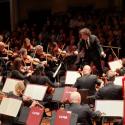
But for this last concert of all, the menu mostly put the less-than-top-notch or the neglected to one side, and served up two popular pinnacles of the composer’s perplexingly varied art: Prokofiev’s first and fifth symphonies. Was it because of the repertoire’s familiarity that Jurowski chose not to conduct the programme himself? Whatever the reason, it was good as always to see the orchestra’s Principal Guest Conductor Yannick Nézet-Séguin bouncing about the podium, grinning widely, mouthing ‘Yaah!’ during a hectic climax, windmilling his arms, and generally having the time of his life
In the poised trifle of the Classical Symphony there was happily no trace of the dark red meat Valery Gergiev insists on discovering when he’s conducting the piece. Instead, Nézet-Séguin found balletic grace, lively dynamic contrasts, sharp instrumental colours, elegant wit, unfiltered sunshine: much, much better. The only time when something seemed amiss came in the finale, when the music’s bass lines skimmed past the ear, barely registering. Rather that, though, than heavy artillery and blood on the floor. The LPO played deliciously: thumbs up especially to the silken strings and the two bassoons.
Nézet-Séguin breezed along with the composer, waving the Soviet flag just enough
After the interval, spry delight was put to one side for Prokofiev’s Fifth, a contradictory work that refuses to settle neatly into any pigeon-hole you might think of. An orthodox Stalinist war symphony? Hardly. A personal parade of pain and grotesquerie? Only fitfully. This is Prokofiev the champion chameleon, the man of masks, and the LPO proved admirably attuned to the constant twists of mood. The first movement was exceptionally well handled, dark clouds gathering behind your back, the grating climaxes emerging unforced, with the final major chord convincingly plucking victory from defeat. The second movement lost a little traction in the final mad caper, rushed in too much of a blur: a pity about that. But so much else in the rest was weighted exquisitely and thoughtfully phrased. In the third movement let me single out the strings’ eerie millpond calm, hard on the heels of heavy snarling: impressively unsettling. For the giocoso finale, Nézet-Séguin breezed along with the composer, waving the Soviet flag just enough, but sprinkling vinegar over the finish: I’m sure Prokofiev would have approved of that.
Front and back, then, this was a concert easy to enjoy. But what of the middle? Janine Jansen, tall and lovely, is a violinist who regularly escorts us to heaven, though even she couldn’t find paradise in the brittle bit and pieces of Prokofiev’s Violin Concerto No 2 of 1935. The concerto refuses to play the virtuosic game without finding anything to fill the gap except grimacing mockery and curdled lyricism. It’s not enough. We could certainly enjoy Jansen’s range of colours and emotions, sinuous here, golden-toned there, muscular attack to the right, ghostly tip-toeing on the left. And everything delivered with authority and flair. The orchestra’s colours weren’t smudgy either, particularly in the slow movement’s striking opening, clarinets plopping like raindrops against the violin’s long-legged song. But the music’s hard bulk, and the puzzle of Prokofiev, remained.