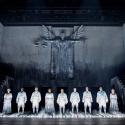
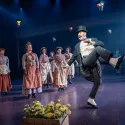
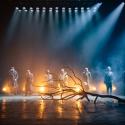
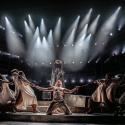
"Why write about Ruth Ellis?" It’s a question I’ve been asked many times in the run-up to The Thrill of Love and it’s a good one. I’d like to know the answer, too.
Three years ago, I was commissioned by the New Vic Theatre in Newcastle-under-Lyme to write a play which I suspect is some 30 years in the making. I can trace its beginnings to the mid-Eighties, when I was 17 years old and on high-alert for the kind of gritty icons who graced the singles covers of The Smiths. I discovered Ruth Ellis at the cinema, played so vividly by Miranda Richardson in Dance with a Stranger. The film cast a powerful spell, not least because of the screenplay by Shelagh Delaney, whom I already loved for A Taste of Honey. Delaney wrote in a way that no other playwright I knew. Her characters gave a spark to my own ambitions. It was a few years before I wrote a play of my own but a fuse had been lit.
The play seeks to understand more about a complex, enigmatic young woman
Yet Ruth Ellis is no fictional character. She was flesh-and-blood real and her story is true. The bare facts are as follows. A 28-year-old model, nightclub hostess and mother-of-two, she was executed in July 1955 for the murder of her lover, David Blakely. Ruth pleaded not guilty but offered little defence. She was tried and sentenced in a day-and-a-half. Three months after the night of the crime, she was dead. The public outcry was a key factor in the abolition of the death penalty. Ruth Ellis became the last woman to be hanged in Britain and her death was seen as a shocking example of "the medieval savagery of the law".
Ruth also lived on in popular culture. A year after her death, Diana Dors was strongly influenced by her story in Yield to the Night, a film with close similarities to her crime and punishment. Ruth still appears in the tabloids when, every few years, yet more "unseen photos" are unearthed. A Fine Day for a Hanging by Carol Anne Lee, published last year, is the latest and best Ruth Ellis biography. A British "blonde bombshell", her reckless life continues to fascinate, as does her lack of remorse. “It's obvious when I shot him, I intended to kill him,” Ruth tersely told the prosecuting QC. “No further questions,” he replied. But of course, there are.
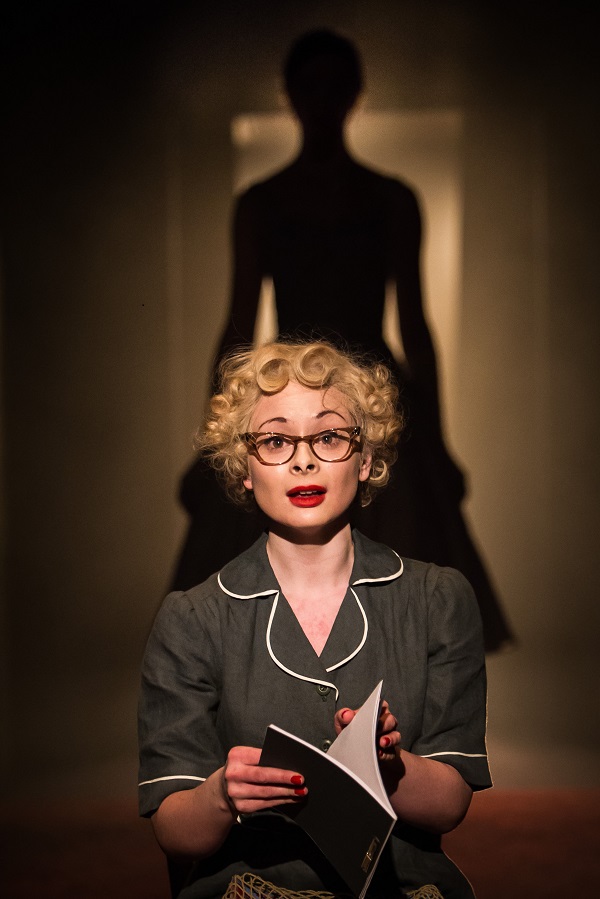 Ruth had already left a violent marriage when she met Blakely. His own violence was raised in court but not in the way we’d discuss it today. “He only hit me with his hands and his fists but I bruise very easily,” said Ruth, revealing so much about her sense of self-worth. Neither she nor Blakely were faithful and her motive for murder was seen as sexual jealousy. With the benefit of 60 years' hindsight, that looks very much like the symptom and not the disease. The record (and the play) shows Ruth had suffered at the hands of people never brought to justice. In 1955, domestic violence and sexual exploitation had barely been named.
There’s no doubt Ruth Ellis committed a terrible crime. She never denied that herself. She shot Blakely outside of a pub at point-blank range. Four bullets went into his body, a fifth bounced off the pavement, hitting a passer-by in the hand, which didn’t help her defence. The sixth, she may have meant for herself but as Blakely lay dying, she passed the gun to an off-duty policeman who found himself first on the scene. She didn’t resist her arrest or her fate. Many thousands of voices called for a reprieve but not hers.
Researching The Thrill of Love took me to the case-files in the National Archives but the emotional truth was more elusive. Official documents reveal more about the authors than the subject, with her psychiatric reports particularly distressing to read given what we now know about mental health. In reference to her crime, one doctor concludes “an emotionally mature woman would have been prevented from this action by thoughts of her children”. Why write about Ruth Ellis? That judgement seems reason enough.
Ruth Ellis has become a symbol of criminal injustice but in The Thrill of Love she is neither victim, villain or hero. The play seeks to understand more about a complex, enigmatic young woman and the life she lived. With Blakely an off-stage character, the story focuses on Ruth and her fellow hostesses. They would have known her better than anyone yet they are all but silent in the official records. By finding their voice, I felt we may hear Ruth’s, too. Exactly what drove her out with a gun on Easter Sunday 1955 can never fully be known but we still have much to learn from the question.