The best playwrights create word magic – and when that happens, you can’t miss it. Other writers produce journalism, or teaching materials. Sadly, for me, Christine Bacon is one of the latter, and her latest 90-minute play, A Fine Idea at the Arcola studio, is a didactic account of 80 years of international aid. Inspired by Jason Hickel’s 2017 book about global inequality, The Divide, her play is a passionately felt critique of international development which questions whether us liberals really want to change the world – or are we just more comfortable with the idea, a fine one, of helping the global poor?
The plot is simple, and predictable: Jo, an idealistic British twentysomething, whose grandfather Ben Hardy persuaded American President Truman to include the mission of “international development” in his 1949 inaugural speech, is an aid worker in 2024 Nairobi. Although her experienced boss, Laura, insists that they should be politically neutral, Jo is drawn into the June protests against government taxation plans when she meets Kala, an activist who wants justice for the Global South. History tells us that the protests were only partially successful, but guess what happens to the play’s individual characters?
Given the sketchiness of the story, the main content of the drama is not character, but education: suddenly we are back in the classroom, listening once again to teacher:
So, listen children: Kenya is a country in East Africa, which is a former British colony, and gained its independence in 1963. Today, it has a population of around 56 million people. Despite making progress in many areas, it still faces several development challenges. Almost one million children are not attending primary school, and years of underinvestment have left parts of the healthcare system struggling to meet people’s needs. Around 19 million people do not have access to safe drinking water, and about one in four children suffers from malnutrition. High levels of poverty and unemployment mean that many families find it difficult to earn a stable income. Because of these challenges, Kenya receives support from international aid organisations, which work to improve education, healthcare, access to clean water and living standards.
Listen children, life chances are much better in wealthier countries in the West than in the Global South. People in poorer countries are more likely to experience poverty, poor healthcare and limited access to education. Despite this, discussions about international development fail to attract much attention, and aid workers often find that their friends back home are uninterested in their work. However, public figures such as Angelina Jolie have helped raise awareness of global issues by supporting humanitarian causes. There have also been important efforts to reduce global poverty. In 2000, governments around the world agreed to the United Nations Millennium Development Goals, which aim to halve extreme poverty and improve living conditions for millions of people. Building on this progress, the international community has committed to ending extreme poverty altogether by 2030 as part of the Sustainable Development Goals.
Listen children, in 2024, large protests took place across Kenya in response to the government’s proposed Finance Bill, which included a series of tax reforms. The government argued that the changes were needed to increase Kenya’s tax revenue, partly in response to pressure from lenders such as the International Monetary Fund. However, many Kenyans opposed the proposals because they feared that higher taxes on everyday goods, including bread, drinks and vegetable oils, would make it harder for ordinary people to afford basic necessities. Some commentators compared the spirit of the protests to the ideas of revolutionary Africans such as Thomas Sankara, radical leader of Burkina Faso in the 1980s who advocated economic independence and social justice, earning him the nickname “Africa’s Che Guevara” (you may google this name).
No talking please. Quiet. Listen. The Kenyan protests became increasingly tense as demonstrators clashed with the authorities. Several people, including Rex Masai, aged 29, and Evans Kiratu, aged 21, were killed by police. Human rights organisations accused the police of using excessive force against protesters, while reports emerged that some demonstrators had been abducted from the streets and tortured. Meanwhile, Kenya receives financial support from the International Monetary Fund, an international organisation in which the United States is the largest shareholder. However, these loans come with conditions which place additional pressure on ordinary citizens. About 68 shillings out of every 100 collected in tax goes towards debt repayments – more than the government spends on health and education combined. Is this fair?
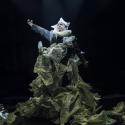
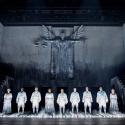
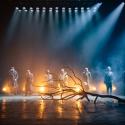
If you’d like to go back to secondary school, then A Fine Idea is the play for you. On the plus side, Charlotte Westenra’s production, which is designed by Georgia Wilmot, is successful in realizing the more overt theatricality and satirical intent of Bacon’s work: there’s a parody of Live Aid music, a magic show about the economics of international development, a surgical episode illustrating IMF cuts, the ghosts of Ben Hardy and his wife from the 1950s, and of Florence Nightingale, and a symbolic cesspit. A lot of the sarcasm about the good intentions of the rich lands well enough, and there are some good laughs along the way, even if the story’s conclusion is depressingly obvious.
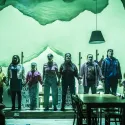
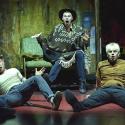
A hardworking cast of four give life to the staging, which hops around in time from the 1940s to the present, with Nightingale telling us about the Crimea War, and interludes of more physical comedy. Ella Bryant makes her stage debut as Jo, and is convincingly naïve and idealistic, gradually coming of age in a situation where Grace Saif’s intense and committed Kala leads the way. Kevin Trainor plays both Ben and Elio, an economist, while Georgina Rich is Laura, Mrs Hardy and Nightingale. If you want to know more, I can always set some homework.