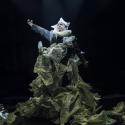
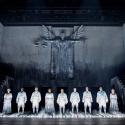
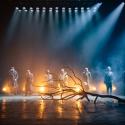
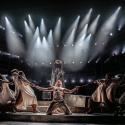
We are in Brooklyn in 1938 and Sylvia Gellburg, a middle-class Jewish housewife, is paralysed from the waist down. It’s a hysterical paralysis brought on by the shock of seeing newspaper pictures of the cruelty meted out to German Jews during the horrors of Kristallnacht (or the night of broken glass). She becomes obsessed with a picture of two elderly Jews forced to clean the pavement with toothbrushes - events several thousand miles away have caused the sudden numbing of her limbs. Or is it something else?
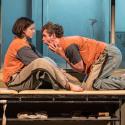
In Arthur Miller’s play (written in 1994), Sylvia (Lucy Cohu) is married to Phillip (Antony Sher, magnificent if a little overwrought at times), a buttoned-up property valuer who is an almost comically self-hating Jew. He despises his Jewish looks, is quick to point out that his name comes from Finland, and looks down on recent immigrants fleeing Nazi Germany. He proudly boasts he’s "the only Jew ever" at Brooklyn Guaranty, where he’s a cringe-making toady to his Gentile boss (Brian Protheroe).
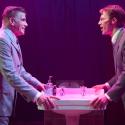
Dr Harry Hyman (Nigel Lindsay) is treating Sylvia and his quietly insightful wife, Margaret (Madeleine Potter), has Phillip’s number - “a miserable little pisser”, she calls him. She also knows her husband. A famed lothario in his youth and an adulterer in their marriage, his interest in Sylvia goes beyond the strictly professional - “I have an unconventional approach to illness” - as he tries to get to the bottom of her condition which, he believes, lies in her subconscious.
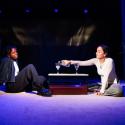
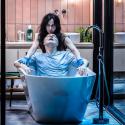
Slowly - very slowly - Harry’s questioning of Sylvia and Phillip, and Sylvia's sister Harriet (Emily Bruni), lays bare the details of their sexless marriage. As with all of Miller’s work, including his masterpieces The Crucible, A View From the Bridge and Death of a Salesman, the story is full of metaphor and hidden meaning. Sylvia's paralysis parallels the inactivity of American Jews slow to realise the enormity of Nazi crimes in pre-war Germany, and we realise it's because her husband is an emotional cripple that she is now in a wheelchair. She reflects on a life unlived: "I gave it away like a couple of pennies - I took better care of my shoes," she says matter-of-factly.
The marital bed, with its counterpane neatly placed, is onstage throughout, and when it is moved downstage it’s for the invalid Sylvia; this is a bed, we realise, that has seen very little service beyond being where two people have slept in their 20-year marriage. If only Dr Hyman had sussed this earlier we might have been spared the longueurs of two-and-a-half hours and the repetitions of a playwright long past his best. The final scenes of death, forgiveness and rebirth are entirely predictable.
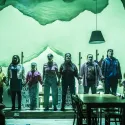
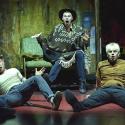
The superb cast give it their all, however; Iqbal Khan directs with great clarity; Mike Britton’s design, with its flaking walls and industrial lightbulbs, is a delight, as is Laura Moody's onstage cello music. But late Miller is far from great.
- Broken Glass at the Tricycle, London NW6 until 27 November
- Find Arthur Miller on Amazon