

So many 19th-century opera plots park themselves on fertile historical ground, amid all the colour, character and juice you could ever want, and then spend three hours picking at some anaemic daisies at the edges. It was a worry last night as I watched Donizetti’s Maria di Rohan in concert at the Royal Festival Hall. By sidestepping the heavyweight power players of Louis XIII’s reign, the eminently operatic figures of Cardinal Richelieu (endlessly alluded to) and Marie de Medici, weren’t we also sidestepping the juice? Thankfully, not. But we did have to wait until the second half for it to flow.
Despite a cavernous back-story – expounded on in irritating detail in the programme notes – and a love triangle as complicated as a cat’s cradle, the core of Donizetti’s 1843 opera is tightly plotted. Maria di Rohan, a lady-in-waiting, finds herself stuck between two courtly lovers: one true love (Riccardo) and one marriage of convenience (Enrico). Trysts, duels, honour and politics flow forth. Tension is ratcheted up. Then released, in classic operatic fashion with the return of an incriminating love letter.
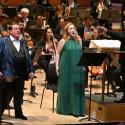
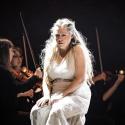
What makes all this more than just a bit of histrionic fluff on the great wall-to-wall carpet of early 19th-century Italian opera is the injection of a certain amount of psychological realism to proceedings. Maria’s delusions, hopes and fears are captured in detail by Donizetti in several rich arias, which Krassimira Stoyanova exploited to great emotional effect. Enrico’s anger, too, is complex, darkly sarcastic, passively aggressive and familiar, and saw a vocally troubled Christopher Purves storm back into form at just the right time. It sets up a classic Donizettian finale: a trio in meltdown, psychologically, physically and vocally.
The only problem with such an intrinsically theatrical and intensely character-driven piece like this is that it is almost impossible to pull off in concert. There are so many dramatic possibilities that, without a director, you’re left with a jumble of jigsaw pieces, all interesting, but ill fitting. The quality of the music-making, however, was of such a standard as to sweep away any concern about the consistency of the dramatic line.
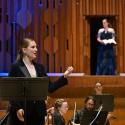
For much of the first half, with the boys yet to hit their stride, a lot of confused plotting and only one, admittedly stunning, aria from Stoyanova, the interest mainly lay with Mark Elder and the Orchestra of the Age of Enlightenment. It was model playing: sharp and tight when necessary, but also long-lined too. For an orchestra so addicted to a rough-edged period clipping and cutting, it was impressive to hear such consistent lyricism and tonal beauty.
But the second half was all about the singers, above all the spin and sway of Stoyanova and her opulent sound and the conceited swagger and intensity of Jose Bros’s Riccardo.

Add comment