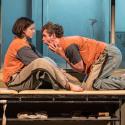
When I got the call enquiring whether I’d like to adapt The Sunday Times Humour Book of the Year Dear Lupin for the stage, the first thing I did was to thank my lucky stars. Dear Lupin: Letters to a Wayward Son is a collection of real letters, written over 40 years, by racing correspondent Roger Mortimer to his wayward son Charlie (christened “Lupin” after Mr Pooter’s disreputable son in Diary of a Nobody). While I’ve been an actor for 40 years, and a writer for 15, I’d never take the plunge of attempting to write a proper play. Sometime the quickest way to do something is to be asked.
I settled down to read the original, and long before I’d reached the end I’d decide that this was too wonderful an opportunity to be missed. Dear Lupin is indeed a modern humorous classic of English life; just as the reviews have said: funny, unsentimental, and ultimately deeply moving.
Weaving these twin stories into a simultaneous conversation provided the dénouement of their relationship
The first thing was to meet the original Lupin – real name Charlie, now aged 62 and living in Parsons Green – to see if we got on. We duly arranged a rendezvous at a favourite Italian restaurant of his in south London, and after three hours of conviviality, discussing both the book and his father (aided by several bottles of Merlot), he announced himself delighted to let me have a go.
The biggest issue to be addressed was that of trying to turn a correspondence into a three-dimensional theatrical entertainment. Letters are, by definition, a monologue, and Charlie, with typical modesty, had deliberately kept his own contribution to his dad’s oeuvre to a minimum; indeed, the original book contained nothing of his own voice beyond a few pithy epithets, discreetly placed to illuminate his father’s hilarious and exasperated musings.
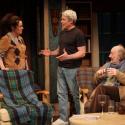
Charlie and I were soon meeting at his flat once a fortnight (pictured below: Michael Simkins). As our conversations lengthened and progressed, his own extraordinary story began to come out. His life, indeed, was very nearly as extraordinary as that of his father. Piece by piece, interview by interview, a parallel narrative began to emerge, one that was, thankfully, complementary. There were constant surprises; sometimes Charlie would offer me a memento or anecdote which, in his own words, “might be of help” – a photograph here, a school report there – and inevitably they were. And thus gradually a dialogue between him and his dad began to emerge.
 For instance, one of his father’s most memorable letters, describing a calamitous package holiday to Crete, coincided with Charlie sunning himself in a spirit of unrestrained hedonism on a sun-kissed island off the coast of Kenya, surrounded by waiters straight out of a modeling catalogue and by a menagerie of pets including a tame monkey. Juxtaposing the two stories – Charlie’s ecstasy and his father’s comic agony – provided exactly the sort of dramatic and comedic counterpoint I was seeking.
The final years, in particular, provided a tender and melancholy counterpoint to the frivolity and hilarity of the early times; for while Roger was coping with old age, infirmity and at least the prospect of death, Charlie himself was experiencing illness and battling with alcoholism. Weaving these twin stories into a simultaneous conversation provided the dénouement of their relationship.
Indeed, such were the stories on offer – many hilarious, several hair-raising, all of them absorbing – that the problem was what to leave out. Did I include the wonderful tale of Roger’s horrendous family Christmas, or instead eschew Charlie’s trip overland to Poland with a consignment of toilet rolls for underprivileged children? It was, in every sense, an embarrassment of riches.
Now it's written; and there’s nothing left but to stand at the back of the auditorium like Zero Mostel in The Producers and watch the performance with bated breath. But I wouldn’t have missed the ride for anything.