Family crises and relationship breakdowns are familiar subjects for films to tackle. Both are central to Aribam Syam Sharma’s 1990 feature Ishanou (The Chosen One), where divine intervention wreaks havoc on a middle-class family living in India’s remote north-eastern Manipur province. Husband and wife Dhanabir and Tampha (Kangabam Tomba and Anoubam Kiranmala) are celebrating their young daughter’s transition to adulthood by having her ears pierced as part of a Meitei religious ceremony. Tension between the pair is signalled early on when Tampha rebuff’s Dhanabir’s attempts to embrace her. The following day, she begins experiencing visions and is compelled to join the Maibi sect as a priestess.
Forces beyond her control are at work, the scenes showing Tampha writhing and shaking resembling demonic possession. Sharma’s depiction of a society where the spiritual and the prosaic coexist is disarmingly matter of fact; Dhanibir is seen signing paperwork and answering the phone at the office where he works, while Tampha adjusts to a life of religious ritual and isolation. Modern and medieval worlds are side-by-side. A pre-crisis sequence showing the family riding their newly acquired scooter contrasts with shots of Tampha’s nocturnal journey to the Maibi retreat, irresistibly propelled whilst in a deep trance.
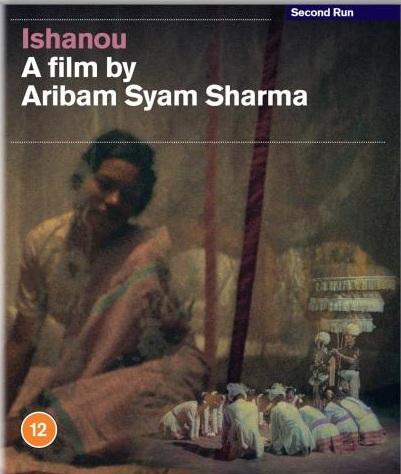
Tampha’s Maibi elders explain to Dhanabir that his wife has had no choice but to be ordained, and that only God has the power to release her from her new status. The village doctor can prescribe a sedative to relax her, but the effects are short-lived, the metamorphosis seemingly permanent. As a Maibi priestess, Tampha has a high status but becomes invisible to wider society, losing her role as a wife and mother.
Ishanou looks and feels like a documentary, Sharma drawing incredibly natural performances from his cast, while cinematographer Girish Padhiar makes the rural Manipur locations glow. Extended scenes showing ritual dances (to music composed by Sharma) are compelling. Extras are as good as you’d expect from this imprint, film historian Omar Ahmed’s booklet essay outlining the history of Manipuri cinema. Do watch the recent interview with the elderly but lucid Sharma, proud that Ishanou was shot on 35mm film and recalling its production. Especially interesting is his revelation that casting Tampha proved difficult as “actresses feared that playing the part might lead to their being chosen as Maibi in real life”, Kiranmala’s Brahmin caste supposedly making her immune from the risk. Second Run’s HD transfer of a new restored print looks exquisite.