

For a creator of any kind, keeping control over what happens to their original work is essential. Their creativity is their livelihood, and their reputation is built on it. They protect it fiercely from other people copying it, altering it, selling it - anything in fact which devalues the work and damages the creators’ earning capacity from it.
So it has come as a shock to the entire theatrical design community to find that the Royal Opera House appears to have drawn up a new contract for any new commission which will attack this core principle, which is the basis of English and European copyright law. The ROH is demanding that its entire stable of creative talent – directors, set and costume designers, lighting and special effects designers, even composers, choreographers and librettists - sign over to the Royal Opera House all their copyright in their work there - in perpetuity.
 It’s a worrying development for the future of creative work in the UK, which should exercise everyone who wants to see the best of talents at work in opera, ballet and theatre. For this article I have canvassed opinion widely among creative artists, managers, publishers, lawyers – and I will identify no one so as not to jeopardise their position vis-à-vis any future dealings with the Royal Opera House (ROH). Only this past week, the ROH showed its sledgehammer approach to people it thinks step out of line when it attempted to censure an arts blogger for using ROH publicity stills to illustrate ROH productions.
From correspondence that I have seen from the ROH’s Legal and Business Affairs Department, it appears that these “all-rights” contracts for work done for the ROH’s Education Department and for ROH2 are already in place and non-negotiable. I am told that the same conditions are also being required for work to be done in the main house. And this correspondence contains a clear statement from a writer in the Legal and Business Affairs Department that the ROH’s policy is to acquire copyright in all commissions in future.
What effect might this have? If you look at the 2010/11 Royal Ballet season, most of the work programmed was created by choreographers who emerged from within the Royal Ballet – Frederick Ashton, John Cranko, Kenneth MacMillan, Christopher Wheeldon and so on, who are all now considerable names with productions of their work in companies around the world. If they had handed over their copyrights to the ROH when they made their work originally, they would have no benefit from the longevity of their work; they would have no say even on whether other companies could be allowed to perform the work. The ROH would have the decisive word on whether - or if at all - a work created inside it should ever be seen again. Or, at the other extreme, it could override the creators’ unwillingness for a particular theatre or performers to restage that work, or to be performed in another bowdlerised form.
Certainly Tony Hall, ROH Chief Executive, wants the ROH to have its massive popular success: viz the PR push announcing the forthcoming production of Bonnie Greer’s “opera” inspired by her night with the BNP on BBC TV’s Question Time, the Twitter opera, and the February premiere of Mark-Anthony Turnage’s ROH commission Anna Nicole – her rise and fall from Playboy model to geriatric billionaire’s wife (with scandals, sex, lawsuits) to her early death.
Redesigning, merchandising, incomplete stagings, digital versions: all examples where the original creators will lose power to ensure their work is seen in the context they intended
Turnage’s librettist is Richard Thomas, author and composer of Jerry Springer, the Opera which achieved more column inches of publicity than any new work from the conventional opera scene. A show which started in workshop at the Battersea Arts Centre, was acclaimed at the Edinburgh Fringe, went on the National Theatre for a successful run, a DVD, transfer to the West End, touring, and productions elsewhere in the world. Under the new ROH rights contracts, the progress of such a edgy production would be left entirely in the hands of the monolithic opera house, and it would capture the future benefits of any emerging talents from the start.
It is frustrating for the Opera House that perhaps the most critical element of new operas they commission - the score - will fall outside their rights contracts, since composers in general have already assigned their rights to their publishers. In Turnage’s case, this is the mighty Boosey & Hawkes, who as part of the deal make the scores, hire out the instrumental parts, promote their composers’ work worldwide, and ensure they have an income from performance of the music.
However the net cast by the contract over the remainder is wide. The redesigning of an original Royal Ballet creation for performance in a different company; the use of an incomplete production on stage without key elements of the original; the merchandising of iconic designs as tea-cups, dolls or fancy dress; the staging of an exhibition of costumes; the licence to make a cartoon or digital version of a stage production; even a decision by the creators that the ROH should no longer be entrusted with the staging of a production - these are all examples where the original creators would lose any power to ensure their work was seen in the context and standards that they approved of.
On the ROH website there is a "Licensing" page with an invitation to “share the magic” - it is already offering to license the ROH “brands” (the Royal Opera House, Royal Opera and Royal Ballet) for use for a number of categories, enthusing that “our outstanding imagery, artefacts, performing excellence and production values will give your products competitive edge”.
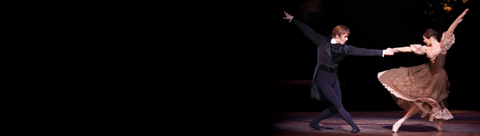
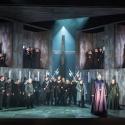
At the moment, the ROH can’t exploit such things without the express agreement of the creators. The basic tenet of copyright law is that it protects the author’s (or creator’s) right not only to be able to have an ongoing commercial benefit from their work but also their right to control how a work is used. If David Hockney doesn’t like the idea of his L’Heure Espagnole clocks on sale in shops, he won’t agree. If La Scala tries to stage MacMillan’s Romeo and Juliet with makeshift lighting that ruins the set designs, the creatives can force the issue. And the guardians of a choreographer’s work can put their foot down over castings as the John Cranko heirs in Stuttgart do at the Royal Ballet over Onegin (which is about to be performed, below, ROH publicity image for Onegin).
The question is whether, in future, such obviously significant permissions to protect the artistic product and to protect the artists’ reputations will be possible under the ROH contract. It is particularly germane with young artists who could easily be persuaded to think that it’s OK to sign away their copyright at this early stage in their career, because they can change their position later. After all, it would take a strong constitution to resist the siren offer of working at the ROH, it looks so good on the CV. But any lawyer will advise that the last contract one signs will always be held against the next. If you sign away your rights today, it creates a precedent.
The ROH lawyers know this very well: I understand they have already refused to agree that to sign over a copyright on a contract for Education or ROH2 will not be taken as a precedent for any future contracts with the ROH.
I have seen correspondence from several executives in the ROH’s Legal and Business Affairs Department justifying their demand on the assignment of all rights to the ROH. These are some key points in their argument:
- As the ROH is commissioning new work it is entitled to acquire the entire copyright in the work it commissions.
- Because the ROH is heavily funded by the public purse, it isn’t right that artists should be free to exploit their copyright for their own benefit, with the ROH only having limited rights.
- Because there are many rights involved in making a production, the ROH should therefore be in charge of all these rights, making no exceptions, because otherwise there would be lots of difficult administration details, and associated costs.
- That as the ROH will hold all the copyrights, the ROH will then be best placed to look after those rights – as that will be in its own interest: if artists held onto their copyright, they’d have to protect those rights themselves.
- The ROH, in having all the copyrights in a production assigned over to it, is then the right place to allow future performances of the work.
A leading lawyer for the entertainment industry told me that in his experience he has never heard of any other publicly subsidised organisation which insists on the assignment of rights. That even in commercial productions, most producers are satisfied with having a licence to perform the work they’ve commissioned (which is negotiated according to the circumstance) and that the underlying rights of the creative team still remain with them. The producers negotiate contracts with each and every one of the separate rights holders (which can total 15–20 in a high-end West End production), yet they still manage to put the show on, and to make money – for producers, investors and the creatives. Any further developments – touring, filming, adaptation, merchandising, whatever - will have further agreements appropriately negotiated.
 The same lawyer could understand and have sympathy with the present need for subsidised organisations to be seen to be getting value for money, but suggested that this could be achieved with a properly balanced structure, where the artists get fair rewards. Such as is well practised in the straight theatre where productions transfer from the subsidised theatre to a successful West End run – the National Theatre’s Warhorse or the Royal Court’s Enron for examples - where the benefits of the on-going success are also shared by the originating theatre and the creatives.
Also, present accepted practice is that licences are granted for only a certain time and place: that the commissioning organisation will be given exclusive rights to produce and perform the work, say for three or five years; after which the licence can then be renewed, or adjusted so that it’s no longer exclusive – the original commissioners can keep it for London performances, say, but others will then have the right to perform it outside a certain exclusion zone such as not within 100 miles, or only outside the UK and so on. The creative team is paid their commission fee and then have royalties paid per performance. I’m told also that if the commissioning organisation fails to do anything with the work within two years, all rights return to the creatives.
This allows creatives not only to benefit personally from a slow-burn production that possibly did not work well first time out but found a niche in a new production later, but to prevent unsuitable or exploitative stagings that reflect badly on their original work.
This new ROH all-rights contract is the latest development in a series of discussions between the creatives’ managements and the ROH which have been progressing painfully slowly for over two years. The need was to update the terms of agreement to take into account the much changed scene with all the developments of electronic media, play-it-again broadcasts, big-screen simulcasts, cinema screenings, more and more DVD recordings, 3D, downloads and so on. Perhaps even more problematic, to deal with the increasing prevalence of co-productions with other houses where several theatres may put on a shared production, not all of them observing its original specifications.
The need was to update the terms to take into account the developments of electronic media, play-it-again, simulcasts, DVD, downloads and so on
It is not possible to identify from the Royal Opera House’s annual report how much income or expenditure is due to copyright matters, but “commercial trading, touring etc” rose in 2009 to £13.9 million from £9.8 million in 2008. Given the expected subsidy cuts this autumn that the Coalition government has given warning of, this push to streamline and corral rights income may be intended to maximise other forms of income and minimise the time spent on negotiating about it.
As I understand it, an agreement had been reached some months ago, acknowledging both the ROH’S need to get value for money from its productions with this added income from new opportunities – as well as respecting the rights of the creatives also to have a reasonable share of that income. (A recognition that without their creative work making the productions, the ROH has nothing to sell.)
A bewildering succession of ROH executives have apparently come and gone in those two years of discussions. The new contract demand coincided with the arrival of George Avory as Head of the Legal and Business Affairs Department in February this year. Avory’s boss introduced him to the management negotiating team as a qualified solicitor whose experience would be invaluable to the ROH as in-house counsel and someone who could give a good legal framework for all ROH business: his CV according to the ROH shows his recent career path in senior business positions with Channel 4 and the vast American media conglomerate Discovery Networks International, where programming is sold across many global channels.
Certainly Avory’s television background fits well with ROH Chief Executive Tony Hall’s well-aired plans to widen the ROH audience through all kinds of broadcasting technologies – the most recent announcement proposes to put ROH productions on a pay-to-view basis, streaming direct to the customer’s home. Both Hall (his past career entirely in television with BBC News) and Avory will also be well in the loop with their old media colleagues on what new technologies are in the offing.
So it would seem that Avory’s new contract is designed to have a practical purpose specifically to pre-empt any possible problems in securing agreements from the creative side for all potential future developments. (An observation from several people involved in this dispute is that the contract issued by Avory is indeed based on TV and film contracts where they try to take all rights. Some time ago, TV’s attempt to take all rights in music composed – and then that of the advertising industry - was successfully challenged by the Performing Rights Society).
There is a precedent, unfortunately signed away by performers some years ago as a consequence of the BBC being given the right to free broadcasts from the ROH, soon after Chris Smith took over at the Department for Culture, Media and Sport. Old TV agreements for opera and ballet broadcasts are a contractual nightmare of individual agreements right across the house – which makes it impossible to release many recordings from Covent Garden’s glory days. So the permanent performers agreed to an extra payment each year as a blanket catch-all payment to cover broadcasts and recordings - which they now bitterly regret, given the pace of change which they are not part of.
From the creatives’ point of view, only ten years ago if anyone had signed away their rights for future development, they would now have no benefit from the present ROH developments in the media and IT; and could anyone have known what would be going on via the web, iPlayer, Facebook, YouTube and Twitter? Naturally, every creative artist is anxious to safeguard their work as much as possible from any improper exploitation – being particularly wary of how other parties intend to develop their property without their specific knowledge and permission, and might bypass the share they should be entitled to in profiting from their own creative work.
In the opera world the model contracts are considered those long in place with the Metropolitan Opera House, New York (an unsubsidised house), which is far ahead of the pack in promoting its productions to the widest possible audiences. I understand that the original agreement is always for the live performance, with everything else ancillary subject to the negotiation of each right to be granted. Nothing is granted that is not specified. The Met gets the rights they want, and the artists get a share of the moneys earned from those rights. It’s an agreement that’s been hammered out by tough US theatre unions who’ve built their muscles on deals with the film industry in Hollywood, negotiating with Peter Gelb, the Met’s General Manager, who is one of the most experienced professionals in the business. He knows his deals, but also knows about respect for the work of the creatives.
One seasoned player in negotiations between creative talent and the ROH pointed out that there are very few who truly understand the delicate process that goes on to make things work in the theatre – in opera particularly – and very few of those are now in top management positions. Making theatre is a complicated process, built up through years of experience, mutual respect and trust between the parties. Tony Hall, when appointed as Chief Executive of the ROH in April 2001, confessed in an interview for the Evening Standard that he didn’t know anything about the running of lyric theatre, but thought it would take him about three months to get his head round it.
The shop floor at the ROH calls the management "people with carpets" - as opposed to those who are getting their hands dirty making the work, who feel they are being marginalised in the rush to exploit the "product". One director commented that the management appears to be losing sight of the original purpose of the Royal Opera House, which is to make live theatre: the people working there are crafting their art for live performance on stage to a physical audience present: the new contract appears to take no account of any such consideration underpinning previous agreements. Artists are in danger of finally losing control of the theatre.
 But Tony Hall (pictured right by Johan Persson) will also know very well from his time at the BBC - he spent his entire career in News, ending as Director of News - how the Corporation suddenly and successfully changed its contracts from ones that respected the creative person’s copyright in their contributions for the BBC, to one that took all rights in all media, known and unknown, terrestrial and extra-terrestrial, in perpetuity and so on. This all-rights contract means it can do what it likes with your work without any further permission or fee: re-broadcast it, use parts of it out of context in other programmes, print it, without acknowledging that it is your work being used. And yet, if you, the writer/broadcaster, want to reproduce it to others, for your own career reasons, you need to obtain the BBC’s permission.
This now looks to be the new attitude at the ROH – like the BBC, a huge institution with no real competitor in the UK and very few institutions to match it internationally. The only weapon an individual has against a mammoth organisation is to withdraw: but if you want to work in opera, the opportunities are so few, competition so fierce, word-of-mouth so rife, that it would take a brave soul to stand up for a principle. Obviously, the injustice done to a television journalist or producer over the later commercial exploitation of their published work by their bosses is on a different scale from that done to a young choreographer or designer in their 20s whose first live-theatre work makes their name, but is virtually inaccessible to them in its original form for the rest of their career.
Meanwhile, my notes from the ROH paperwork show that the ROH management are adamant that they will not concede two further key points which are also massive bones of contention with directors and designers:
- They intend to keep not only the right to perform the production in question, but also to record the production and also to "exploit" that recording – and the right to license others to do the same, ie to perform the production, record it and exploit the recording.
- They argue that if they only get limited rights licensed to them on a commission, there’ll then be room for arguments over what rights the ROH actually does have in the production - and what rights it may want to have in the future.
The comment on this, from one leading agent was that on these terms, the ROH could sell the recording to whomsoever, chop it into bits, use it out of context, put it in advertisements, re-package it how they want, for as long as they want – all without permission from the people who had the original creative ideas and without care that they might be damaging those creatives’ reputation.
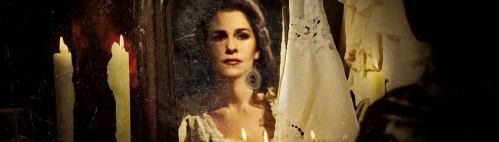
And this is particularly perilous for the directors and lighting directors who also have intellectual rights in their work to protect, and are most vulnerable with each new production they are commissioned to make. Already there is dismay about the consequences of co-productions where a new Royal Opera staging – say that of the forthcoming Adriana Lecouvreur (above, ROH publicity image for Adriana Lecouvreur) - goes on to several other houses, in this case the Vienna State Opera, San Francisco, the Liceu, Barcelona, and the Opéra Bastille in Paris. It is not a given in the ROH deals with other houses that the original creative team (or their approved associates) necessarily have a right to be involved in the re-staging to make sure that it is properly done. The ROH sends the production book with the sets and frocks, along with the lighting plot and that is supposed to be enough. But as every stage is different, there will always be adjustments necessary, particularly in the lighting states which is the crucial element in making theatre magic. Never mind a different cast who will certainly try to adapt the original concept.
And when the ROH has the right to record the production and exploit that recording without the original team involved – then the creatives are very exercised that their professional reputations are at risk. Lighting directors are particularly aghast at how their subtle schemes are blasted away by the demands of video.
Even down the line of a long run, all sorts of things change: London audiences were very surprised to see the Kirov Ballet’s take on MacMillan’s Manon when they brought it to London with the original production much "developed" and changed. If the production had come from the ROH and the MacMillan Estate had signed the new all-rights agreement, there would have been no redress. As it is, the Kirov’s licence to perform Manon was not renewed. Equally it was accepted throughout the ballet world that the Balanchine Foundation should have the right to pull the licence for Apollo from the Royal Ballet some years ago when a cast was put forward which they argued would not show the ballet to advantage.
One director observed to me that everybody wants the big names to be associated with their opera house, but they’re not willing to respect what makes those big names’ work – and they resist the notion that the creative team should at least supervise what is being done in their name even on a commercial recording. The only recourse, the director told me is to remove his name from the production, and from the recording, because: “The only thing I have is my name”.
At the moment, there’s a stand-off: no artists management I’ve contacted will advise their clients to sign away their rights, no creative is willing to do so either, certainly not to create a precedent. But frustration is mounting amongst those who make the work - not least because of the massive power of the ROH over the people who they invite to work.
It’s widely said that the ROH is one of the most difficult organisations to deal with, it is so big it translates into an arrogance that the management's opinion must therefore be right. And for the individual to take unilateral legal action against the ROH would certainly be expensive as well as risky for his or her professional career.
Last week the ROH had to retract its out-of-proportion attack on the "Intermezzo" opera blog - in which its threatened to ban the blogger from the Opera House - thanks to a huge outcry on the web and in the press. Embarrassingly for the ROH the management had publicly to acknowledge they were wrong: the publicity stills they complained "Intermezzo" had used without permission were indeed publicity stills for copyright purposes. But paradoxically, their original argument was that the pictures of set designs were copyrighted to the designers themselves.
But what next? Will the ROH really risk antagonising the very people upon whom it depends, world-renowned people such as (to name but a few) David Hockney, Mark-Anthony Turnage, Julian Opie, Howard Hodgkin, Richard Jones, David McVicar, Bob Crowley, Wayne McGregor? Does it seriously expect them over to sign over their copyright? Or realistically will it make individual arrangements for the big guns and a blanket one for the more vulnerable ones?
I understand that creatives are considering making a collective refusal to work for the ROH. But that action then depends on how collegiate the creatives are prepared to be: one person stepping away from a job creates a tempting vacuum for those on the up – and especially those on the down. Meanwhile, there is terrible danger for the young, rising talents who have no other option than to take the doubtful privilege of an ROH commission for a low fee, which will dazzle today – but one day, if the work is a hit, may reap rewards on stage and screen around the world in which the begetter of the original idea has no part.
- If you are affected by this new contract, or have a contract that could shed light on how various organisations are dealing with rights in the theatre, please contact me in confidence. natalie.wheen@theartsdesk.com
- 'The ROH gets Creative with the rights of newcomers': new buzz on theartsdesk
- See what's on at the Royal Opera House in 2010-11
- Buy the lawyer T-shirt from zazzie.com




Add comment