
Robin Gibb, 1949–2012 | reviews, news & interviews
Robin Gibb, 1949–2012
Robin Gibb, 1949–2012
Farewell to the distinctive Bee Gee and songwriter, who has died at the age of 62
Monday, 21 May 2012
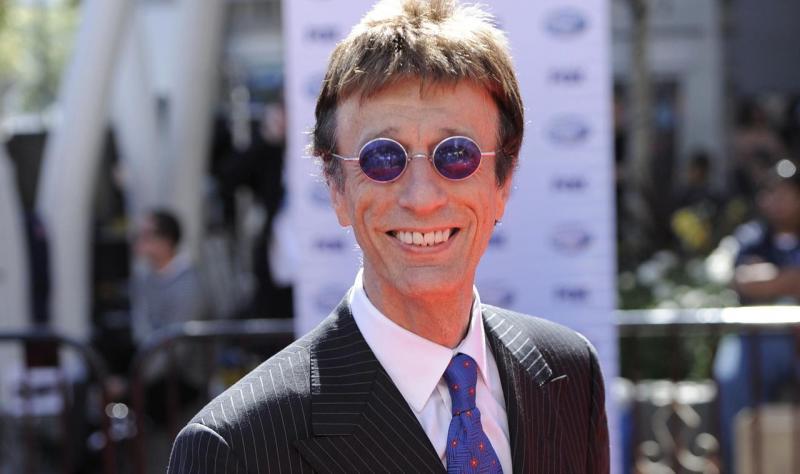
Robin Gibb: his natural vibrato was integral to the Bee Gees sound
The death of Robin Gibb was announced last night. He had been diagnosed with cancer following surgery for a blocked intestine in 2010, when it was discovered that he had cancer of the colon. This April, it was announced he had contracted pneumonia. His death leaves brother Barry as the only surviving Bee Gee.
Although influenced by The Beatles, The Bee Gees did, in time, become as big. From the beginning, Robin’s distinctive, soulful and emotional voice was always crucial to their edge. Scissor Sisters' Jake Shears said of Robin, “You are and forever will be a massive influence and inspiration”.
Brought up on the Isle of Man and in the north of England, Gibb moved from Manchester with his family to Brisbane, Australia in 1958. As The Bee Gees, Robin, Maurice and Barry were first seen performing on Australian TV in 1960. Their debut single was issued in 1963. They returned to Britain in 1966 and after a false start with the single "Spicks and Specks” racked up an incredible run of hits including “New York Mining Disaster”, “To Love Somebody”, “World” and “Words”.
But their success – and staying power – did not seem assured. Robin left in 1969 for a solo career. After the album Robin's Reign and the hit “Saved by the Bell”, he returned to The Bee Gees in 1970. What ensured The Bee Gees’ longevity and legacy were not the Sixties’s hits but their incredible talent – together and apart under the Bee Gees umbrella – as songwriters, as well as their innate ability to change with the times.
Their first American chart topper was 1971’s “How Can You Mend a Broken Heart”. America, and its music, would become their focus. After Ahmet Ertegün of Atlantic Records teamed them with soul producer Arif Mardin they moved to Florida in 1975. “Jive Talkin” and “Nights on Broadway” meant America was theirs. Their manager Robert Stigwood was behind the film Saturday Night Fever and their involvement meant disco was theirs too. After this, they wrote songs for – and were instrumental in rescuing the careers of – Diana Ross, Dionne Warwick and Kenny Rogers.
Robin though issued a trio of solo albums in the Eighties, and went on to issue Magnet in 2003. A solo tour followed. Most recently, despite being extremely ill, he worked with his son RJ on The Titanic Requiem. An extraordinary talent, his departure leaves a gaping hole.
Robin Hugh Gibb: 22 December, 1949 – 20 May, 2012
See Robin Gibb videography overleaf
The promotional film for The Bee Gees’s “World”
The promotional film for The Bee Gees’s “I’ve Got to Get a Message to You”
Robin Gibb performs “Saved By The Bell”
The promotional film for The Bee Gees’s “Jive Talking”
The Bee Gees perform “Nights On Broadway”
The promotional film for The Bee Gees’s “Stayin’ Alive”
The Bee Gees perform “Woman in Love” and “Guilty”
The trailer for Robin Gibb’s The Titanic Requiem
Robin Gibb’s distinctive, soulful and emotional voice was always crucial to The Bee Gees's edge
Buy
Share this article
The future of Arts Journalism
You can stop theartsdesk.com closing!
We urgently need financing to survive. Our fundraising drive has thus far raised £49,000 but we need to reach £100,000 or we will be forced to close. Please contribute here: https://gofund.me/c3f6033d
And if you can forward this information to anyone who might assist, we’d be grateful.

Subscribe to theartsdesk.com
Thank you for continuing to read our work on theartsdesk.com. For unlimited access to every article in its entirety, including our archive of more than 15,000 pieces, we're asking for £5 per month or £40 per year. We feel it's a very good deal, and hope you do too.
To take a subscription now simply click here.
And if you're looking for that extra gift for a friend or family member, why not treat them to a theartsdesk.com gift subscription?
more New music
 theartsdesk Q&A: musician Warren Ellis recalls how jungle horror and healing broke him open
The Bad Seed explains the cost of home truths while making documentary Ellis Park
theartsdesk Q&A: musician Warren Ellis recalls how jungle horror and healing broke him open
The Bad Seed explains the cost of home truths while making documentary Ellis Park
 Pop Will Eat Itself's 'Delete Everything' is noisy but patchy
Despite unlovely production, the Eighties/Nineties unit retain rowdy ebullience
Pop Will Eat Itself's 'Delete Everything' is noisy but patchy
Despite unlovely production, the Eighties/Nineties unit retain rowdy ebullience
 Music Reissues Weekly: The Earlies - These Were The Earlies
Lancashire and Texas unite to fashion a 2004 landmark of modern psychedelia
Music Reissues Weekly: The Earlies - These Were The Earlies
Lancashire and Texas unite to fashion a 2004 landmark of modern psychedelia
 Odd times and clunking lines in 'The Life of a Showgirl' for Taylor Swift
A record this weird should be more interesting, surely
Odd times and clunking lines in 'The Life of a Showgirl' for Taylor Swift
A record this weird should be more interesting, surely
 Waylon Jennings' 'Songbird' raises this country great from the grave
The first of a trove of posthumous recordings from the 1970s and early 1980s
Waylon Jennings' 'Songbird' raises this country great from the grave
The first of a trove of posthumous recordings from the 1970s and early 1980s
 Lady Gaga, The Mayhem Ball, O2 review - epic, eye-boggling and full of spirit
One of the year's most anticipated tours lives up to the hype
Lady Gaga, The Mayhem Ball, O2 review - epic, eye-boggling and full of spirit
One of the year's most anticipated tours lives up to the hype
 Slovenian avant-folk outfit Širom’s 'In the Wind of Night, Hard-Fallen Incantations Whisper' opens the door to inner space
Unconventional folk-based music which sounds like nothing else
Slovenian avant-folk outfit Širom’s 'In the Wind of Night, Hard-Fallen Incantations Whisper' opens the door to inner space
Unconventional folk-based music which sounds like nothing else
 'The Art of Loving': Olivia Dean's vulnerable and intimate second album
Neo soul Londoner's new release outgrows her debut
'The Art of Loving': Olivia Dean's vulnerable and intimate second album
Neo soul Londoner's new release outgrows her debut
 Music Reissues Weekly: The Peanut Butter Conspiracy - The Most Up Till Now
Definitive box-set celebration of the Sixties California hippie-pop band
Music Reissues Weekly: The Peanut Butter Conspiracy - The Most Up Till Now
Definitive box-set celebration of the Sixties California hippie-pop band
 Doja Cat's 'Vie' starts well but soon tails off
While it contains a few goodies, much of the US star's latest album lacks oomph
Doja Cat's 'Vie' starts well but soon tails off
While it contains a few goodies, much of the US star's latest album lacks oomph
 Mariah Carey is still 'Here for It All' after an eight-year break
Schmaltz aplenty but also stunning musicianship from the enduring diva
Mariah Carey is still 'Here for It All' after an eight-year break
Schmaltz aplenty but also stunning musicianship from the enduring diva
 Album: Solar Eyes - Live Freaky! Die Freaky!
Psychedelic indie dance music with a twinkle in its eye
Album: Solar Eyes - Live Freaky! Die Freaky!
Psychedelic indie dance music with a twinkle in its eye
Add comment