

Exactly three years ago, late in the morning of 29 January, 2009, the news began to circulate that John Martyn had died at the age of 60. I spent the following 24 hours or so talking to many of his cronies to help assemble a tribute feature for a music magazine. Chris Blackwell, the man who had signed him to Island in 1967, had just stepped off a plane in Jamaica. He sounded fuzzy and uncertain. He knew Martyn was dead but needed details. “What happened, I haven’t heard?” he asked. Pneumonia, I told him. “Ah, God, that’ll do you in.”
Bert Jansch sounded even more doleful and lugubrious than usual; Ralph McTell, back from a “very long walk”, was clearly shaken. “I don’t even know what’s happened. We all thought that things were on the up, it’s a real shock.” I also spoke to Danny Baker – more of a fanatic than a mere fan – shortly after he’d played an entire two hours of Martyn’s music on his BBC London radio show, an impromptu tribute that provided a welcome and emotional point of communion for many listeners.
Everyone I spoke to marvelled at the beauty of the man’s music, and the distance his life often travelled from it, and slowly grief began to give way to fond and sometimes rueful reminiscence. There was one exception, however. Martyn’s dearest friend and most inspired sparring partner, Danny Thompson, was inconsolable. The normally chipper double-bassist sounded utterly heartbroken. “I’m empty,” he said. “I can’t stop shaking.” He clearly wanted to talk, however, and after a while gingerly began to open up, losing himself in reveries of the good-old-bad-old days, back when he and Martyn would pick fights with entire rugby teams in curry houses mere minutes after playing sublime, achingly vulnerable music to an appreciative audience. It was these kind of personal complexities and contradictions, felt Thompson, that lay at the heart of Martyn’s life and music.
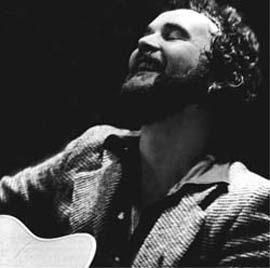 “He dismissed his feelings by being one of the blokes, pretending to throw people out of pub windows, and of course it’s that side of him that gets taken up,” he said. “But all it was - and I understand it because I did the same thing - is that he didn’t want anyone to see that soft underbelly. He wanted to be portrayed as the hard man, and people thought he was a bit of a braggart, a bit arrogant, and of course he wasn’t. He’d often play something incredibly beautiful and follow it with a belch to dismiss it, in case someone thought he was being [here Thompson adopted a comically posh Scottish voice] frightfully artistic; a bit poncey!”
The memories of others brought into sharp focus the day I spent with Martyn towards the end of 2005. Flying to Dublin and then travelling by train down to Thomastown in County Kilkenny, where he lived in modest but appealing disarray, I was met at the tiny station by Martyn and his partner Theresa, who clambered out of the driver’s seat to enable me to scramble into the back seat of their battered little car. We went straight to the pub, Carroll’s bar in the centre of Thomastown, where Martyn was clearly not so much a regular as an institution. And there we stayed.
It’s far from unusual to discover whole fathoms of deep blue sea between the artist and their art, but nothing quite prepared me for John Martyn. One of the few musicians actually deserving of oft-used terms like "one-off" and "unique", he had grabbed a foothold in the rather earnest mid-Sixties London folk scene, but soon grew out of its limitations and immersed himself instead in jazz, blues and dub, pushing his guitar playing and his voice, stretching his capabilities. The results – best heard on spectacular Seventies recordings like Bless the Weather, Solid Air and One World - was the kind of music that renders the written word pretty much obsolete.
The art at its best was magical, unerringly beautiful, feather-light and somehow pure. The artist, however, on this early autumn day in rural Ireland, resembled someone who had failed the audition for Auf Wiedersehen, Pet on the grounds that he erred a little on the rough side. He had once been a beautiful boy, but sitting in the beer garden at Carroll’s, drinking lunchtime double vodkas mixed with cider, it was clear the years had not been kind. In his late 50s and tipping the scales at over 22 stones, his huge face was scarred and his fingers resembled links sausages. A pink abscess poked out from under his shirt. When he stood up and leant on his walking staff, he looked like a white Solomon Burke after a long stretch in Barlinnie.
Martyn had moved to Thomastown with Theresa a few years earlier, after bankruptcy forced him to leave his previous home in Roberton, near Biggar in Lanarkshire. He then lost a leg to amputation in 2003, the last in a long line of tragi-comic physical misfortunes. As a warm-up, he had suffered a broken neck when a heifer smashed through his car windscreen; broken his toe stumbling drunk on stage (he played on); and split his head swimming underwater. He finally lost his right limb in 2003 when a cyst burst and septicaemia ravaged his body. He wore a prosthetic where it used to be.
“I could see it coming,” he said of the amputation. “I had myself resigned to it well before it happened.” He admitted he was one of those typically stubborn middle-aged men who won’t relent to seeing a doctor until blood starts seeping out of their ears. “Well yes, but it wasn’t that bad, I just thought it was a pain in the back of my knee. What can I tell you? I was very angry for a while, very pissed off that it happened to me, but the initial shock wore off and I’m cool.”
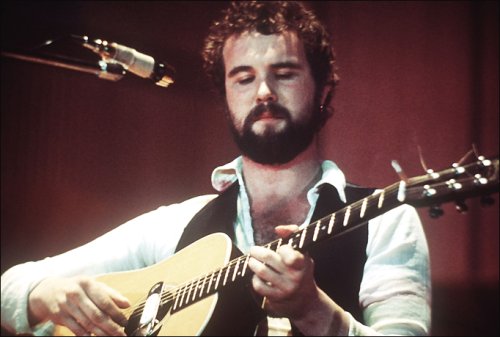 In truth, the new leg had been a disappointment. He was on his ninth prosthetic and had put on six-and-a-half stones in the past 18 months because he couldn’t exercise. It had left him, both literally and figuratively, swimming in circles. “No rudder!” Not only that, but he was constantly at war with his absent limb. “Fuck me, it’s still painful. You can still feel your toes and everything, it’s very odd. It still catches you by surprise in the middle of the night. ‘Ha ha, still here!’ But it could have happened when I was 15 and changed my life entirely.”
Ironically, one of the great positives in Martyn’s life shortly before it ended was the fact that he had finally found a prosthetic that worked. “At the end of 2008 we went to get a new leg for him in New York and I saw him stand for the first time in four years,” said Danny Thompson. “That was great. We had that time together, thank God. With the thought of a new leg, and getting off the booze for a bit, and making some new music with Pharaoh Saunders – which is another story – everything was looking great. Then bang! Pneumonia.”
Clearly not a rich man, during a long and largely liquid pub lunch in Thomastown Martyn displayed only a little bitterness towards an industry which had rarely given him the rewards his talents deserved. The move to rural Ireland had, he claimed, lead to life being lived at a “slower, sweeter pace. I’m becoming more and more withdrawn from the world. I have a lot more peace and composure. I like being on the road still, but I prefer doing sweet fuck all, listening to the trees.”
This sense of composure, if real, was hard won. Brought up by his grandmother after his parents divorced when he was a toddler, his dark side revealed a drink and drug-devouring “nutter” with two ex-wives and – he readily conceded – handfuls of illegitimate children pattering around the globe. “Many’s the party we had in the boiler room, I can tell you”. Raised by his Glaswegian gran in a sprawling, 13-room tenement in the city’s Shawlands, he regarded himself as “total Scottish, there’s no getting out of that one,” but his accent veered, rather disconcertingly, between cultivated Scots and cheeky cockney. At these moments, I remembered that John Martyn was a stage name. He was born Iain McGeachy.
He was an odd mix. He expressed his love of Chic Murray and The X Factor alongside his desire to send the royal family to Elba. At turns he was sweet, tough, slightly terrifying, very funny and highly intelligent, displaying an old school courtesy. He was very concerned that I would miss my train, and a few days after my visit, he phoned to very politely ask me not to repeat a (mildly) derogatory comment he’d made about a band who had covered one of his songs. Above all he tended to elicit sympathy, an emotion he no doubt despised, and yet one which he was more than capable of abusing terribly. It was obvious he was vulnerable long before he needed help walking. What Ralph McTell identified as the “deep hurt” in his music and character stemmed from his parent’s divorce and his subsequent farming out. “I’m very sure of that,” he said.
His parents were light opera singers, all “hampers and stage make-up”, and never rated Martyn as a vocalist, his slurred, honey and gravel stylings too much at odds with ‘proper’ singing. They thought he was a trickster. He inherited, he said, a sense of decency from his father and a wandering morality from his mother, not to mention a colossal capacity for alcohol. No slouch on the drug-taking front, it was booze that really held him in its grip. By late 2005 it was clear that, although he was still gigging, his creative muse had gone walkabout. He told me he was “tidying up” his next album, provisionally called Willing To Work, but when he died three years later it remained unfinished. It was finally released last year as Heaven and Earth, a partial and rough hewn epitaph.
“I don’t analyse it,” he said of his drinking. “It runs in the family for a start – from my grandmother on down. My old man went at 84 and he was still drinking. Big time. The lifestyle got a hold of me, I suppose. You have a drink before the gig to set you up, then you have a drink to celebrate the gig, then you have a drink in the morning to liven yourself up, then you have a drink on the plane... it’s all soundchecks and aeroplanes and hotels. There’s literally nothing else to do. You can read the paper, but that loses its charm after a while.”
All in all, although he was somewhat bruised and battered, largely as a result of the way he had chosen to live his life, Martyn was defiantly unapologetic. “I’m not nearly as wild as I should have been, really,” he said. “Could have had more fun. A lot of people who drink should be ashamed of it, and a lot of people who fucking don’t drink should be ashamed of it. If you want to kill yourself, there’s a thousand ways to skin a cat. You’re going to go one day.” Those words took on a poignant and portentous tinge after his death, but at the time they just sounded like his bravado was getting the better of him.
Three years after his death my most vivid personal memory is of him sitting in the beer garden of Carroll’s, walloping back neat double vodkas mixed with splashes of cider and destroying a cheese toastie with malicious relish. He looked for all the world like Charles Laughton’s Henry VIII; a toddler playing football nearby gazed at him, utterly bewitched. And I’ll remember something else he said. “Even if I popped my clogs tomorrow I’ve had a wonderful time. I can’t argue at all about the hand that life’s dealt me.”
John Martyn and Danny Thompson performing "Solid Air"





Add comment