

A birthday offering, a wedding celebration - with that, and one further creative collaboration ahead, Dame Monica Mason makes her farewell as director of the Royal Ballet after 10 years. The last programme of favourites from the store cupboard must always be a tricky one, but true to form the mistress of the great occasion (anniversaries have been a mainstay of her programming) picked rituals and ceremonies that stressed company ethos and values.
Those 10 years of her reign have been steady, stable, conservative - mostly restricted in programming to the box-office comfort zone; and while the fecundity of the Royal Ballet’s repertoire has attracted an awesome range of star dancers, essentially those stars have been firmly subsumed to the Mason company ethos - and if they didn’t like, as Sylvie Guillem didn’t, tough.
The line-up was not a blinding A-1 team of ballerinas consistently throughout
For her last triple bill Mason took for its themes Frederick Ashton, ballerinas, Russia and company cohesion: Ashton’s Birthday Offering (a traditional company pièce d’occasion), his heartbreaking chamber drama A Month in the Country, and the remarkable, still bewildering Ballets Russes work on which the Royal Ballet’s founder Ninette de Valois fed for inspiration: Bronislava Nijinska’s 1923 Les Noces, in which a peasant marriage is devastatingly arranged to a strange, vivid Stravinsky score.
Birthday Offering was created in 1956 to show off ballerinas to the new young Queen Elizabeth, and if one could have cast it from the stars who have illuminated Mason’s years, the seven ballerinas would have dazzled - from Guillem, Darcey Bussell, Leanne Benjamin and Miyako Yoshida to Tamara Rojo, Alina Cojocaru and Marianela Nuñez today. Most of them are not native to the Royal Ballet, which shows how powerfully its repertoire appealed worldwide. And that was another Mason storyline, the dominance of foreign dancers over native products.
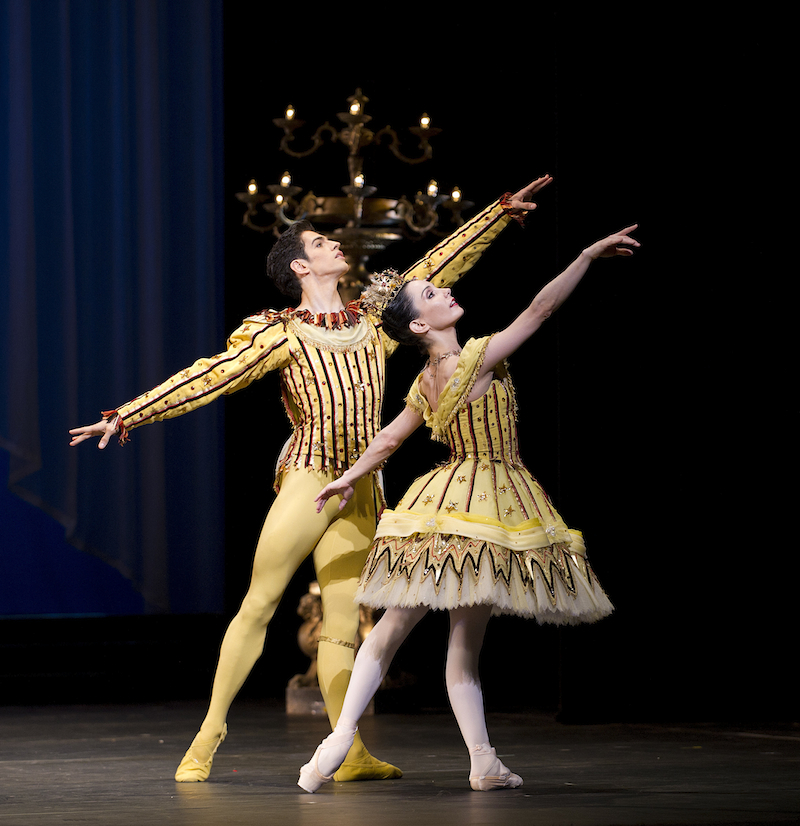 But there’ve been injuries and also Mason’s own dislike of flamboyance, and so the line-up was not a blinding A-1 team of ballerinas consistently throughout. With Rojo naturally centre, it called up sweet Yuhui Choe, crisp Laura Morera, courteous Sarah Lamb and dainty Roberta Marquez and a goodly selection of male cavaliers, but I wondered why Cojocaru and Nuñez weren’t in that A-team. We ought to gorge on ballerinas in Birthday Offering. And the second cast could be all the youngsters rising whom Mason puts her bets on.
The style is powerfully studied of Petipa’s Sleeping Beauty, a lifelong source for Ashton - the ballerinas’ solos strongly suggest the fairies' variations, and the half-hour work proceeds like an Anglicised 19th-century grand pas, with soloists as beauteous heralds for a succulent pas de deux. Ashton is said to have done this one for a bet that he could make a pas de deux without a lift in it, as a riposte to the smash-hit acrobatic tendencies of the newly revealed Bolshoi Ballet, who had just made their debut in London. The spun-gauze result is the work of a genius, using the woman like tumbleweed, skimming the floor weightlessly on her toes, wafted along by the man with feathery sweeps of his arm. Rojo and Federico Bonelli (pictured right) make a satisfying classical couple, his gentlemanly correctness warmed by her intense presence.
Still, the dancers hadn't generally got under its skin, and the result was slightly stilted. I suppose it’s not a ballet one loves more than one appreciates it: it’s a grand ballet but not a great one, full of excellence but conscious of its dignity and not given good enough music to take flight from its vocabulary. The Glazunov arrangement has the feel of flamboyant costume jewellery, big golden tunes, scintillating bling, Russian flutes all a-flutter, the Hollywood feeling enhanced by the white drape behind.
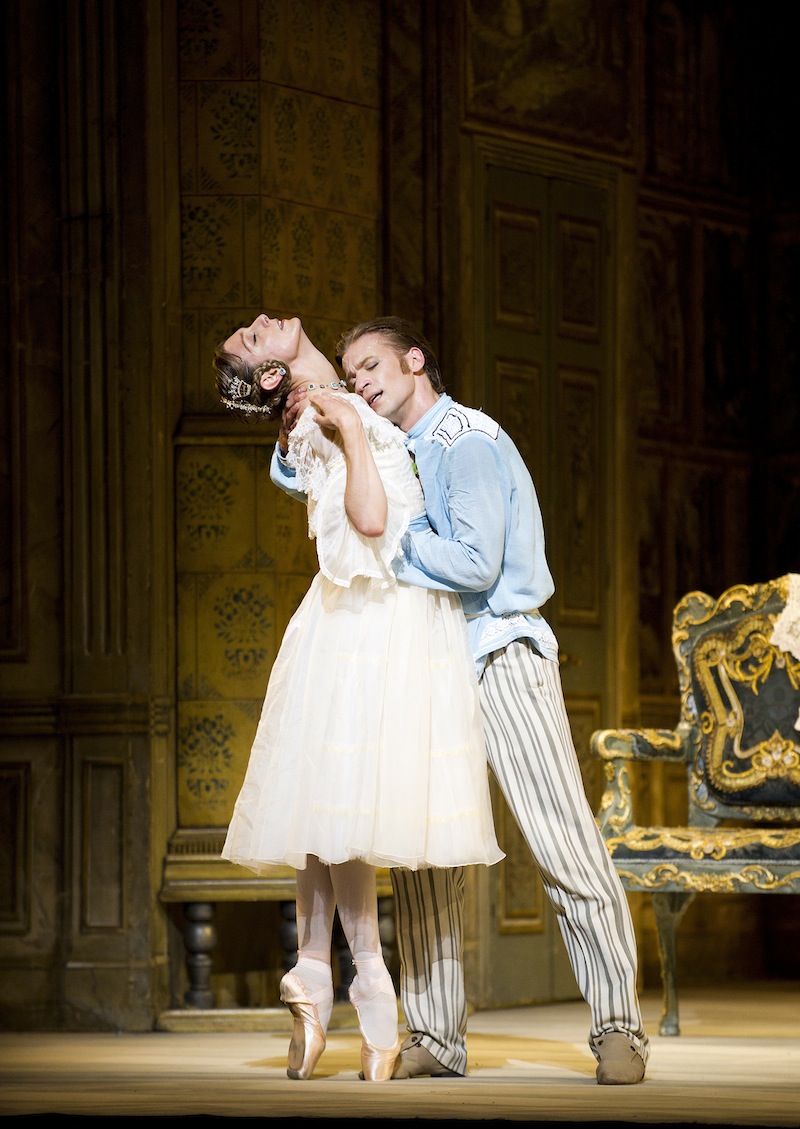 Whereas we all sincerely and deeply love A Month in the Country, a miraculous balletic rendering by Ashton in 1976 of a Turgenev short story about the turbulence in a fine household created by the arrival of a handsome young tutor. The young man echoes Don Giovanni in his opportunities for conquest (Mozart’s "La ci darem" from Don Giovanni is the theme for Chopin’s piano music). He has an easy one with the maid, an illicit one with the young daughter of the house, and then himself is knocked sideways by the passionate advances of the mother, who suddenly is ready to throw over everything she has in order to be in his arms.
Fascinating, in psychology, in storytelling, in dance. The tall, gentle Zenaida Yanowsky and the tall, reticent Rupert Pennefather (pictured together) took the leading roles, and neither of them seized the ambivalent passions and risk of this drama by the throat (at least not if you have intrusive memories of Lynn Seymour or Natalia Makarova in the role of Natalia Petrovna. And I did wish for the originally scheduled tutor, the escapee Sergei Polunin.) More pointed playing came from the ever-impressive Emma Maguire as the daughter, Vera (she was a magnetic Effie in La Sylphide last month). Better playing would also have been welcome from the pit of the admittedly devilish piano part.
Month is terribly easy to get not quite right; Les Noces has a structure, visual language and tone so exact that it can hardly be got wrong, at least not at the Royal Ballet which is the work's adoptive parent. Over crackling pianos, voices chatter non-stop in Stravinsky’s music, about love, sex, marriage, the price of beer, the place of wives.
The girl being married is in the same convent-plain brown and white as everyone else, only her long symbolic braids differentiating her. No-one is interested in what she is thinking, and Nijinska somehow intuitively conjures a wail of sadness to rise unheard around the busy, exact formations, so extraordinarily modernist and unmistakably symbolic (she becomes the apex of a pyramid of submissive girls; the wedding party is a riot of public conformism). The work's boldness can't be dimmed, and despite its tight constraints there’s a place for individuals such as Ryoichi Hirano, the dignified groom, and Genesia Rosato, as the mother in her brief, plangent solo of anxiety for her daughter, to give you the human picture in a few seconds.
A careful and subdued programme, then, but only half the story of Mason’s directorship - the Titian creative event fielding the Royal Ballet’s in-house choreographers will tell the other half.
Watch the original cast of A Month in the Country, Lynn Seymour and Anthony Dowell, dance their wrenching pas de deux and face its aftermath
Watch Fonteyn and Nureyev rehearse Birthday Offeringwith Frederick Ashton in 1968







Add comment