As Julian Lloyd Webber combatively suggests of certain strands of 20th-century music: “Let’s make a noise no one likes. If the audience likes it, you have failed as a composer.” In general, though, the first programme in this welcome three-part series is if anything too measured and respectful in guiding us through the labyrinths of 20th-century music – from Debussy to Richard Strauss (relatively easy on the ears) via the tougher, spikier Schoenberg and Webern.
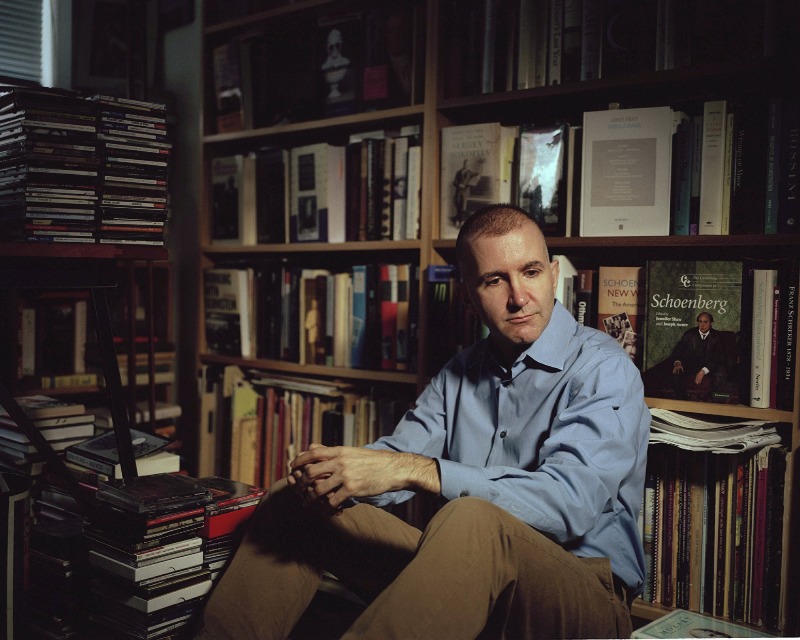
Partly encouraged by the fact that Alex Ross’s The Rest Is Noise has become a bestseller (who knew so many people could be interested in Xenakis and Berg?), The Sound and the Fury handily coincides with the Southbank’s season of the same name. A classier version of what has become the BBC Four house style for music TV, it featured stock footage, snippets of performance and an array of interviews. A fairly heavyweight bunch of composers included Steve Reich, John Adams, George Benjamin, Meredith Monk and Pierre Boulez - and in the next two, John Tavener, Philip Glass and Arvo Pärt. Other pronouncements came from music historians and critics, notably Ross (pictured below), and Schoenberg's daughter. Even so, I wouldn’t be surprised if programme-maker Ian MacMillan had to put up with execs saying "Can’t we get anyone sexier from the pop world, like Björk?"
The Rite of Spring's rhythms were like facing a boxer not knowing where the next punch was coming from
A problem with securing a plethora of pundits is they have to operate at sound-bite length. Some here were memorable: Ross on how The Rite of Spring’s rhythms were like facing a boxer not knowing where the next punch was coming from, or Tom Service arguing that listening to Webern’s unearthly weightless music is like watching a plant or crystal under a microscope (John Adams suggested it is “emotionally stingy”). But there was no time to elaborate on or develop a coherent argument.
This first episode, entitled Wrecking Ball, did make lots of useful connections: we heard how the prickly, tense music of the Viennese School had some parallels with painters like Egon Schiele, how the lack of any “home” key was perhaps a Jewish reaction to anti-Semitism, and how in general the 20th century was the most violent century ever, so why wouldn’t the music reflect that? But it may well have worked better with a more opinionated, central figure who could make clear that their choices of what to cover (no British music worth mentioning in this episode) was a personal one, rather than attempting and failing to be “definitive”.
 By covering so much territory (the first episode took us up to the Second World War, and mentioned that shocking fact that many composers were sympathetic to Fascism), the drawback was Stravinsky was "done" in 10 minutes. The advantage was instant connections – how Charles Ives used vernacular music in a similar way to Stravinsky, for example - and it may be that some viewers who love Stravinsky will be encouraged to discover Ives.
The production values and commissioned performances are of high-quality and as a basic introduction into the sometimes hermetic world of some 20th-century music it works (and the next two programmes will have more live composers to interview). One can only hope for more in-depth programmes on specific movements or composers which can do more than skate over the surface. Meanwhile, interest piqued, we can all go to the Southbank for several hundred hours of their 20th-century season.