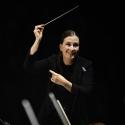
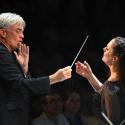
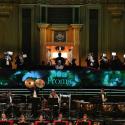
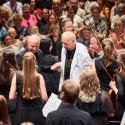
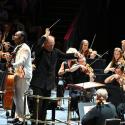
Somehow the manic cry of “Scooby-Doo man!” from the back of the stalls didn’t seem too incongruous. We were in the thick of Shostakovich’s craziest symphony, the Fourth, composed in the mid 1930s when such maverick Russian talent was about to be stamped on and potentially quite a sledgehammer of a season opener for the BBC Symphony Orchestra. Instead dapper Jukka-Pekka Saraste - a more than satisfactory replacement for the great Neeme Järvi - ran through this nightmarish world like an open razor, every cutting gesture aimed with deadly accuracy, having allocated the spiritual healing to a peerless partnership with mezzo Alice Coote in Mahler’s Rückert Lieder.
There are noises throughout the symphony which any composer writing today would kill to discover: the clashing semitonal drone of two low-register horns, mutant birdsong from the E flat clarinet, the deathly clickings of side-drum, woodblock and castanets at the shadowy end of the scherzo. I kept waiting for something like that to emerge from the playful splashes and squalls, the watery calms, of the evening’s BBC commission, Michael Zev Gordon’s Bohortha, but the hoped-for hitting on a truly original sonority proved elusive.
Perfectly honed solos guided us through Shostakovich's twilight zones
The nearest Gordon comes is in his final Cornish haven reflected by the mesh of Chinese gongs and harp. He rarely goes beyond the inverted commas of his quotations – at least the ones that leapt out, chiefly Berg and Mahler, the descending harp of whose Adagietto does promise to morph into something else at the start of the third in the sequence of seven pieces. This impressionistic meditation on time, memory and eternity holds the listener’s interest with its antic zig-zags of mood and density, but it never quite undergoes the necessary sea-change into something rich and strange.
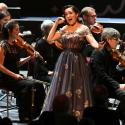
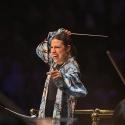
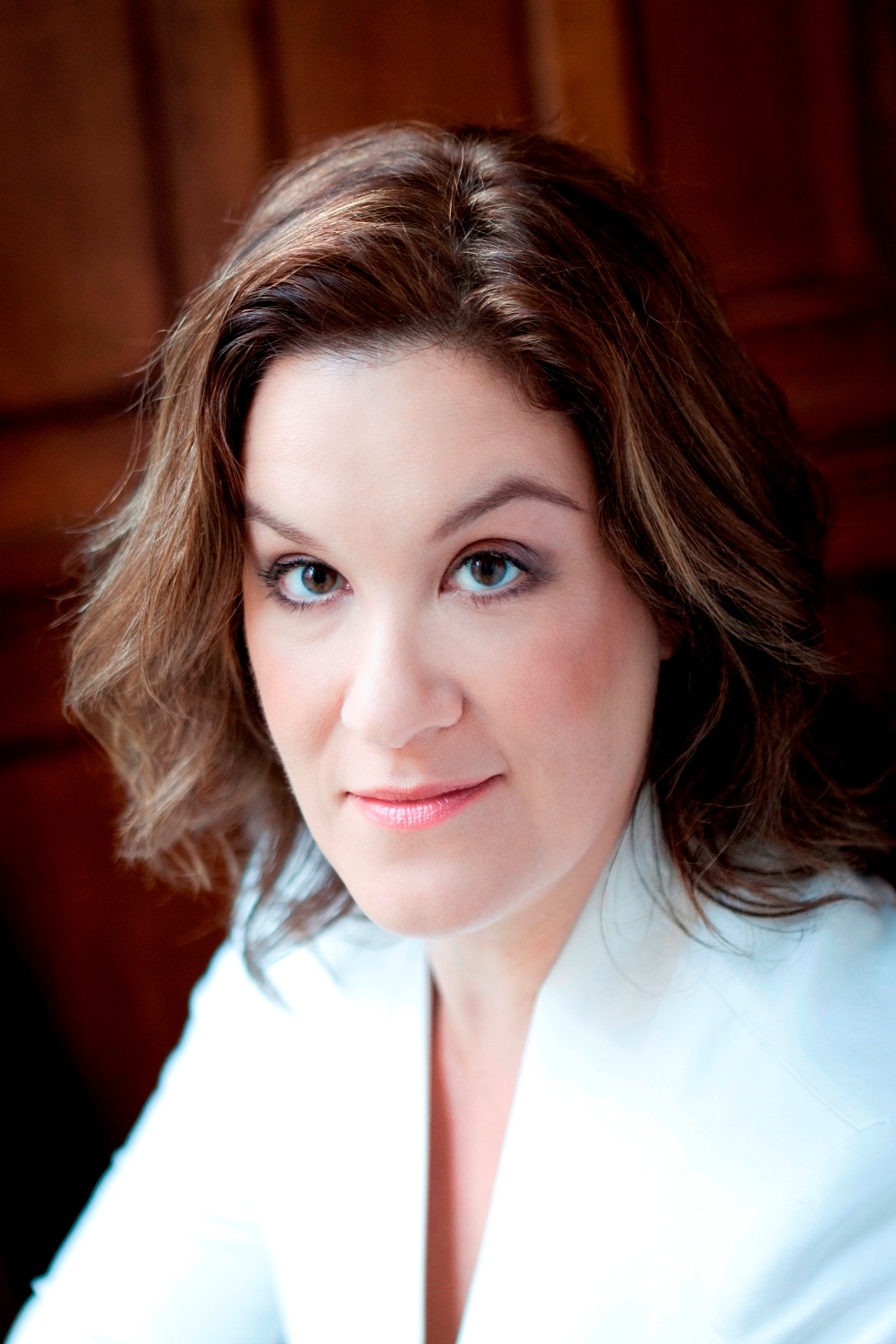
An often hallucinatory reinvention proved spellbinding, on the other hand, as Coote (pictured below right by Ben Ealovega) seized on every precious moment in the Mahler songs, and the selective orchestral players, from first horn to cor anglais, mirrored her resourcefulness. This singer has every technical gift to support the greatness of her narrative art: the richest of full-voiced declamation to hold firm against wind and brass in the midnight ode, hallowed soft singing in the tenderest miniatures and phrasing that seems to go on for ever. In the ultimate challenge of what has to be the world’s loveliest song, “Ich bin der Welt abhanden gekommen”, she reinterpreted what usually seems like poised resignation as the private thrill of withdrawal from the world, drawing us in to her secret rapture with the sliveriest crescent moon of a pianissimo. Mahler singing doesn’t come any classier, warmer or more involving than this.
 Refinement isn’t usually the abiding memory of experiencing Shostakovich’s Fourth in the concert hall. But Saraste’s interpretation of a work which explodes the Mahlerian legacy made sure all the symphonic strands emerged even in the mock-military thrashes of the outer movement’s infernal parades. There was room for playfulness, elegance even, given the unusual spring in the step that propelled us through the two half-hour dramas, with the scherzo passing in between like a vague, bad dream; but wind and brass bit and snapped with devastating focus when they needed to, and rarely can strings have been drilled to such poleaxing fullness of response in the hailstones of frantic, fugue-ing semiquavers which propel the first movement’s hairiest roller-coaster ride.
Perfectly honed solos guided us through the twilight zones, from Julie Price’s lone bassoon to Helen Vollam’s belated headlining as the music-hall trombonist cavorting through the dance-suite that turns out to be the calm before the ultimate storm. It hardly ever fails, that garish roar of false victory followed by the slow death of the soul; with Saraste whipping the parade into the ugliest of shapes and the celesta mesmerising us as it oscillated into infinity, the shock could only really hit home after the final chord had died away.
- Listen to this concert for the next seven days on the Radio 3 website