

Listening to a recording can never replace the joys of live performance. But if you don’t live in London, opportunities to explore quirky new repertoire can be thin on the ground. CDs most often excel as introductions to composers and works that you’ve never heard before. We’ve all experienced those small moments of rapture when a previously unknown piece bowls you over. You immediately skip back to replay it, usually at higher volume, before you hassle your friends and family to listen too. Major label releases of standard repertoire can still delight; Beethoven and Tchaikovsky have had a good year. Too many of us take music for granted, streaming it through smartphones and consuming it passively through crap headphones. Whereas a good CD heard through a nice set of old-fashioned speakers can provide hours of erudite, sensual pleasure for the price of a round of drinks. Everything in the following list is worth a punt – each one worthy of a five star rating.
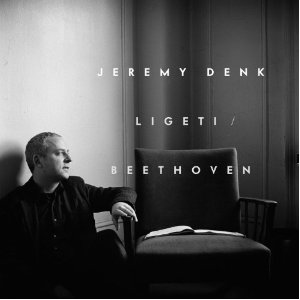 Beethoven: Sonata no 32, Ligeti Études Books 1 and 2 Jeremy Denk (Nonesuch)
The charismatic, effervescent Jeremy Denk couples a stern, imposing reading of Beethovien’s thorniest sonata with a generous selection of Études by the brilliant Hungarian maverick György Ligeti. Attempting to get one’s head round the various technical devices used by Ligeti is difficult enough, and a few seconds of listening to Denk’s astounding playing is enough to persuade anyone with pianistic ambitions to seek out a more sensible career. You can imagine that the endless practice required to perform these works would be enough to tip a player into madness, but Denk allows us to appreciate Ligeti’s fierce intellect, the wisdom underlying the surface craziness. Music which dazzles, frightens and always entertains.
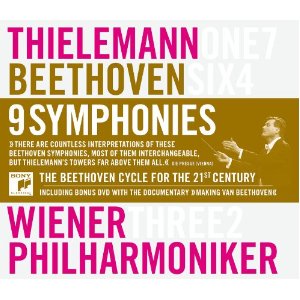
This cycle emerged a few months after Riccardo Chailly’s celebrated Leipzig set, and was overlooked and patronized by many critics. The naysayers were wrong. These are supremely enjoyable performances, imperious and refulgent in a highly anachronistic way. It’s perfectly possible to love period instrument performances and also appreciate Thielemann’s readings. They’re big boned, sumptuously upholstered and always highly musical, played by an orchestra whose old-world sound suits the music perfectly. Beethoven’s rough edges and seismic shocks can be smoothed over, and Thielemann’s flexible approach to tempo might irritate purists. It didn’t annoy me. Beethoven emerges as friendlier, cuddlier and better dressed than he usually seems. And in an age of soulless downloads, Sony’s luxuriant presentation, each disc stored in a highly desirable cloth-covered box, makes the package even more desirable.
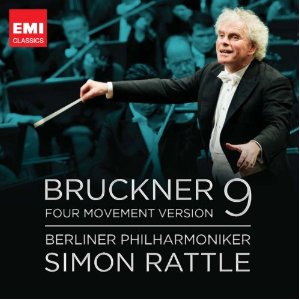
This latest incarnation of an ongoing project by a team of four musicologists to restore the last movement of Bruckner’s valedictory Symphony no 9 is a life-enhancing experience. Bruckner’s sketches were far more complete than is commonly realized, and only 28 bars had to be newly composed. Sir Simon Rattle compared the restoration to surgically reconstructing a face after injury. If you were hearing the symphony for the first time, the Finale would seem an entirely fitting, uplifting apotheosis. If you’re used to the familiar three-movement incarnation, be prepared to be shocked by the new material’s craggy magnificence. Brilliantly performed, too.
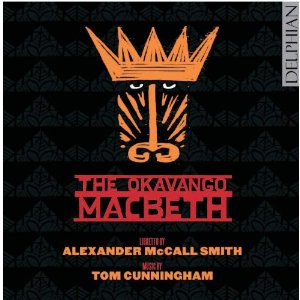
Tom Cunningham’s unpretentious, accessible opera was written to a libretto by Alexander McCall Smith and first performed in a converted garage in Botswana, christened The No 1 Ladies’ Opera House. Shakespeare retold with baboons – McCall Smith was intrigued by the notion of baboon society’s matriarchal nature. The action is observed dispassionately by a group of primatologists who stubbornly refuse to intervene. Cunningham’s background as a choral composer mean that he writes effortlessly singable music, and this feels far more than a string of catchy arias and choruses. Lucidly orchestrated and beautifully sung.
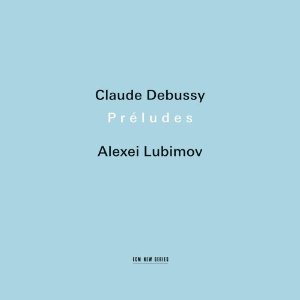
Alexei Lubimov’s handsomely recorded Debussy Préludes are persuasively played, making these elusive pieces far more than picturesque miniatures. Even better are the arrangements for two pianos of Debussy’s Trois Nocturnes and Prélude à l’après-midi d’une faune, where Lubimov is joined by Alexei Zuev. Both so good that you forget the better-known orchestral versions. Lubimov plays a pair of restored vintage pianos made by Steinway and Bechstein; Debussy apparently preferring their sound to the lighter, translucent timbre of French instruments.
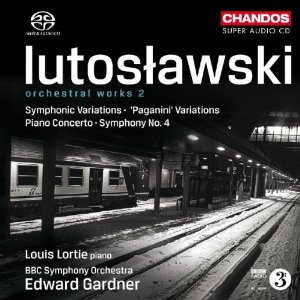
Chandos’s ongoing Lutosławski discs have been consistently enthralling. Edward Gardner and the BBC SO let us wallow in the rapturous, lucid orchestral timbres conjured up by this most fastidious of composers, as well as highlighting their steely compositional rigour. Anyone who thinks that the symphony is dead should investigate Lutosławski’s compact Symphony no 4. 22 eventful minutes which look fondly back over the 20th century while always sounding fiercely contemporary. Like Sibelius’s 7th, it’s a brilliant late work. Louis Lortie plays the composer’s compelling Piano Concerto and there’s also the pre-WW2 orchestral Symphonic Variations.
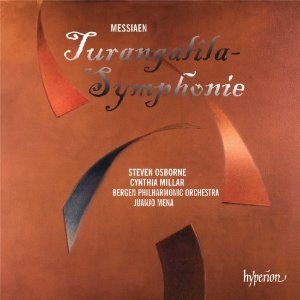
Possibly the best recording of this sprawling, joyous work available – brilliantly played and with wonderful soloists. Cynthia Millar’s ondes Martenot swoops and swoons as you’d hope, but Hyperion’s engineering also lets us hear the startling flatulent rasps that this peculiar electronic instrument emits in its lowest register. Steven Osborne’s terrifying piano obbligato is as good as you’d hope. But most credit is owed to Juanjo Menha’s fearless Bergen Philharmonic, who nail Messiaen’s style to perfection. It’s all here – love, death, pathos, humour. The riper chord progressions could have been doodled by Gershwin. Other passages sound like the noodlings of a cocktail bar pianist. And the whole is so, so convincing – a uniquely optimistic, bold musical statement that, in a performance as good as this one, will convince you that the world isn’t such a bad place after all.

A recent arrival; stunning, well-engineered live performances of two over-played, under-appreciated works. Both sound freshly minted here, conjuring up memories of scratchy, fiery Mravinsky recordings from the Cold War era. Vladimir Jurowski’s London Philharmonic Orchestra play as if possessed – strings making a dark, husky sound with winds and brass alternately shrill and seductive. Listen to the oboe solo in the slow movement of the Fourth, and the way in which Jurowski tears into the Finale. Tchaikosvky’s Fifth emerges as the weaker, baggier piece, though Jurowski does wonderful things with the work. There’s a sense of menace in the first movement’s trudging 6/8 rhythms, and the symphony's big horn solo will melt the coldest of hearts.
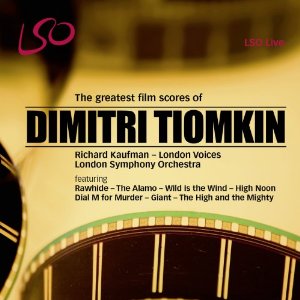
An unexpected release for LSO Live, and an exuberant tribute to the great Dimitri Tiomkin, a Ukrainian émigré who pitched up in Hollywood in the 1930s and enjoyed a compositional career which lasted until the 1970s. Tiomkin understood his limitations, but knew that his versatility made him brilliant at writing music to order. Here we get music written for Hitchcock thrillers and several famous Westerns – the latter in particular displaying Tiomkin’s remarkable assimilation of what we often think of an American style – music full of bold colours and big open spaces. The London Symphony Orchestra under Richard Kaufman are on brazen, vibrant form, and the vocal numbers don’t disappoint.
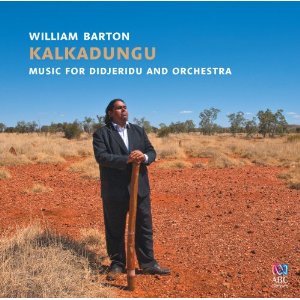
A left-field choice, but still one of the most amazing things you’ll hear all year. Didjeridu player William Barton’s music is as powerful and as uncompromising as the instrument he manages to tame, its throaty, seismic rasp an unforgettable sound. This is not a naff crossover release; Barton doesn’t attempt to smooth over the instrument’s rawness. The resulting clashes are thrilling, in a selection of chamber and orchestral works assembled from different sources. Revel in what’s been described as “the sound of the Australian earth, the ochre-coloured, hit-in-the-guts sound of intense air circulating through hollow timber”.
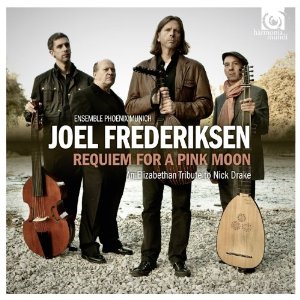
Another unexpectedly beguiling release, with American lutenist and bass Joel Frederiksen reinterpreting songs by the tortured, mumbling folkie Nick Drake, in Elizabethan style. Which is not such a crazy idea; Frederiksen rightly highlights the emotional link between Drake’s exquisite, bittersweet introspection and the downbeat cast of songs by the likes of Dowland and Campion. He focuses on the sparer, more austere material found on Drake’s final LP Pink Moon, artfully sequencing the songs and bookending them with two brief snatches of the Requiem mass. Frederiksen’s veiled reinventions are gorgeous; lutes and theorbo provide backing and good diction means that we get to hear Drake’s elliptical lyrics enunciated clearly.
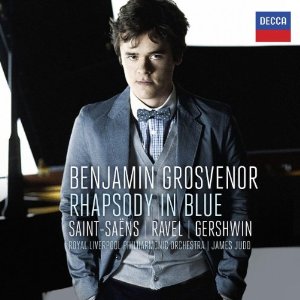
The best concerto disc of the year, played by a precociously gifted British pianist. Benjamin Grosvenor’s playing is wise beyond his tender years. He makes a brilliant case for Saint-Saëns’s lovely, neglected Concerto no 2, plotting its journey from Bachian severity to Parisian frivolity with matchless ease. he’s up against stiffer competition in the Ravel Concerto, but delivers handsomely, its cool central movement played with rare poise. And the jazziness is so unforced, so natural-sounding. It’s no surprise that Grosvenor makes such a success of Gershwin’s ubiquitous Rhapsody in Blue, in a reading which never feels clichéd. Credit also due to the Royal Liverpool Philharmonic under James Judd, sounding thoroughly engaged.








Add comment