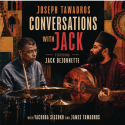
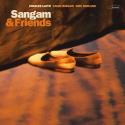
This album is such a remarkable document, and on so many levels. Perhaps its main "story" is that it could well be the very last studio recording by Jack DeJohnette (1942-2025), having been made during sessions on two successive days at a studio near the great drummer’s home just outside Woodstock in upstate New York, at a time when he was already avoiding travel, and, as it was to turn out, not quite a year before he died.
DeJohnette was indisputably one of jazz’s greats and the sheer wonder of his musicianship shines through on this wonderful record. As Ethan Iverson has written, among jazz drummers “Elvin-Tony-Jack was and is the holy trinity”, referring to Jones-Williams-DeJohnette. DeJohnette has almost 100 album credits on ECM, notably all the albums with the classic Keith Jarrett Trio, but also some classic early Pat Metheny, the Charles Lloyd Quartet with Jarrett and much, much more. All those decades of experience, that instinct, that aura and that musical presence come through here, and if this isn’t actually his last testament (I’ve not yet been able to reach a conclusion on that...) then in all its articulate expression and total freedom, it could be or should be.
It is essentially a duo/trio album, and there again, all the surprises are positive. Oud specialist Joseph Tawadros plays with astonishing clarity, resolve and intent. As he points out in his liner note, it’s something of a miracle is that the album exists at all. The backstory here is that at the instigation of the late John Abercrombie, an album was made (The Hour of Separation, 2011) with John Pattituci and Jack DeJohnette, and followed by a tour with bassist Drew Gress. I was lucky enough to catch that at a festival in Austria, and it still stays in the mind. Tawadros then kept in touch with DeJohnette, they discussed the idea of a duo project, and this – a decade and a half later – is the marvellous result.
Tawadros plays with positivity and intent, and just as John Abercrombie would embroider sublime countermelodies around him, here is another partner in melody to weave lightly-spun magic, the Mali-born, Brooklyn-based kora player Yacouba Sissoko, who was present for the second of the two days of recording. The subtlety and cleverness and rightness of their every interaction, happening at the highest level, needs to be heard. Both are remarkable musicians, capable of throwing challenges at each other and responding, and if the level of virtuosity is jaw-dropping, this is all about dialogue and never about display.
But the more times I have listened, the more I have found my ears and my mind going back to Jack. What comes across remarkably in this album is the sense that, as he used to assert, “I think of myself more as a colorist than a drummer.” For some tracks we hear what happens when he moves away from the drum kit, in order to conjure up magical, beautifully shaped and placed sounds on three other instruments: Hang Drum, keyboard synth and Indian tabla synth. But, whatever he is playing, his every touch has meaning and grace. On one of the longer tracks, “Free Spirits”, which sounds as if it was improvised freely, the sense of dialogue from these musicians with a deep understanding of each other, of building, of shaping everything in the moment, is quite extraordinary. This album, this unique document, simply needs to be heard.