Catrin Finch has been at the top her field for a long time now. The Welsh harpist was appointed to the ancient office of Royal Harpist by Prince Charles in 2000, was nominated for a Classical Brit Award in 2004 and her World Music collaborations with Seckou Keita resulted in their winning the 2019 BBC Radio 2 Folk Award for Best Duo.
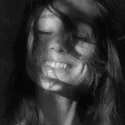
After her three acclaimed albums with Keita, she released the striking Double You with Irish fiddler and classical violinist Aoife Ni Bhrian in 2023. And now, striking out with her first solo album in a decade, she turns to her self – in fact, to her 13-year-old self – in this beautiful set of pieces accompanied by short pieces of prose in the form of letters to herself, and archive family photos that focus on the young Katrin, and her growth and personal journey. It’s a journey that encompasses the rigours of becoming a master of her art, a 40-year career in classical and world music, as well as being a cancer survivor, a mother, sister, daughter and gay woman, and a creative force who has mesmerised audiences worldwide.
It opens with “13”, a high, glistening array of binary notes expanding into a subtle, overarching melody that opens its wings on a lead line that could be a vocal. “Adre” follows, with its subtle background ambiance of what sounds like electronic washes and percussions, all drawn from her harp. Further in, “Black Holes” has an underlay of tappings, scrapings and other abstract sounds roused from her instrument like a roomful of sleepy bodies stretching up, and over that an echo-filled, pulsing architecture rises up and populates its own sound cosmos.
So it goes across the album’s 11 pieces. Self-reflecting and introspective as they are, her subtlety of composition and improvisation, and her assuredness of hand when she plays, ensures that these interior musical monologues addressed to the self become conversations with the listener, reflecting the interplay of strings and the intensity of their conversation.