To celebrate Miles Davis’s 100th anniversary this week, Fontana have released a “ Deluxe Re-issue” of one of the jazz giant’s best-known recordings, the soundtrack for Louis Malle’s first film Lift to the Scaffold (Ascenseur pour l’échafaud) 1958. This ranks as some of the most emblematic specially recorded film music: a classic that in its own way characterises Miles’s unique capacity for constant re-invention throughout a long and adventurous career.
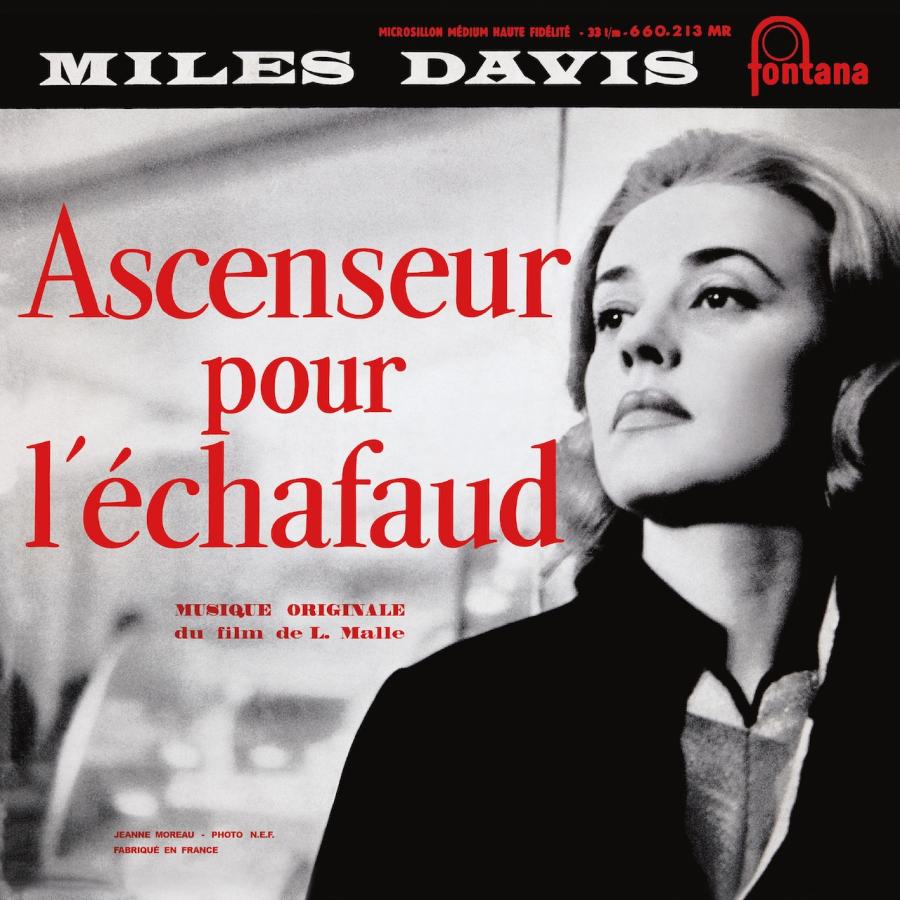
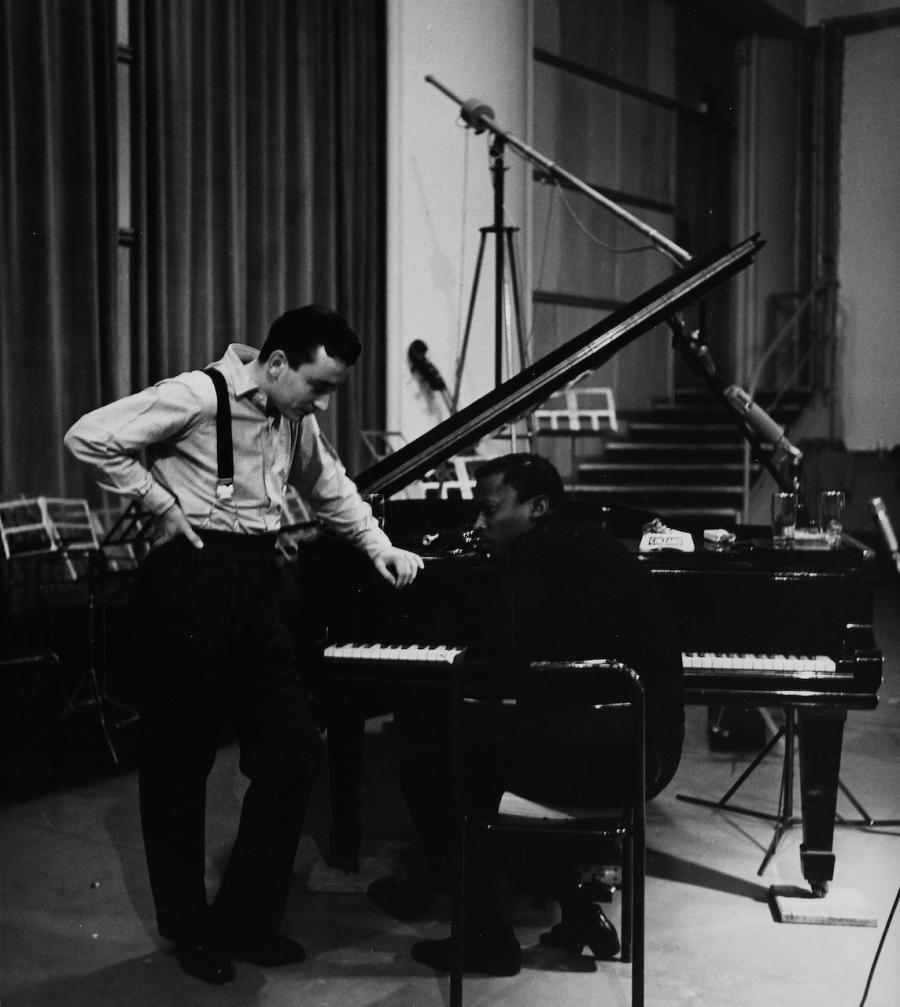
The new release is a neatly packaged two-CD combo, the original tracks supplemented by extra material, alternate takes and other music that were never used. Nothing earth-shattering but interesting nevertheless. There are some inspiring essays – one by Franck Bergerot, and the other by an American authority on Miles Davis, Ashley Kahn – that describe the legendary recordings, which were improvised during a legendary all-night session, as the musicians watched the film and played live to the images. Miles happened to be at a relatively loose end, as his great quintet of the 1950s had been fallen foul of saxophonist John Coltrane’s heroin addiction. A French promoter, Marcel Romano, had organised a tour for Davis. Louis Malle had been impressed by the jazz soundtrack for Roger Vadim’s 1957 thriller, No Sun in Venice (Sait-on jamais...) composed by John Lewis of the Modern Jazz Quartet – who were at the height of their popularity, creating a moody sound that contrasted with the febrile intensity of the bebop and hard bop that characterised modern jazz of the time.
The music that Miles created for Lift to the Scaffold was moody as well – and for the trumpeter, signalled a move away from the tropes of bop – improvisations based on a series of chord changes – and embraced what became known as "modal" jazz, in which scales or small and repeated groups of notes provided a more open-ended launching pad for improvisation. The soundtrack, with the eerie explorations of just a few notes laid the way for Kind of Blue (1959) the album that launched modal jazz on the world and changed the music forever. Joined for the soundtrack session by the Paris-based bebop pioneer Kenny Clarke on drums, bassist Pierre Michelot and pianist René Urtreger, Miles traded licks with the young say player Barney Wilen – whose soft tone had more in common with the reed players of the "cool" period, Lee Konitz and Gerry Mulligan. The soundtrack’s instantly memorable sounds include echo-laden blasts of Miles’s trumpet, and frantic lines with a mute, driven by nervous brushwork from Kenny Clarke. And there is Pierre Michelot’s bass, pulsating relentlessly and accentuating the suspense that runs all through the film.
The film was Malle’s first feature: he was still in his early 20s, and it was one of the key works that set a tone for the French New Wave, the cinema of Truffaut, Godard Chabrol and others. The film’s anti-hero (played with great cool by Maurice Ronet) murders the husband of his mistress – a wonderfully sensual Jeanne Moreau – bungles his escape and is trapped in the lift of the title. Jeanne Moreau wanders through the Paris rain, we hear her inner monologue as she searches for her lover. The murderer’s car is stolen by a young tough, who ends up shooting a German couple in a motel. The plot thickens and most of all darkens – with the sense that only tragedy can complete the drama that unfolds. With often unexpected cuts between parallel narrative threads and point-of-view, the film broke new ground, and the equally non-linear feel of the jazz track worked as a perfect element in the subtly constructed and often surprising whole.
The jazz of the late 1950s fitted the experimental nature of new cinema perfectly well. Unlike the more narrative film music that emerged from classical programme music – the music of Bernard Herrmann in Hollywood, or Joseph Kosma in France – jazz emphasised shifting momentary moods rather than manipulative emotional story-telling. Jazz was popular with the new film makers of the period. Malle’s Miles Davis soundtrack inspired other directors – notably Édouard Molinaro, who hired Barney Wilen (once again with Kenny Clarke, along with Trumpeter Kenny Dorham) for the noir thriller Un témoin dans la ville (1959). Art Blakey and the Jazz Messengers whose hard bop was particularly popular in France at the time, improvised live music to Molinaro’s Des femmes disparaissent ( (1959), and continued with Roger Vadim’s Les liaisons dangereuses (1960), that also drew on original recordings by Thelonious Monk. Godard turned to the brilliant French jazz pianist Martial Solal to sustain the edgy atmosphere of his massively influential feature début Breathless (1960). A little bit later, Polanski, in his first feature Knife in the Water (1962), made before he left Poland, created much of its mood of foreboding with a haunting soundtrack composed by Krzysztof Komeda that featured Swedish jazz saxophonist Bernt Rosengren. There was in all these films, including Lift to the Scaffold ,a connection between the essentially rule-breaking nature of modern jazz and the dramatic lives of those who live outside the norms of law-abiding convention. This was perfect music for thrillers that featured doomed outsiders.
The soundtrack for Lift to the Scaffold is better known than the film – although it’s a classic too, and launched the career of Jeanne Moreau – who attended the recording sessions. The music Miles and his fellow musicians improvised provides much more than background: it is a character in the drama, a kind of musical Greek chorus, reflecting on the inevitability of the tragedy played out before us. The same role in the drama as Cristobal Tapa de Veer’s extraordinary music for Mike White’s TV Series The White Lotus – a truly original counterblast to the tendency nowadays to swamp moving image with music, a tic most obvious and intrusive in today’s podcasts, which supposedly keep the listener engaged with constant musical doodling that undermines music’s capacity for expressing a language that often goes deeper than words.
What makes the soundtrack to Louis Malle’s classic film so powerful as well, is that it intervenes relatively rarely, each ‘cue’ as they are called, adding to the evocative night-world that the film captures. The music is not illustrative but plays an essential part in the drama making it possible to keep dialogue at a minimum, and allowing the audience to feel the emotional roller-coaster that the characters go through with remarkable immediacy – an encounter that leaves much open to interpretation rather than imposing a single director-imposed narrative. It’s no exaggeration to say that Miles Davis was not just the man who led the music-making for the film, but that he was its co-author as well.