

It’s not often you go to a ballet to watch a history lesson unfold, but Laurencia, the 1939 Soviet ballet choreographed by Vakhtang Chabukiani, gives us exactly that, and a gripping one under the froth and fun.
Based on the 17th-century playwright Lope de Vega’s Fuente Ovejuna, Laurencia tells of the wicked ruler Don Fernán, who spots the lovely Laurencia (Natalia Osipova) as she is dancing with her fiancé, Frondoso (Ivan Vasiliev). Frondoso protects her at some risk to himself, and instead Don Fernán and his men assault their friend Jacinta (the lovely Oksana Bondareva).In Act II, the Don returns, abducts both Laurencia and Frondoso, assaulting Laurencia and imprisoning her lover. She escapes and rallies the townspeople to revolt. They storm the castle, kill the evil ruler and liberate Frondoso. Everyone (spoiler alert) lives happily ever after.
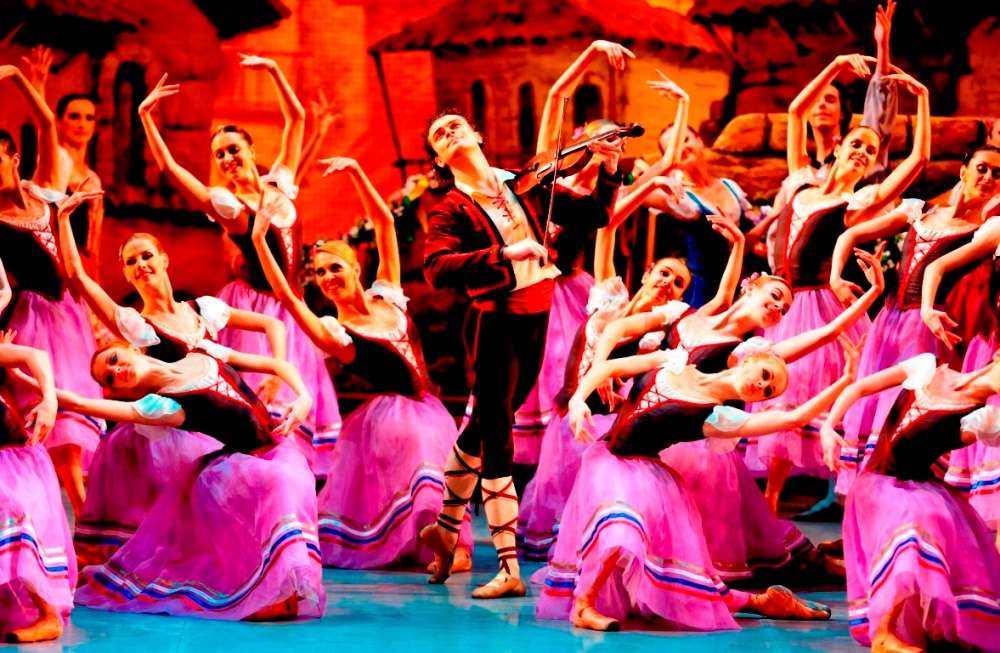 Within this story, two separate historical narratives unfold, one dance, one political, both fascinating. The political one is more obvious – the ballet was created as the Nazis threatened in 1939, and the people rising up, only 20 years after they did so in actuality in Russia, makes for fine stirring drama. (This production also uses historical bits of film during the overture and scene drop to good effect.) The death of Don Fernán, when his helmet is carried on a pike, is an overt reference to the French Revolution.
Even more interesting is the second narrative. For Laurencia is Giselle gone socialist: what would have happened if Giselle had not fallen for Albrecht, but had, instead, gone off happily with Hilarion. After all, Albrecht may not have planned to rape Giselle, as in Laurencia (indeed, Laurencia clocks up a shattering four rapes in the first 35 minutes), but he certainly was going to seduce her and run like hell. She was not going to end any more happily than Jacinta does here.
 The revolutionary townswomen are therefore not terribly far off from the Wilis of Giselle: spirits of revenge. (And when one remembers that, historically, the corps de ballet was a post-French Revolutionary depiction of virtuous, classical-inspired women, Laurencia’s female mob becomes even more closely linked.)
This makes the evening sound like a history lesson, but far from it.
The Soviet dance aesthetic developed out of silent film, which in turn relied on 19th-century melodrama for its gestures. One begins to love a style where a shaken fist is almost an ordinary gesture of communication.
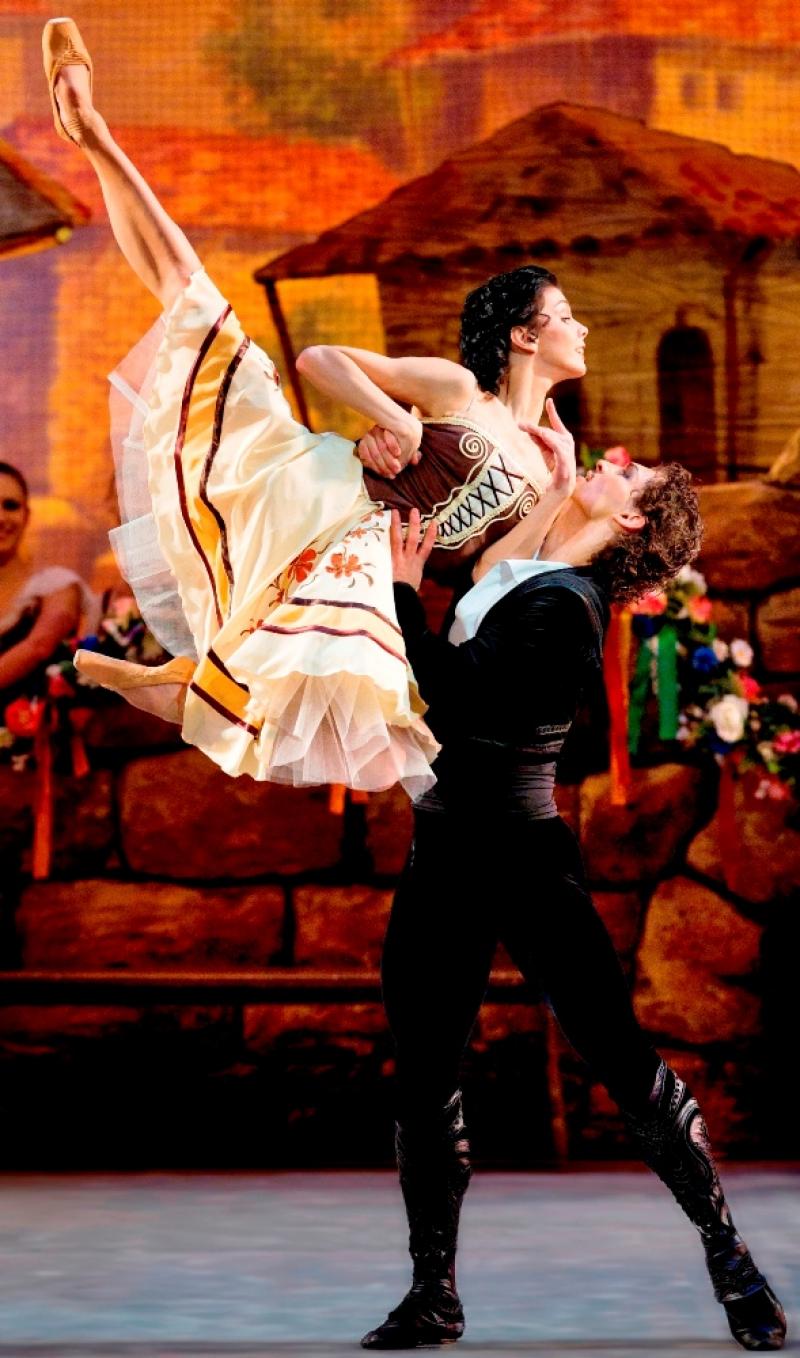
And even more, Vasiliev and Osipova (pictured left), as well as displaying their great virtuosity, here relax back into that Soviet style in which they were trained. Vasiliev, in particular, is all rolling eyes and pencil moustache, having a grand time.
Chabukiani was not, shall we say, the world’s most interesting choreographer, and in many ways it is easier to love the melodrama than the dance. The famous pas de six (staged in the west by Nureyev; in this clip he performs aged 21, with, in the background, the great Yuri Soloviev) is often used as a gala piece, and it is not enhanced by being regularly stopped for forays by the corps. Often the steps are wildly difficult, without being particularly attractive – not a great combination.
In fact, the piece could be said to be Stakhanovite – expending lots of energy, in very little time, for a maximum display. It’s not art, but it’s great history, and terrific theatre.
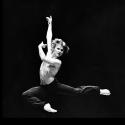
Watch Vakhtang Chabukiani in a solo from Laurencia



Add comment