This, Heinrich von Kleist’s last play, was completed not long before he committed suicide, aged 34, in 1811, when the map of Europe - and indeed that of his native Prussia - was changing with indecent frequency. It is loosely (very loosely) based on the real Prince of Homburg and events at the Battle of Fehrbellin in 1675, and with its leitmotif of honour, duty and loyalty to the Fatherland, it is no wonder that the play was appropriated (with suitable adjustments) by the National Socialists in the 1930s (it was a favourite of Hitler's apparently) and then fell out of favour in German theatre in the postwar period.
In Dennis Kelly’s new version, the historical setting remains, but the inclusion of an interesting programme note by Colonel Tim Collins (the retired Army man, he of the ever-present cigar and the famous eve-of-battle speech to his troops in Kuwait in 2003 - “We go to liberate, not to conquer... ") - suggests we should draw modern parallels about the morality of war, while examining anew the recurring theme of von Kleist’s work, the threat to established order from within.
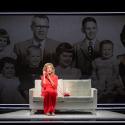
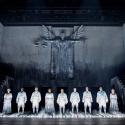
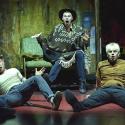
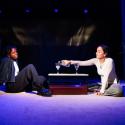
As the play begins, the Prince of Homburg, a dashing but easily distracted young officer serving in the army of the Elector of Brandenburg, is exhausted after a long campaign. Homburg (Charlie Cox) falls into a deep sleep and while he's in a dream-like trance, the Elector (Ian McDiarmid), whom he regards as a father figure, plays what seems like an innocent prank. But as the Elector hands Homburg the chains of office and offers his beautiful niece Natalia in marriage, we realise it’s nothing of the sort – the Elector is testing the extent of Homburg’s ambition, and thereby his loyalty.
When he awakens, Homburg is dazed and confused and, now smitten by Natalia (Sonya Cassidy), he fails to record precisely his orders for the battle that follows. In consequence, he leads a charge early and, although the Prussians win, the Elector, unbending in his belief that “order is the future of war”, condemns Homburg to death for failing to obey orders.
What follows is a series of rather earnest speeches about honour by Homburg and the importance of obeying rules by the Elector, as various generals plea for Homburg’s life to no avail. What we desire at this point is an intellectual joust between von Kleist's Romantic hero of the Enlightenment and a moribund figure of the old order. But the language remains prosaic and Jonathan Munby's uncertain direction leaves the actors stranded between dignified seriousness and buffoonish comedy.
The play lasts a little over two hours, but feels longer, despite the comedy that Kelly injects; McDiarmid gives a suitably magisterial performance as the Elector, while Julian Wadham, Harry Hadden-Paton and David Burke give fine support in the underwritten roles of army generals. Cox’s Homburg, meanwhile, moves from dreamily boyish lover to heroic leader of men without us seeing how he gets there. It left me unmoved, and disappointed that neither Kelly nor Munby offer any fresh insights into von Kleist's subtle - and often ambiguous - study of personal morality versus collective duty.
As the play begins, the Prince of Homburg, a dashing but easily distracted young officer serving in the army of the Elector of Brandenburg, is exhausted after a long campaign. Homburg (Charlie Cox) falls into a deep sleep and while he's in a dream-like trance, the Elector (Ian McDiarmid), whom he regards as a father figure, plays what seems like an innocent prank. But as the Elector hands Homburg the chains of office and offers his beautiful niece Natalia in marriage, we realise it’s nothing of the sort – the Elector is testing the extent of Homburg’s ambition, and thereby his loyalty.
When he awakens, Homburg is dazed and confused and, now smitten by Natalia (Sonya Cassidy), he fails to record precisely his orders for the battle that follows. In consequence, he leads a charge early and, although the Prussians win, the Elector, unbending in his belief that “order is the future of war”, condemns Homburg to death for failing to obey orders.
What follows is a series of rather earnest speeches about honour by Homburg and the importance of obeying rules by the Elector, as various generals plea for Homburg’s life to no avail. What we desire at this point is an intellectual joust between von Kleist's Romantic hero of the Enlightenment and a moribund figure of the old order. But the language remains prosaic and Jonathan Munby's uncertain direction leaves the actors stranded between dignified seriousness and buffoonish comedy.
The play lasts a little over two hours, but feels longer, despite the comedy that Kelly injects; McDiarmid gives a suitably magisterial performance as the Elector, while Julian Wadham, Harry Hadden-Paton and David Burke give fine support in the underwritten roles of army generals. Cox’s Homburg, meanwhile, moves from dreamily boyish lover to heroic leader of men without us seeing how he gets there. It left me unmoved, and disappointed that neither Kelly nor Munby offer any fresh insights into von Kleist's subtle - and often ambiguous - study of personal morality versus collective duty.
- The Prince of Homburg continues at the Donmar, London until 4 September
- Check out what's on at the Donmar
- Find Dennis Kelly on Amazon