

Excess of light and heat sends sun-god Apollo’s son Phaeton tumbling from his father’s chariot. The light was iridescent and the temperature well conditioned as peerless Christophe Rousset led his period-instrument Les Talens Lyriques and a variable group of singers through a concert performance of Lully’s 1684 tragédie-lyrique, a specially pertinent, heliotropic operatic homage to le roi soleil Louis XIV. That there was never a dull moment probably owed more to Rousset’s extraordinary if always tasteful animating gift as both conductor and harpsichordist than to the work itself, sensitive to dramatic mood changes but not often stepping into the realm of the extraordinary.
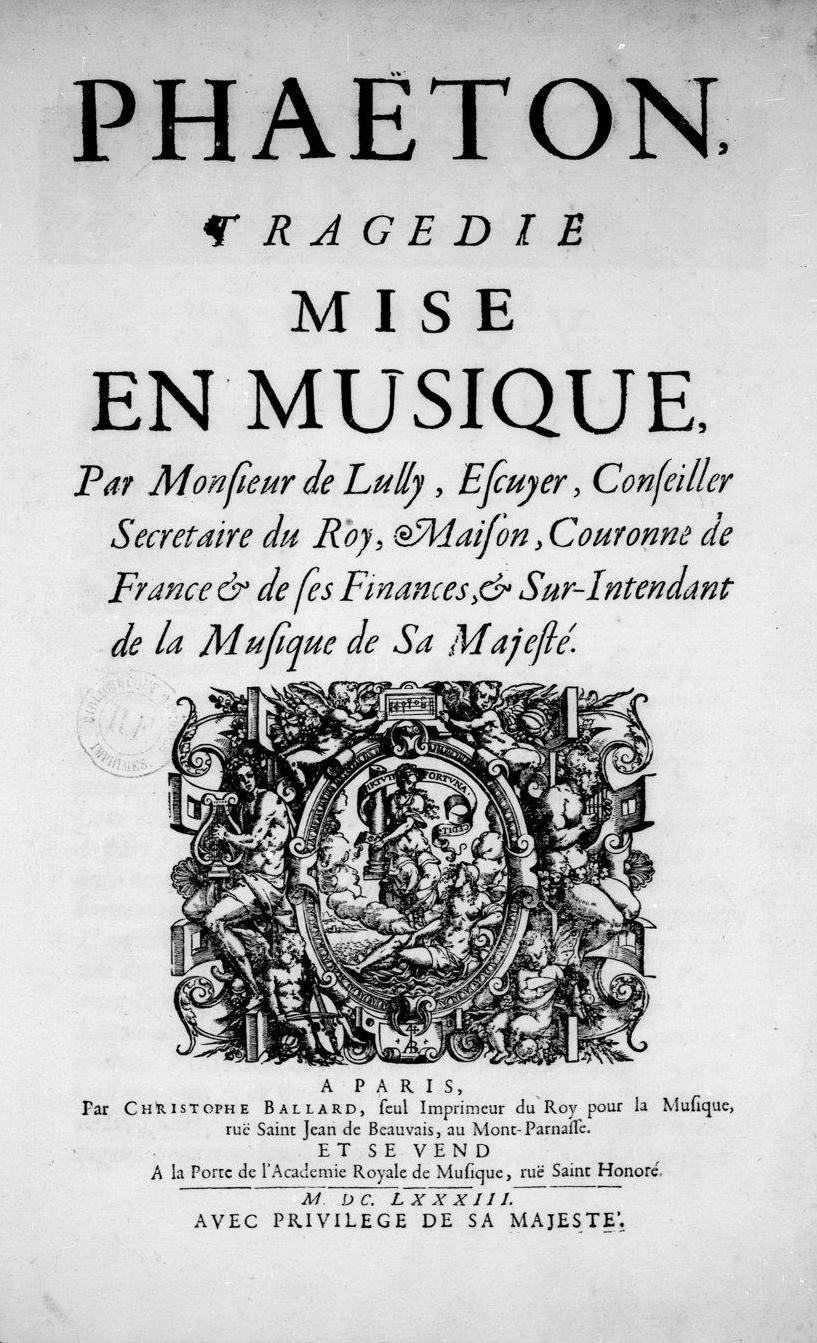 Lully was certainly capable of that, as we know from Rousset’s performance and recording of an earlier experiment mixing highly-charged recitative, big choruses and dance, Bellérophon. Phaëton certainly has its moments, though. After a frivolous prologue complete with ubiquitous toadying to the King, strings plunge us into the sudden gravity of Egyptian princess Libye’s plight, with an immediate touch of class in the shape of exquisite soprano Sophie Bevan. All-seeing Proteus’s sombrely coloured prophecy of Phaëton’s fall injects drama into the Act 1 curtain; a dance to conclude Act 2 that could blissfully have gone on for ever makes playful work of the chaconne form with its repeated (in this case chromatic) bass, while the three winds that whisk Phaëton up to see his dad are duly delineated. All is weightless in Act 4's light opening chorus of Apollo’s time-marking courtiers.
Expect the kind of graphics for the arrogant young man’s fatal journey that Saint-Saëns later provided in his brilliant tone poem, though, and you’ll be disappointed. The highlight of the last act is a moving duet for Libye and the man she must forsake to marry Phaëton, his rival Epaphus (a sometimes over-forceful but stentorian Andrew Foster-Williams, good fun in the spat between the two men). We wait for the peripetaia, and it’s over in a flash, as is the opera. Why? Probably because the original stage machine for showing Phaëton’s demise was so spectacular, as Lindsay Kemp told us in his crisp programme note, that Lully didn’t need to do anything with the music.
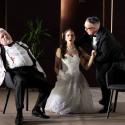
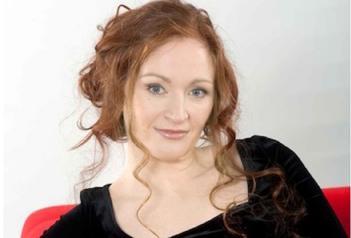 What keeps us company elsewhere, especially as the silly love-story wrapped around the Phaëton myth takes time to unfold, is the superbly-moulded nature of the French recitative that constantly bursts into heroic (or tragic, or merely dramatic) arioso. Philippe Quinault's libretto keeps a dignified balance between clarity and sententiousness, and Lully, who would declaim the verses to catch the melody in them, knows exactly what to do with it. The finest exponent in terms of both tone colour and text was the regal Ingrid Perruche (pictured above) as Phaëton’s ambitious mother Clymène. Urgency, but not beauty of tone, came from the paint-stripper voice of Isabelle Druet as Phaëton’s not-enough-beloved Théone.
Emiliano Gonzalez Toro’s only just steady enough protagonist had the right ring for vaunting ambition, but it was a bad idea to match him with another, paler tenor possessed of a rather peculiar technique, Cyril Auvity, as a less than divine father. Benoît Arnould’s Protée needed the lower bass notes that Matthew Brook possessed in abundance. But the real fluent pleasures came from Rousset’s ensemble, sounding silky-gorgeous in the Barbican Hall – how much better this venue suits a smaller, period ensemble than a big symphony orchestra – with the cellos especially rocking the bass line where necessary, and the supremely cultured Namur Chamber Choir. Rousset could take charge of the telephone directory and we’d probably listen with just as much pleasure. May they come back soon.
Watch Rousset and Les Talens Lyriques in the complete Phaëton at the 2012 Beaune Festival
Read David Nice's blog, I'll Think of Something Later





Add comment