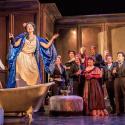
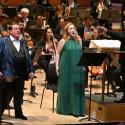
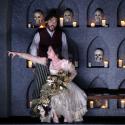
Only those who think the burnt-out question of Wagner and the Nazis can still be brought to bear on his operas could be disappointed by Richard Jones's life-enhancing new production. Not a swastika in sight, not a hint of anti-semitic caricature for the fallguy who was never intended for it in the first place, only affirmation of the opera's central message that great art can bring order and understanding to society.
It launches with a masterstroke: a dropcloth collage portraying German-speaking genius from Bach and Mozart to Pina Bausch and Michael Haneke, embracing all creeds and persuasions among those whose work outlives the chaos that threatened it. It's only at the end that the central, historical figure of Hans Sachs, the opera's cobbler-philosopher hero, joins the portraits. Holding him aloft is his embodiment, Bryn Terfel, the Welsh bass-baritone who especially after this, his most daunting achievement to date, should join any British pantheon of greats.
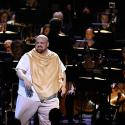
Jones's view of a Nuremberg that veers wittily between 16th-century pomp, 19th-century bourgeois dress and a dash of the later artistic Germany - a photo of Lotte Lenya and Kurt Weill is propped up on the cobbler's bookcase - is not without its inner demons. Its heart of darkness is located, tellingly, in Sachs himself. Perhaps it takes a singer who has also brought us a definitive Sweeney Todd to embrace the murk as well as the humanity. Terfel really does look like a master who thrashes his apprentices in a bad mood. And it doesn't get much worse than the slough of despond into which the violent folly of St John's Eve casts him: Jones has the curtain rise on a seriously depressed Sachs with the first notes of the deeply melancholy Act Three Prelude, and we see him bolting for freedom, like the young lovers tried to do before him, only to return to bring order to the day of a great song contest.
 He's the embodiment, then, of the opera's later message that nothing can happen, or be created, without a touch of Wahn, that untranslatable key word which can be rendered as "madness" or "illusion". Terfel's warm, never over-forced timbre embraces both masculine weight and feminine sensitivity, and as we've long known, he's the ultimate embodiment of stage charisma. No one takes their eyes off this Sachs, his physical presence emphasised by the way Jones brings him so close to his relatively diminutive fellow leads. If Sachs is the noblest, most reflective character in any opera, then that means that anyone who can master his essence will be giving the performance of a lifetime. I saw one, way back in the 1980s, from the lovable Norman Bailey, which I never thought to see equalled. Bryn did just that, in his own very different way. He too was born to play the part; he's made it his own; take your pick of the clichés, and any one will be true.
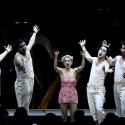
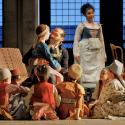
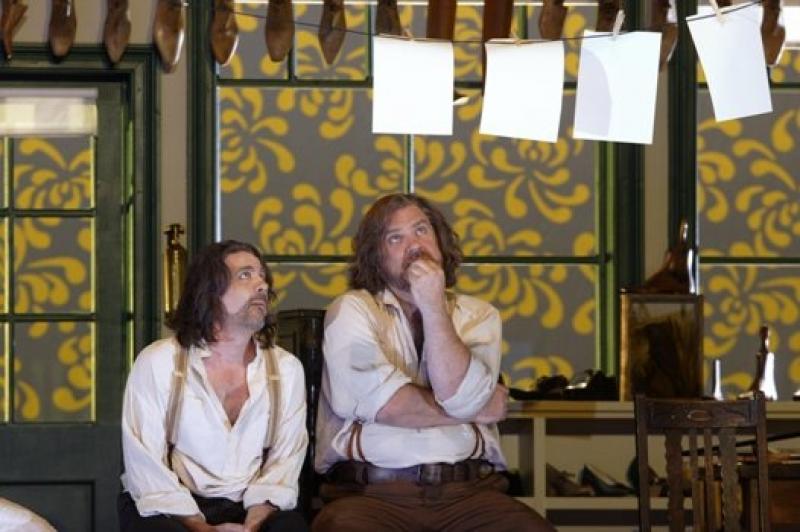
Where to begin with how Wagner weaves in the demands of an art that must respect tradition but learn also to embrace the new with the slowly emerging love-triangle that gave Strauss and Hofmannsthal the cue for the drama of ageing in Der Rosenkavalier? All I can promise you is that Jones tells the story and brings out its tangled relationships as well as its artistic debates with exemplary clarity. There's not even a problem with the early, dramatically sticky passage in which apprentice David (Andrew Tortise, a suitably truculent and whimsical adolescent if at times in need of a bit more vocal support for his lightish tenor) instructs outsider knight Walter (Raymond Very, pictured above right with Terfel) in the rules of song as the mastersingers dictate it so that Walter can win the young girl he's fallen in love with. All the song-types, related in pedantic if orchestrally delicious detail, get pointed out on the wardrobes wheeled around by the other apprentices, who accomplish their multiple tasks with disciplined aplomb and manage to sing spiritedly at the same time.
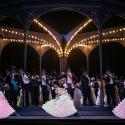
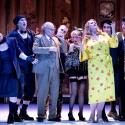
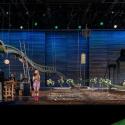
Paul Steinberg's bare set for the church which must become the song school is transformed before our very eyes both through what's in the wardrobes and a series of portraits of latter-day Welsh worthies dressed up in the same Renaissance garb. Sachs stands out immediately by gently brushing the costume aside, unlike his fellow Mastersingers; already we learn that he's both part of the group and prepared to resist it if he thinks it needs putting to the test. There's a symmetry in Act Three where it's the townsfolk who get to wear Buki Schiff's fantastical pageant-costumes and the masters who appear in everyday smart suits to people the bare green framework of the stage.
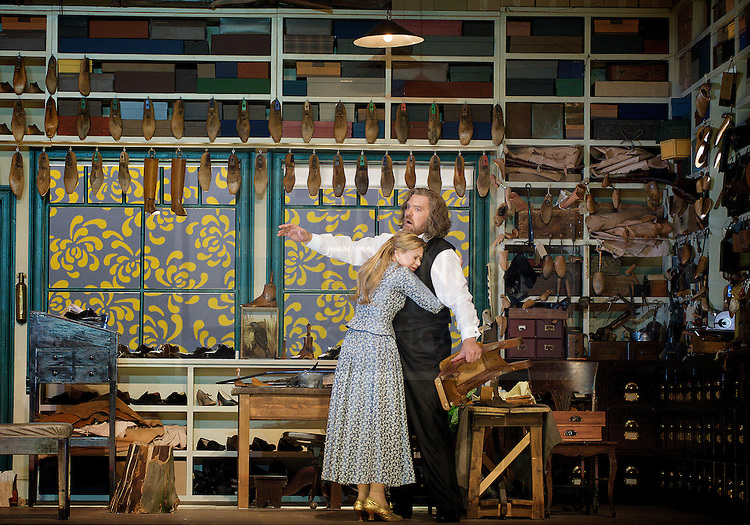 It's not until Act Two that Wagner lets us see to the heart of more personal relationships. Amanda Roocroft's vivaciously acted Eva, vocally stretched to the limit only when Wagner finally wants her to be an impassioned woman rather than a sweet girl, is credible from the start. She's seen as capable of teasing her goldsmith father (Brindley Sherratt, noble and intelligent of phrase in his long Act One narrative), but less so Sachs, the much older man who's played such a part in her life and with whom, in this production, she's clearly in love (Roocroft and Terfel pictured above). The problem we have to see borne out is that she's now blitzed by a deeper, more troubling infatuation with young Walter - despite his nobility, a mini-Sachs in Act Three when the two men sit side by side in their shirts and braces with their matching beards and long hair. Very looks right, which is more than I can say for any other Walter I've seen, but for the near-impossible ideal you want someone who's charismatic, impetuous and who really takes the palm with golden singing at the competition. The American tenor didn't achieve that, but curiously when Walter's working out his prize song in Sachs's workshop, a memory lapse threw him and suddenly, when he stopped thinking too hard about what he was doing, the vocal production eased up - but only then. Still, he got through this killer role, which is worth a prize in itself.
There's a masterclass in comic timing, as ever, from Christopher Purves as the pedantic Beckmesser: first elegantly malevolent as he fingers the chalks to mark the newcomer's performance in Act One, then desperately unpleasant and finally preeningly foolish as he tries to sing the song stolen from his assumed rival. We don't need to feel sorry for his come-uppance: Jones and Terfel between them make much of Sachs's remark that everyone has moments of weakness, but some learn from their mistakes and others like Beckmesser crash on through the red lights.
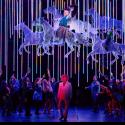
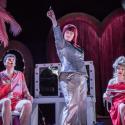
Though this characterisation is merely a slightly more realistic than usual rendering of the expected comedy of discomfiture, a straight line that's taken over the four hours plus of the drama as a whole, Jones's imagination surfaces in sudden, telling and often tear-inducing moments. His two most typical thumbprints are the phantom procession of markers with crosses on their box heads which Walter conjures in his night-time brain-fever, and the Seventh Seal, Brother Death-like figure of the night watchman (David Soar, a promising young bass), bearing a lantern in place of a scythe. There's also a Jonesian caper when David thrashes Beckmesser for wooing his Magdalene (Anna Burford, smiling charm throughout), who's disguised as her mistress - a chase around the houses in which Beckmesser eventually loses his trousers. The night brawl as a whole is relatively tame, maybe to make sure that the splendid WNO Chorus keep in time with the conductor (they did on the first night).
The bedrock of this towering company show is WNO music director Lothar Koenigs's natural grasp of the score's rich ebb and flow
Other touches are humane and intelligent. When Sachs tells Walter he'll help him to interpret his dream - a passage of which Freud undoubtedly took note - the young man lies on the couch while the cobbler sits at the table behind him writing it all down. The finished sheets are hung up to dry, and the characters all look up at them in wonder just as in the first act the assembled burghers all looked up at their rather more rigid rules for mastersinging. On the first night, I wasn't sure if these green panels were working as intended, and the usually reliable lighting of Mimi Jordan Sherin was playing up rather a lot, especially at the end of the First Act and in a quintet where I couldn't believe that four of the five characters were supposed to be left in the dark. These are the kind of teething problems that such a massive undertaking as the staging of a Wagner opera is bound to throw up, and the sometimes tricksy Wales Millennium Centre doesn't always make things any easier, so no doubt things will have settled by the time the show hits Birmingham.
I haven't even so much as mentioned the bedrock of this towering company show, WNO music director Lothar Koenigs's natural grasp of the score's rich ebb and flow. Transparent and buoyant from the first in a Prelude that inspires total confidence, he brings the carolling woodwind voices of spring and youth to the fore, lets the orchestra billow in the big emotional climaxes and never overdoes the pomp and ceremony. So the final celebrations in the Nuremberg meadow underpin deliciously Lucy Burge's choreographed rituals and dances and never come close to bluster - crucial when we get to the sticking point of Sachs's final address to "holy German art". Whatever that might have meant to the unruly German states of the 16th century, or for the still dubious German identity of the 1860s, Jones makes clear what it means to him: a universe of German-speaking genius across the centuries. So, yes, the portraits from the dropcloth come back, as we thought they would, but couldn't work out how. As Sachs delivers his keynote speech, the townsfolk one by one hold up their portraits of composers, artists, performing musicians, actors, filmmakers. There couldn't be a more wonderful, euphoric or moving way of expressing what Meistersinger means to us today.