We had already been reassured in interviews that Calixto Bieito’s production of Carmen would not be shocking, although perhaps this was more a warning to those of us hoping that it might be. Bieito’s radical reputation is well earned, although approaching 50 he is by no means an enfant and clearly not so terrible anymore either.
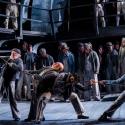
The first scene opens with a soldier wearing nothing but Y-fronts and boots, holding a rifle and running round the stage, presumably as a punishment handed out by Corporal Moralès or Lieutenant Zuniga. In fact, there are bits and bobs of undressing at various stages of the production, though nothing one could call gratuitous – apart from the fully nude male dancer during the Act III prelude, and even he is dimly lit and shrouded in a modesty mist.
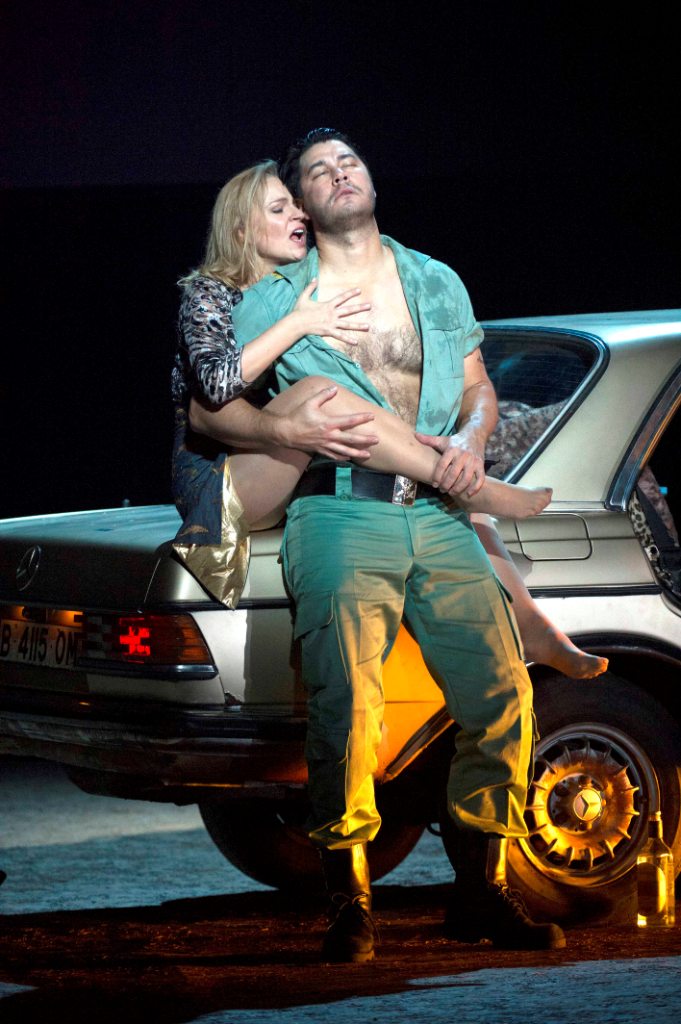 There is a surprise in store, though. The cigarette factory bell rings and the soldiers, with much jostling and thrusting of loins, prepare to ogle the women workers. Out comes Carmen, jet-black hair and a sultry pout; "phwoar" say the soldiers, or words to that effect, as she languidly strolls past them and lights a cigarette downstage. Except, what’s this? Why are they asking where Carmencita is, when she is right there? Turns out that isn’t her after all, it is just an actress apparently cast to look exactly like you’d expect Carmen to look, so that when Ruxanda Donose appears – blonde, distinctly un-Spanish – our expectations are confounded.
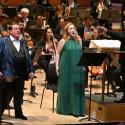
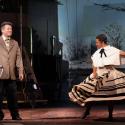
It must have been intentionally playful, except the result is that Donose (pictured above right with Adam Diegel’s José) is undermined before she even begins the evening’s hard slog of trying to convince the audience that she is the raunchy, animalistic, hedonistic and fickle heroine who would ultimately become the victim of her own irresistible charms. It doesn’t work – she is just too nice, too awkward. Her costume for most of it hampers her efforts further: it must be hard to be wild when you’re wearing high heels and a pencil skirt.
In an opera with, at best, dubious attitudes to women (the clingy, homely Micaela versus the femme fatale Carmen), the failure here is not in trying to avoid the stereotypes, but rather in trying hard to fulfil them and falling short. It does not help that the part seems to sit rather low in Donose’s voice, so she is never the most sparkling, vital thing on stage: if Carmen isn’t that, then what is she? It is important to add that Donose has a beautiful voice, warm and rounded, and well worth checking out. But things did not gel for her last night.
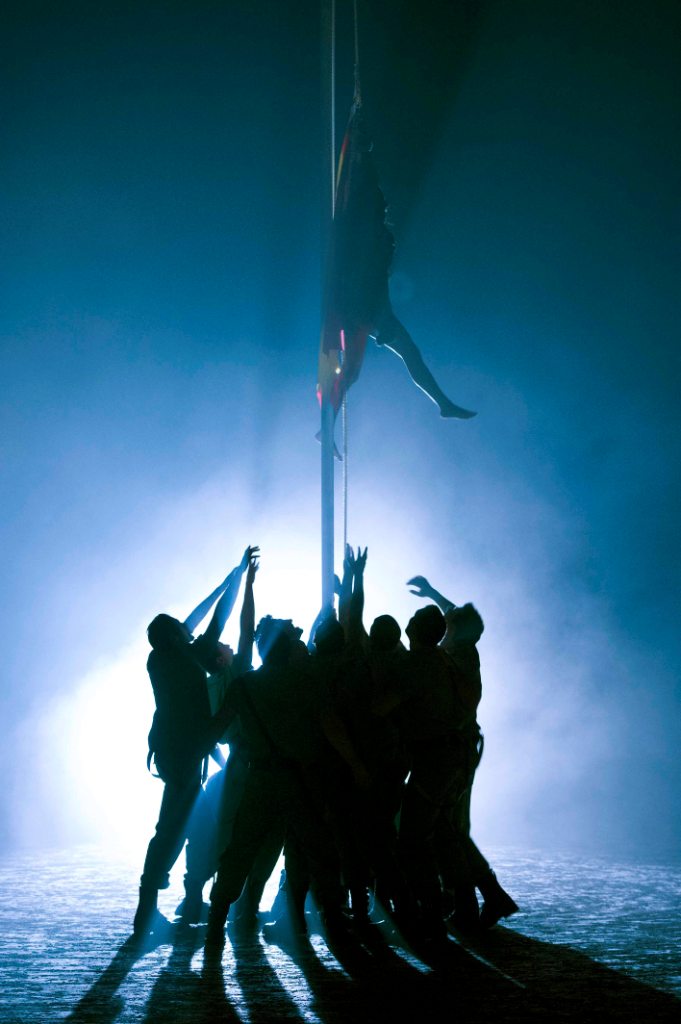 Adam Diegel’s José also started rather underpowered, his bright, forward tenor feeling a little strangulated, but he loosened up in time to give an admirable account of his big second act aria, and kept it up to the bitter end. It is the bit parts that steal show, though, with Rhian Lois and Madeleine Shaw as Frasquita and Mercédès being particular highlights. They are both natural actors, and raise a fair few laughs along the way. Duncan Rock as Moralès is also impressive, not least thanks to his Action Man physique, while a genuinely intimidating Graeme Danby is the lewd and gruff Zuniga. Elizabeth Llewellyn’s Micaëla, though a dreadful drip of a role, gets probably the warmest applause, and well-deserved too.
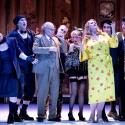
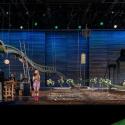
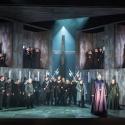
The chorus scenes are a joy, the shabbily gaudy costumes quite appropriately bringing to mind Emir Kusturica films, while presenting the gypsies as economic migrants, or even perhaps illegal immigrants, gives things an interesting spin. And though any admiration for staging restraint, compared to the pointless extravagance of Francesca Zambello’s effort at Covent Garden, is somewhat revised after the appearance of five(!) battered Mercedes for Act III, visually it is a both coherent and satisfying production, and there is no reason that it shouldn’t become a firm part of ENO’s stable for years to come.
A rather peculiar moment deserves mention, though. Merrily dressing up a Bambi-limbed child in pink tights and lipstick and dragging her off to join the women in "distracting the customs officers" is a directorial interpolation as uncomfortable to watch as it is unnecessary to the plot.