Before The Beatles touched down there in 1964, British pop was barely a concern for America. The first in this three-part series took The Beatles arrival as the year zero for British pop’s conquering of America. An entertaining canter through an over-familiar slice of pop history, Go West was enlivened by some top-drawer talking heads including Paul McCartney and Jimmy Page. No Rolling Stones though.
But it was great to see members of The Animals, Hollies, Searchers and Zombies given the chance to reminisce. American context came from veteran DJ Larry Kane, New York Doll Syl Sylvain, Jackie deShannon and Neil Sedaka. Donovan and Herman's Hermits's Peter Noone shone most brightly though.
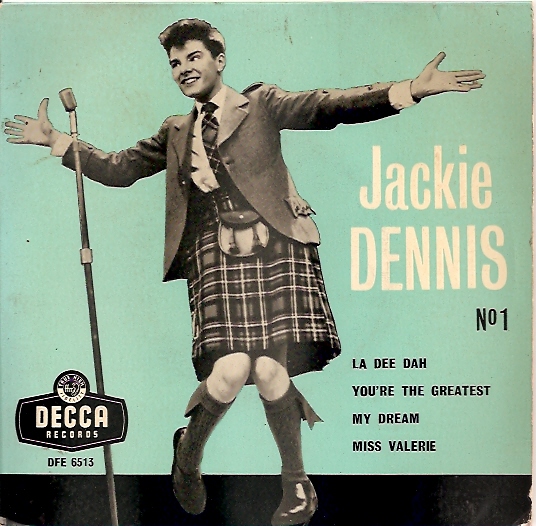 Although the clock was turned back for a recap of the state of American pop in the run up to The Beatles arrival, earlier British forays into America were ignored. The Tornados and Acker Bilk, who had US number ones in 1962 didn’t get a look in. Nor did Cliff Richard, whose 1960 tour had failed to conquer America. Before that, the kilted Scottish teenage singer Jackie Dennis, despite being introduced on American TV as “Britain's Ricky Nelson” in 1958, had also made no waves. The call of the west wasn’t new.
American pop of the pre-Beatle era was characterised by the bland Bobbies: Rydell, Vee and Vinton, with the Scopitone of Dion’s “Ruby Baby” wheeled out to demonstrate how US pop needed a shot in the arm (rather unfair as it's a pretty great record). But incredible singles like The Four Seasons's “Walk Like a Man”, The Chiffons’s “He’s so Fine”, The Tymes’s “So Much in Love” and Stevie Wonder’s “Fingertips (Pt II)” had topped the US charts in 1963. American pop wasn’t quite on its last legs, ready to keel over from a dose of blanditis.
The Dave Clark Five were mentioned in passing as the British band with most Ed Sullivan appearances, but didn't figure otherwise, a glaring omission that mattered (in tribute, see a clip of them below). There were also a few bizarre assertions on the voice over. The Beatles were said to have arrived in America on 7 February 1964 with modest expectations. Hardly – they were already lodged at number one with “I Want to Hold Your Hand” and were booked onto US TV’s prime showbiz showcase, The Ed Sullivan Show.
Watch the Dave Clark Five performing “Catch us if You Can” on US TV’s Shindig, broadcast 18 September 1965
Paul McCartney’s take on US teens, especially the crew cut coiffed boys, was that “they had a bit of catching up to do”. Fashion-wise and attitude-wise, America was stuck in Fifties, while Britain was already embracing the Sixties. A brilliant clip of Jerry Lee Lewis had him saying of the Bobbies that The Beatles “cut ‘em down like wheat before the sickle”.Amongst the other eye-catching contemporary snippets were Paul McCartney summing up meeting Elvis, saying “ he is a nice fella”. An acid John Lennon said it “seems a bit silly to be in America and for none of them to mention Vietnam, as if nothing is happening”. It wasn’t clear whether he was saying this after or before the bigger-than-Jesus furore.
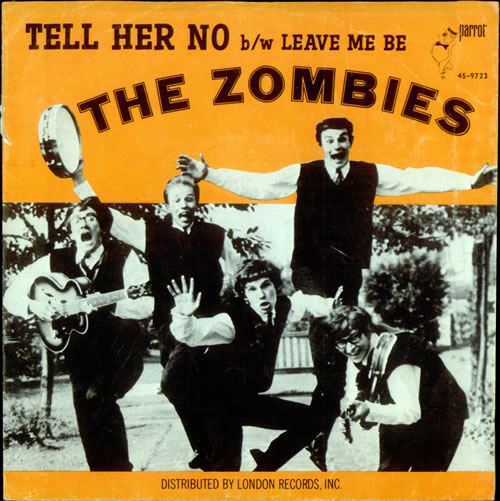 The Zombies's Rod Argent remembered the Americans “were very good with beef”. On tour, his band came up against the US south’s segregation. Argent said fellow Zombie Colin Blunstone “and I had our arms round each of The Velvelettes, in a friendly way”. That attracted attention. Peter Noone recalled playing to an all-black audience. He measured the success by noting that “they never applauded, but we got through the evening”.
Some bands played up their Britishness, adopting merrie olde England poses. Herman’s Hermits sang “I’m Henry VIII, I am” while The Yardbirds’s rueful Chris Dreja acknowledged the silliness of dressing up for the promo film of “For Your Love” (see the film below, with an eye-rolling Jeff Beck). American bands like the Knickerbockers (seen in a clip at the bottom) and The Sir Douglas Quintet also affected a Britishness, helping them climb the charts. However terrific those records, the meaningful response to the arrival of the British was The Byrds, whose Roger McGuinn contributed with dignity.
Watch The Yardbirds’s promo film for “For Your Love”
Opportunities to link some of the contributors were missed. Jackie deShannon discussed touring America with The Beatles. Yet after that, she came to London, curious about what was going on after discovering The Searchers had covered one of her songs. She recorded here with session guitarist Jimmy Page. The pair went to America in early 1965, where Page saw pre-fame Byrds’s shows. She, Page, The Searchers’s Mike Pender and The Byrds's Roger McGuinn were all in the programme, but not tied together.
Most strange was the choice of Procol Harum's Gary Brooker to comment on 1967's Monterey Festival. McGuinn played it. So did The Animals's Eric Burdon, who wrote the song “Monterey" in tribute. Both were in the programme. Procul Harum were nowhere near the festival.
The programme’s best card was played by exhuming Peter Noone’s support for the Vietnam war and playing it off against The Hollies's Graham Nash's anti-war stance. A contemporary clip had them hashing it out it. The current-day Noone was clearly having a ball playing the square.
Donovan’s importance was acknowledged. He certainly looked the part, poised on what might have been a throne regally talking of himself in the third person, of the “beautiful young boy singer called Donovan”. A Sixties-era Graham Nash declared that “what Donovan’s trying to put over will stop wars”. Amen.
Watch The Knickerbockers perform "Lies" on Hullabaloo, broadcast November 1965